


Abstract Background: The mortality of critically ill patients with COVID-19 is high, particularly among those receiving mechanical ventilation (MV). Despite the high number of patients treated worldwide, data on respiratory..
Read More
Abstract Objectives: Refractory postcardiotomy cardiogenic shock complicating cardiac surgery yields nearly 100% mortality when untreated. Use of venoarterial extracorporeal membrane oxygenation for postcardiotomy cardiogenic shock has increased worldwide recently. The aim of the current..
Read More
Abstract Background: Monitoring oxygen delivery to the oxygenator of a heart lung machine (HLM) is typically accomplished with an O2 analyzer connected to the gas inflow line. It is assumed when..
Read More
Abstract Background The optimal regimen for intravenous administration of intraoperative fluids remains unclear. Our goal was to analyze intraoperative crystalloid volume administration practices and their association with postoperative outcomes. Methods..
Read More
Abstract Inter-facility transport of a critically ill patient with Acute Respiratory Distress Syndrome (ARDS) may be necessary for a higher level of care and/or initiation of extracorporeal membrane oxygenation (ECMO)...
Read More
Abstract A team of travel risk management experts from International SOS have completed a complex evacuation and repatriation involving four ICU COVID-19 patients from La Réunion to Paris. Commissioned by..
Read More
Abstract Two recently published studies report success with extracorporeal membrane oxygenation support in patients with acute respiratory distress syndrome associated with COVID-19. In a retrospective cohort study published in The Lancet Respiratory..
Read More
Abstract A 53-year-old male was submitted to veno-venous extracorporeal membrane oxygenation (ECMO) due to coronavirus disease 2019 (COVID-19) pneumonia for 84 days, without relevant complications related to the circuit itself until..
Read More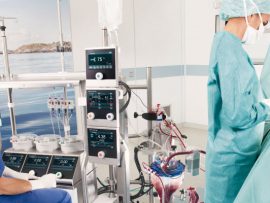
Abstract Objective: To provide a brief review of the development of cardiopulmonary bypass. Methods: A review of the literature on the development of extracorporeal circulation techniques, their essential role in..
Read More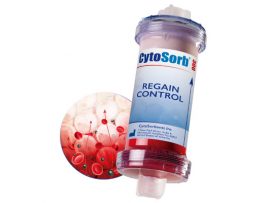
Abstract Septic shock is a major burden to healthcare with mortality rates remaining high. Blood purification techniques aim to reduce cytokine levels and resultant organ failure. Regarding septic shock, hemoadsorption..
Read More
Abstract Many centers reported positive outcome after left ventricular assist devices (LVADs) implantation using a minimally invasive approach. The main drawback of this minimally invasive approach is the feasibility of..
Read More
La pandemia del covid 19 ha impactado enormemente en nuestras vidas, cambiando modelos sociales, económicos y sanitarios. La información es desbordante, cambiante, instantánea, catastrófica unas veces, anecdótica otras, muchas veces..
Read More
Abstract The field of left ventricular assist devices (LVADs) witnessed an important boost after the introduction of the third-generation durable mechanical circulatory support devices. Among the technical improvements which contributed..
Read More
Abstract (LVADs) improve symptoms and outcomes in advanced heart failure. Although device malfunction has decreased significantly with later generation LVADs, it has not been eliminated. We describe the clinical course..
Read More
March 18, 2020 — A groundbreaking new study led by University of Minnesota Twin Cities researchers from both the College of Science and Engineering and the Medical School shows..
Read More
Le cœur Carmat de l'entreprise du même nom a obtenu il y a peu pour être commercialisé en Europe et dans certains pays qui acceptent ladite certification comme gage de qualité...
Read More
Abstract The concept of the ‘unique myocardial band’, which proposes that the ventricular myocardial cone is arranged like skeletal muscle, provides an attractive framework for understanding haemodynamics. The original idea..
Read More
Abstract Two of the leading concepts of mural ventricular architecture are the unique myocardial band and the myocardial mesh model. We have described, in an accompanying article published in this..
Read More
Abstract OBJECTIVES Cerebral injury is a complication of surgery with deep hypothermic circulatory arrest (DHCA). This study aimed to evaluate diffusion-weighted imaging (DWI) for the early detection of brain injury..
Read More
Abstract Objective: To test the capacity of the Logistic CASUS Score on the second postoperative day, the total serum bilirubin dosage on the second postoperative day and the extracorporeal circulation..
Read More
Abstract Background. Hyperoxia has long been perceived as a desirable or at least an inevitable part of cardiopulmonary bypass. Recent evidence suggest that it might have multiple detrimental effects on..
Read More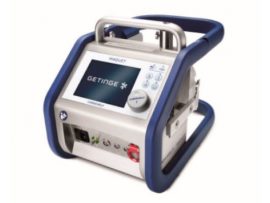
Abstract OBJECTIVES Heparin-induced thrombocytopenia (HIT) requires alternative anticoagulation strategies. We investigated outcomes in patients with HIT antibodies undergoing low-dose bivalirudin anticoagulation during left ventricular assist device implantation on an extracorporeal..
Read More
Abstract OBJECTIVES Minimally invasive extracorporeal circuits (MiECCs) aim at the preservation of physiologic reserves, the impact of which is expected to be most evident in patients in whom these are..
Read More
Abstract OBJECTIVES Following paediatric cardiac surgery with cardiopulmonary bypass (CPB), there is a tendency for fluid accumulation. The colloid osmotic pressure of plasma (COPp) and interstitial fluid (COPi) are determinants..
Read More
Abstract OBJECTIVES Postinfarction ventricular septal defect is a serious mechanical complication of acute myocardial infarction associated with high postoperative mortality. The aim of this study was to review our experience..
Read More
Abstract OBJECTIVE This study aims to describe the population pharmacokinetics and pharmacodynamic target attainment of meropenem in critically ill children. METHODS The study involved a retrospective medical record review from..
Read More
Abstract This chapter explores the best practices of mechanical ventilation during extracorporeal membrane oxygenation (ECMO) through a detailed discussion of the physiologic theory and clinical evidence. Future areas of study..
Read More
Abstract Donor shortage is a major limitation in organ transplantation. Several studies have reported that extracorporeal membrane oxygenation (ECMO)-assisted organ donation can be successfully completed without inducing warm ischemia in..
Read More
Abstract The management of a patient placed on extracorporeal membrane oxygenation (ECMO) is a team effort. The anesthesiology team plays an integral part during cannulation and oftentimes as well during..
Read More
Abstract Conventional extracorporeal membrane oxygenation (ECMO) training usually only consists of didactic lectures and water drill of ECMO circuit. However, learners cannot “experience” changes of clinical condition of patients. Simulation-based..
Read More