


Abstract Thrombocytosis has been feared as a source of thrombotic complications during the conduct of cardiopulmonary bypass (CPB) for patients undergoing cardiac procedures. We present a patient urgently requiring repair/replacement..
Read More
Patient with left pulmonary malignancy and occlusion effect on LPA with low LVEF undergone tumor resection and PPM insertion. [gallery ids="20352,20355,20358"] Dr.Sam Zeraatian Nejad Davani, CEO of rockingham medical..
Read More
One of the first things I try to teach the participants in my classes is the meaning of the term atrioventricular block – commonly abbreviated as “AV block.” So many..
Read More
Abstract Background Early identification of patients at risk of AKI after cardiac surgery is of critical importance for optimizing perioperative management and improving outcomes. This study aimed to identify the..
Read More
Abstract Background In our earlier study on the functional limits of the aneurysmal aortic root we determined the pig root is susceptible to failure at high aortic pressures levels. We..
Read More
Abstract Refractory cardiogenic shock (CS) often requires veno-arterial extracorporeal membrane oxygenation (VA-ECMO) to sustain end-organ perfusion. Current animal models result in heterogenous cardiac injury and frequent episodes of refractory ventricular..
Read More
Abstract Objectives: This project aims to describe brain injuries on routine neuroimaging in a large single-center neonatal and pediatric cohort supported by extracorporeal membrane oxygenation. The study also aims to..
Read More
Abstract Background Extracorporeal membrane oxygenation (ECMO) was frequently used to treat patients with severe coronavirus disease‑2019 (COVID‑19)‑associated acute respiratory distress (ARDS) during the initial outbreak. Care of COVID‑19 patients evolved..
Read More
Abstract Blood stream infection (BSI) is a potentially lethal complication in patients receiving extracorporeal membrane oxygenation (ECMO). It may be particularly common in patients with veno-venous ECMO due to their..
Read More
Abstract Objective: Children requiring multiple consecutive extracorporeal membrane oxygenation (ECMO) runs likely have ongoing cardiac pathology (eg, residual lesions, myocardial dysfunction) and are exposed to increased complications and end-organ failure...
Read More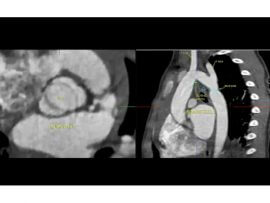
Bicuspid Aortic Arch Gothic aortic arch Mild coarctation Mohamed Gibreel , FEBR (Fellowship of Egyptian Board of Radiology ) Cardiac imaging consultant at Aswan heart center -Magdi Yacoub Foundation..
Read More
Patient with Covid 19 and LV failure refractory under mechanical ventilation to the treatment undergone central ECMO with inflow access right femoral vein and outflow access to the ascending aorta..
Read More

Joe will lecture and discuss what we have learned about the health-care delivery industry through the COVID-19 pandemic. The goal is to offer provocative opinions, based on real world data,..
Read More
Aula para liga de perfusão do Piaui sobre Perfusão infantil. Prof. Elio Carvalho é Biomédico, Microbiologista e Perfusionista pela Unicamp, CLAP e SBCEC. É perfusionista do Hospital de Clínicas da..
Read More
This case reports on a 54-year-old female patient who initially presented to the Emergency Department of a peripheral hospital with dyspnea and reduced general condition. Following temporary inpatient admission and..
Read More
Patient with BAV and supra coronary aortic dilation undergone AVR with resillia Inspiris valve and specially form of aortic reduction aortoplasty. [playlist ids="20210"] Dr.Sam Zeraatian Nejad Davani, CEO of..
Read More
Abstract Introduction The risk for renal complications from hydroxyethyl starch 130/0.42 (HES) impacts treatment decisions in patients after cardiac surgery. Objective The objective of this study was to determine the..
Read More
Abstract Objectives: To prospectively describe 1-year outcomes, with a focus on functional outcome, cognitive outcome, and the burden of anxiety, depression, and post-traumatic stress disorder, in coronavirus disease 2019 patients..
Read More
Abstract There is limited evidence as to the pharmacokinetic changes expected in adults with extracorporeal technologies. Drugs may be taken up by various components of the cardiopulmonary bypass circuit itself...
Read More
Abstract Extracorporeal Membrane Oxygenation (ECMO) is commonly associated with a high blood transfusion requirement. Jehovah’s Witness patients present a particular challenge. The impossibility of transfusing blood cells and starting anticoagulation..
Read More
Abstract When we first published our call for revisiting efforts to teach the skills of evidence-based healthcare (EBHC) back in November 2019, “COVID-19” was absent from society’s vocabulary. The aim of..
Read More
Introduction Coronavirus infectious disease 2019 (COVID-19) pandemic has resulted in global disruption of cardiac surgical practice. More worrisome is the impact of COVID on cardiac surgical patients, especially in the..
Read More
Abstract Objective Neurodevelopmental delays and frontal lobe cortical dysmaturation are widespread among children with congenital heart disease (CHD). The subventricular zone (SVZ) is the largest pool of neural stem/progenitor cells..
Read More
Abstract We recently documented that cardiopulmonary resuscitation (CPR) generates the same level of cardiac output (CO) and mean arterial pressure (MAP) during both normothermia (38 °C) and hypothermia (27 °C). Furthermore, continuous..
Read More
Abstract Introduction Cardiopulmonary bypass (CPB) is currently performed in infants and newborns for surgical correction of congenital heart diseases (CHDs).1 CPB exposes the body to extreme, nonphysiologic conditions that initiate a..
Read More
Early biochemical markers in the assessment of acute kidney injury in children after cardiac surgery
Abstract Our aim was to evaluate biochemical markers in plasma (NGAL, CysC) and urine (NGAL, KIM-1) in children's early onset of acute kidney injury after congenital heart defect surgery using..
Read More
Abstract Objective: Children requiring multiple consecutive extracorporeal membrane oxygenation (ECMO) runs likely have ongoing cardiac pathology (eg, residual lesions, myocardial dysfunction) and are exposed to increased complications and end-organ failure...
Read More
Abstract Background: The prevalence of delirium and its association with long-term outcomes of extracorporeal membrane oxygenation (ECMO) therapy have not yet been identified. We aimed to investigate the prevalence of delirium..
Read More
ABSTRACT In 1952, John Gibbon performed the first successful cardiac procedure using cardiopulmonary bypass, which turned out to be one of the most important clinical advances of that year. Cardiopulmonary..
Read More