

Abstract Dual lumen cannulas (DLCs) for venovenous extracorporeal membrane oxygenation (ECMO) therapy are introduced in the right internal jugular vein, passing through the superior vena cava and the right atrium (RA) down..
Read More
Abstract Background Although there have been several large reviews documenting the complications following intraoperative (TEE), most of these prior reports are almost 2 decades old and may not reflect current practices...
Read More
Abstract Background: Modified ultrafiltration has been touted as superior to conventional ultrafiltration for attenuating the consequences of hemodilution after cardiac surgery with cardiopulmonary bypass in children. We conducted a prospective randomized..
Read More
Abstract Background Coronary artery bypass graft (CABG) surgery is the most widely performed cardiac surgery in the United States. (TEE) is frequently used in a variety of cardiac surgical procedures, but..
Read More
Abstract Background: Although the use of protocols for "enhanced recovery after surgery" (ERAS) have been associated with improved results in different surgical specialties, only a few data are available for ERAS..
Read More
Abstract Objectives The study objectives were to describe the incidence, risk factors, and outcomes of acute kidney injury after cardiopulmonary bypass in Jamaica. Method We performed a review of the..
Read More
Abstract Objective: The impact of cardiac arrest in the donor on long-term outcomes of pediatric heart transplantation has not been studied. Methods: The UNOS database was queried for primary pediatric heart transplantation..
Read More
Abstract Extracorporeal membrane oxygenation (ECMO) is a form of organ support which is used for severe, potentially reversible respiratory, cardiac or cardiorespiratory failure. While it is associated with significant risk..
Read More
Patient with pulmonary embolism and hemodynamic instability and hypoxemia undergone CPB bicaval cannulation and single incision technique or Zeraatian's technique of pulmonary embolectomy with good post operative course. Dr.Sam..
Read More
Abstract Extracorporeal circulation (ECC) catheters have potential to be blood compatible and could be used to prevent thrombotic occlusion. Here, we produced heparin-mimicking anticoagulation PVC tubing on a large scale..
Read More
Abstract Background Extracorporeal membrane oxygenation (ECMO) has been widely used in patients with COVID-19, but uncertainty remains about the determinants of in-hospital mortality and data on post-discharge outcomes are scarce...
Read More
Abstract Conventional ultrafiltration (UF) fails to reverse satisfactorily hemodilution and the rise in total body water (TBW) seen after cardiopulmonary bypass (CPB). We have modified the technique, timing, and placement..
Read More
Abstract Previous studies suggested that contact pathway factors drive thrombosis in mechanical circulation. We used a rabbit model of veno-arterial extracorporeal circulation (VA-ECMO) to evaluate the role of factors XI..
Read More
Abstract The surgical correction of congenital heart disease using haemodilution and hypothermia with cardiopulmonary bypass (CPB) may expose patients to tissue ischaemia and initiate a systemic inflammatory response, increasing the..
Read More
Abstract Right axillary transverse minithoracotomy is not conventionally used for ventricular septal defect (VSD) repair because of complicated VSD exposure and the need for a temporary tricuspid valve leaflet detachment..
Read More
NOW AVAILABLE! Download ASE’s EchoGuideTM today and gain access to a powerful echocardiography calculator and algorithm app. EchoGuideTM provides access to over 50 calculators, algorithms, and charts based on key ASE guidelines..
Read More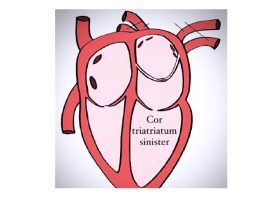
The cor triatriatum sinister is a rare congenital heart defect, the product of an embryonic defect in the incorporation of the common pulmonary vein to the left atrium, this being..
Read More
Abstract The use of heparin for anticoagulation has changed the face of cardiac surgery by allowing a bloodless and motionless surgical field throughout the introduction of cardiopulmonary bypass (CPB). However,..
Read More
Abstract Total body water (TBW) is increased after cardiopulmonary bypass (CPB) resulting in tissue oedema and organ dysfunction. Ultrafiltration has been used to reduce this accumulation of water, although conventional..
Read More
Abstract BACKGROUND To accurately quantify the costs of care for patients with transfusion-dependent thalassemia (TDT), and to evaluate cost-effectiveness of new treatments, data are required on costs of regular red..
Read More
Abstract Background This study aims to investigate the effect of cardiopulmonary bypass on antibody titers in patients vaccinated against the severe acute respiratory syndrome-coronavirus 2 (SARS-CoV-2) undergoing cardiac surgery with..
Read More
Abstract Background In patients receiving venovenous (VV) (ECMO) packed red blood cell (PRBC) transfusion thresholds are usually higher than in other patients who are critically ill. Available guidelines suggest a restrictive..
Read More
This case reports on an 81-year-old man who presented to the hospital with methicillin-sensitive Staphylococcus aureus prosthetic aortic valve endocarditis and hemodynamic instability requiring an urgent operation (EuroSCORE II 31.05%)..
Read More
Abstract Context: Viscoelastic hemostatic assays (VHA) are commonly used to identify specific cellular and humoral causes for bleeding in cardiac surgery patients. Cardiopulmonary bypass (CPB) alterations to coagulation are observable on..
Read More
Abstract Near-infrared spectroscopy (NIRS) measurements of tissue oxygen saturation (StO2) are frequently used during vascular and cardiac surgeries as a non-invasive means of assessing brain health; however, signal contamination from..
Read More
Abstract Introduction: Preoperative anemia is an important and relatively common problem in patients undergoing cardiac surgery, and its treatment is crucial in improving postoperative outcomes. The use of recombinant erythropoietin is..
Read More
Abstract The effect and safety of bivalirudin compared with heparin in patients undergoing extracorporeal membrane oxygenation (ECMO) remains unclear. Therefore, we conducted a systematic review and meta-analysis to compare the effectiveness and..
Read More
Abstract Background Minimally invasive extracorporeal circulation (MiECC) is employed as a strategy to attenuate the physiologic disturbance caused by cardiopulmonary bypass. The aim of this study was to compare the..
Read More
Abstract This in vitro experimental investigation aimed to provide a novel method for preventing blood clotting based on the electrochemical characteristics of blood. Using this method in cases such as..
Read More
Abstract Right ventricular injury (RVI) in the context of acute respiratory distress syndrome (ARDS) is well recognized as an important determinant risk factor of mortality. Veno-venous extracorporeal membrane oxygenation (VV-ECMO)..
Read More