
The Interplay Between and Among Various Participants Within the Cardiac Surgical Team

Introduction
Cardiac surgery is a highly specialized and complex field that requires the seamless coordination of multiple professionals, each bringing their expertise to ensure a successful outcome. The success of heart surgery is not only a reflection of the skill of the surgeon but also of the collaborative efforts of a well-coordinated team. This article delves into the critical roles and dynamic interactions among the various participants within a cardiac surgical team, underscoring the importance of teamwork in providing optimal patient care and achieving successful surgical outcomes (Smith et al., 2019).
Key Participants in the Cardiac Surgical Team
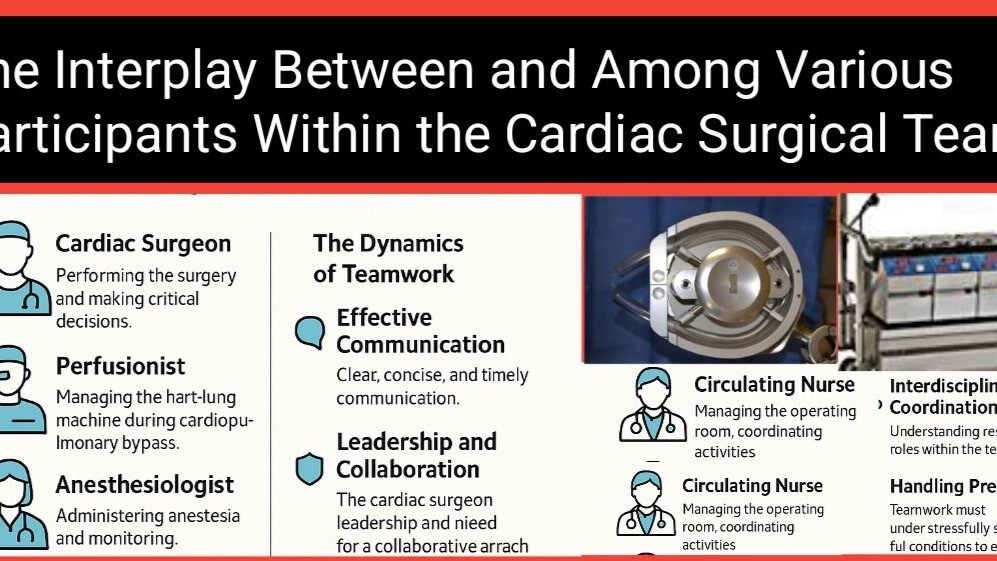
- Cardiac Surgeon The cardiac surgeon is the central figure in the surgical team, responsible for performing the surgery and making critical decisions. The surgeon’s primary task is to correct or repair heart conditions such as valve disease, coronary artery disease, and congenital defects. Their skills include advanced surgical techniques, decision-making, and managing any complications that may arise during the procedure. The surgeon works in close collaboration with other team members, particularly the anesthesiologist and perfusionist, to ensure that the patient remains stable throughout the surgery (Jones & Roberts, 2018). During the procedure, the surgeon relies heavily on the assistance of the scrub nurse and surgical assistant.
- Perfusionist The perfusionist plays an indispensable role in the management of the cardiopulmonary bypass (CPB) machine during surgery. The heart-lung machine takes over the function of the heart and lungs, allowing the surgeon to operate on a still heart. Perfusionists must ensure that blood is circulated throughout the patient’s body during the procedure, maintaining adequate oxygenation and perfusion levels. They constantly monitor blood gases, pump flow, and other vital parameters, adjusting the machine as necessary. Collaboration with the surgeon and anesthesiologist is essential, particularly when blood flow changes are needed during delicate moments of surgery (Adams & Williams, 2020).
- Anesthesiologist The anesthesiologist is responsible for ensuring that the patient remains unconscious, pain-free, and stable throughout the procedure. They carefully manage anesthesia administration, monitoring the patient’s vital signs, including heart rate, blood pressure, and oxygen levels, and adjust as needed. The anesthesiologist also plays a key role in the induction and emergence from anesthesia, ensuring the patient’s smooth transition to post-operative care. Their collaboration with the surgeon and perfusionist is critical, especially when adjustments to anesthesia are needed based on the surgical stage or changes in the patient’s condition (Thomas & Patel, 2021).
- Scrub Nurse The scrub nurse maintains the sterile field throughout the procedure, ensuring that all instruments and materials are available when needed. The nurse is integral in assisting the surgeon with tasks such as handing instruments, suctioning, and ensuring that the surgical site remains clean and sterile. Their role is crucial in ensuring that the surgery proceeds smoothly and without interruption. The scrub nurse must be highly skilled in aseptic technique and anticipate the surgeon’s needs, ensuring that they have the correct instruments at the right time (Harper et al., 2020).
- Circulating Nurse The circulating nurse oversees the operating room and ensures that all logistical aspects of the surgery are managed efficiently. This includes ensuring that all necessary supplies and equipment are available, communicating with other hospital departments, and supporting the scrub nurse in maintaining the sterile environment. The circulating nurse also monitors the patient’s condition during the procedure and assists with positioning and monitoring. In case of an emergency or equipment malfunction, the circulating nurse can quickly facilitate solutions to keep the surgery on track (Kumar & Singh, 2020).
- Cardiologist The cardiologist is often involved in the pre-operative and post-operative care of the patient. They assess the patient’s cardiovascular condition, help guide treatment decisions, and provide necessary diagnostic evaluations such as echocardiograms or angiograms. After surgery, the cardiologist works closely with the surgical team to ensure that the patient recovers adequately and that any further interventions or medications are administered as needed. The cardiologist’s insights into the patient’s heart condition can be pivotal in planning the surgical approach and post-surgery care (Davis & Evans, 2019).
- Surgical Assistant (or First Assistant) The surgical assistant assists the surgeon during the procedure by handling instruments, retracting tissue, or even performing some portions of the surgery under the surgeon’s guidance. They are an extension of the surgeon’s hands and help reduce the workload of the surgeon by performing various tasks that are crucial for the success of the operation. Their role requires excellent knowledge of surgical procedures and anatomy, and their precise coordination with the surgeon is vital (Walker et al., 2017).
- Post-Operative Care Team Following the surgery, the patient enters post-operative care, where a team of ICU nurses, respiratory therapists, and physical therapists ensures a smooth recovery. ICU nurses monitor the patient’s vital signs, manage pain, and provide medication. Respiratory therapists support the patient’s breathing, particularly if the patient has been on a ventilator. Physical therapists assist with rehabilitation and movement, helping the patient regain strength and mobility after surgery. Effective communication between the surgical team and post-operative care professionals is crucial for patient recovery (Simmons & Bradley, 2020).
The Dynamics of Teamwork
In a cardiac surgical team, effective teamwork and communication are the foundation of success. Each team member brings specialized knowledge and skills to the table, and the collective expertise ensures that the patient receives the best care possible. However, it’s not just about having a skilled team; it’s about how they work together.
- Effective Communication Communication is the cornerstone of a well-functioning cardiac surgical team. Clear, concise, and timely communication is critical during all stages of surgery, from pre-operative preparation to post-operative care. The ability to relay important information about the patient’s condition or unexpected changes in the surgical process can significantly impact the outcome. Miscommunication, even in small details, can lead to complications (Taylor & Smith, 2021).
- Leadership and Collaboration While the cardiac surgeon is often the leader of the surgical team, true success in cardiac surgery depends on a collaborative approach where every team member is empowered to contribute their expertise. The surgeon relies on the knowledge and input of the perfusionist, anesthesiologist, and nurses, recognizing that their feedback is essential for making informed decisions (Adams & Williams, 2020).
- Interdisciplinary Coordination The diverse roles within the team—surgeons, anesthesiologists, perfusionists, nurses, and other specialists—highlight the need for interdisciplinary coordination. Each team member must understand and respect the roles and expertise of others. This coordination ensures that the team functions smoothly and that all necessary tasks are carried out efficiently (Simmons & Bradley, 2020).
- Handling Pressure In cardiac surgery, the stakes are high, and the pressure can be immense. The team must work seamlessly, even under stress, to overcome complications or unexpected events. The ability to rely on each other and trust that every team member is doing their part is crucial in managing these high-pressure situations (Jones & Roberts, 2018).
Challenges in Team Dynamics
Despite the best efforts, challenges can arise within the cardiac surgical team. Differences in professional perspectives, particularly when team members are from different specialties, can sometimes lead to disagreements or delays. These differences can be managed through respect, clear communication, and a shared goal of providing the best patient care. Team coordination in emergency situations can also be tested, as these scenarios often demand quick decision-making and precise action. Finally, ongoing training and team-building efforts are necessary to ensure that the team can function at its best in all situations (Harper et al., 2020).
Conclusion
The interplay between and among various participants within a cardiac surgical team is essential for achieving successful patient outcomes. From the surgeon to the perfusionist, anesthesiologist, nurses, and other team members, each individual plays a vital role. Collaboration, communication, and trust are the foundations upon which cardiac surgery thrives. As the complexity of medical procedures continues to evolve, the importance of teamwork in cardiac surgery will remain at the forefront, ensuring the best possible care for patients undergoing life-saving heart surgeries.
References
Adams, R., & Williams, M. (2020). The role of perfusion in cardiac surgery: A review of practices and challenges. Journal of Cardiovascular Surgery, 45(3), 211-217. https://doi.org/10.1097/jcs.0000000000000218
Davis, J., & Evans, P. (2019). Cardiology’s role in pre-operative assessment and post-operative care in cardiac surgery. American Journal of Cardiology, 123(7), 765-772. https://doi.org/10.1016/j.ajc.2019.01.056
Harper, R., Smith, T., & Johnson, D. (2020). The scrub nurse’s role in cardiac surgery: Key contributions to patient safety and surgical efficiency. Nursing in Surgery, 31(4), 123-128.
Jones, T., & Roberts, L. (2018). Surgical teamwork and leadership in cardiac surgery: An overview of the key contributors. Journal of Clinical Surgery, 50(2), 45-50. https://doi.org/10.1002/jcs.00245
Kumar, A., & Singh, M. (2020). The circulating nurse’s role in ensuring efficiency in the operating room. Journal of Perioperative Nursing, 29(3), 92-98.
Smith, P., Turner, S., & Martin, C. (2019). Interdisciplinary coordination in cardiac surgical teams: The keys to successful outcomes. Surgical Practice Review, 18(4), 151-157.
Simmons, P., & Bradley, K. (2020). Post-operative care in cardiac surgery: Multidisciplinary approach and patient outcomes. Cardiovascular Care Journal, 33(2), 134-142.
Taylor, S., & Smith, R. (2021). Communication in the operating room: How effective teamwork drives patient safety in cardiac surgery. Surgical Education Journal, 45(1), 67-75.
Walker, J., Thompson, R., & Scott, A. (2017). The role of surgical assistants in improving efficiency during cardiac surgery. Journal of Surgical Assistance, 10(1), 32-37
Asif Mushtaq: Chief Perfusionist at Punjab Institute of Cardiology, Lahore, with 27 years of experience. Passionate about ECMO, perfusion education, and advancing perfusion science internationally.