


Abstract Background Neuroprotection during aortic arch surgery often involves hypothermia and the use of adjunctive cerebral perfusion. While antegrade cerebral perfusion (ACP) is favored for extended hypothermic circulatory arrest (HCA),..
Read More
Abstract Objectives To identify independent predictors of 30-day mortality, adverse discharge, and length of hospital stay following a perioperative stroke among cardiac surgical patients, and to measure trends in outcomes..
Read More
Abstract Stroke and intracranial hemorrhage (ICH) are serious complications that are difficult to manage during surgery for active infectious endocarditis (AIE). Relevant society guidelines still recommend delaying the cardiac surgery..
Read More
Abstract Background Perioperative stroke after cardiac surgical procedures carries significant morbidity. Dual with electroencephalography (EEG) and somatosensory-evoked potentials detects cerebral hypoperfusion and predicts postoperative stroke in noncardiac procedures. We further evaluated..
Read More
Abstract Background While venoarterial extracorporeal membrane oxygenation (V‑A ECMO) provides lifesaving supportfor cardiopulmonary failure, complications may increase mortality, with few studies focusing on ischemic/hemor‑rhagic stroke. We aimed to determine the..
Read More
Abstract Background The rates, outcomes, and long-term trends of stroke complicating the use of extracorporeal membrane oxygenation (ECMO) have been inconsistently reported. We compared the outcomes of pediatric ECMO patients..
Read More
Abstract Stroke has potentially devastating consequences for patients receiving veno-arterial extracorporeal membrane support (VA-ECMO). Arterial cannulation sites for VA-ECMO include the ascending aorta, axillary artery, and femoral artery. However, the..
Read More
Abstract Objective Stroke remains a potentially devastating complication of aortic arch intervention. The value of neurophysiologic intraoperative monitoring (NIOM) in the early identification of stroke is unclear. We evaluated the..
Read More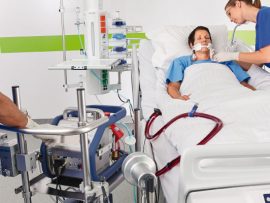
Abstract Extracorporeal membrane oxygenation is challenged by several potential complications. Adverse neurologic events such as intracranial hemorrhages, strokes, seizures, and brain death are among the most detrimental and even catastrophic..
Read More
Abstract Objectives The aim of this study was to evaluate the prognostic impact of cerebral regional oxygen saturation (crSO2) in patients undergoing surgery for Stanford type A aortic dissection (TAAD)...
Read More
Abstract Objective: Exposure to cerebral emboli is ubiquitous and may be harmful in cardiac surgery utilizing cardiopulmonary bypass. This was a prospective observational study aiming to compare emboli exposure in..
Read More
Abstract Cardioaortic embolism to the brain accounts for approximately 15–30% of ischaemic strokes and is often referred to as ‘cardioembolic stroke’. One-quarter of patients have more than one cardiac source..
Read More
Very interesting presentation and discussion on the incidence of stroke in cardiac surgery and the development of Cerebral Embolic Protection devices.
Read More
Abstract Introduction: Stroke is a complication that causes considerable morbidity and mortality during the heart surgery postoperative period (incidence: 1.3 to 5%; mortality: 13 to 41%). Models for assessing the..
Read More
Abstract Introduction: Cardiopulmonary bypass (CPB) is associated with hyperlactatemia, which leads to adverse clinical outcomes. No study has examined the effect of different clamping techniques on postoperative hyperlactatemia (PHL). Thus,..
Read More
Effect of Cerebral Embolic Protection Devices on CNS Infarction in Surgical Aortic Valve Replacement
Abstract Importance Stroke is a major complication of surgical aortic valve replacement (SAVR). Objective To determine the efficacy and adverse effects of cerebral embolic protection devices in reducing ischemic central..
Read More
Abstract Objective To determine the impact of different strategies on the incidence of cerebral embolic events during (CABG). Methods Between 2012 and 2015, 142 patients with low-grade (epiaortic ultrasound grade I/II) undergoing primary..
Read More
Abstract Introduction This study was planned to investigate the impact of severe bleeding and on the development of stroke after . Methods This includes 2357 patients undergoing isolated CABG from the prospective European (E-CABG)..
Read More
Abstract Objective Silent brain lesions are known to occur after coronary artery bypass grafting (CABG). The aim of this study was to seek the incidence rate, the influence of procedures,..
Read More
Abstract To prevent embolic stroke during thoracic endovascular aortic repair, we have adopted the brain isolation technique since June 2014 in 9 selected high-risk patients (9/134: 6.7%) having ulcerated or..
Read More
Abstract Mechanical support devices have revolutionized the management of circulatory failure. This has been met by a dramatic increase in ventricular assist device (VAD) utilization in children over the last..
Read More
Abstract Objective We studied patients who had experienced a stroke in the postoperative period of cardiac surgery, aiming to analyse their progression and determine the factors that may influence prognosis..
Read More