


Introduction Cardiopulmonary bypass (CPB) is a cornerstone of modern cardiac surgery, facilitating complex intracardiac procedures by temporarily assuming the function of the heart and lungs. One of the most critical..
Read More
Introduction Cardiopulmonary bypass (CPB) is essential in cardiac surgery, but high-risk patients—such as pediatric, geriatric, and renal-compromised individuals—require specialized priming strategies to optimize outcomes. A one-size-fits-all approach can lead to..
Read More
Introduction Cardiopulmonary bypass (CPB) is a life-saving technology that temporarily replaces the heart and lungs during cardiac surgery. The choice of priming solution plays a crucial role in maintaining hemodynamic..
Read More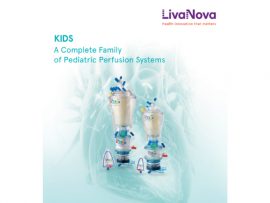
Abstract Background and Objectives Neonatal cardiac surgery requires careful consideration of cardiopulmonary bypass (CPB) priming fluid composition due to small blood volume and immature physiology. This study investigated the impact..
Read More
Abstract Introduction Despite technological advances, the use of homologous blood to prime the cardiopulmonary bypass (CPB) circuits of infants under 10 kg remains common. However, such rapid massive transfusion may increase..
Read More
Abstract Objectives The FUWAI-SAVE system is a modified low-priming cardiopulmonary bypass (CPB) system. The study aimed to explore whether the FUWAI-SAVE system can reduce the perioperative blood transfusion and its..
Read More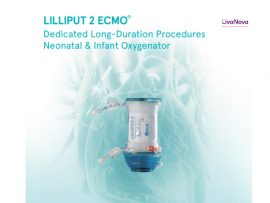
Abstract Extracorporeal membrane oxygenation (ECMO) circuit priming procedures are crucial for removing air bubbles and the albumin in priming solution is thought to create a protective layer against blood exposure..
Read More
Abstract Background Acute microcirculatory perfusion disturbances and organ edema are important factors leading to organ dysfunction during cardiac surgery with cardiopulmonary bypass (CPB). Priming of the CPB system with crystalloid..
Read More
Abstract Objective Compared with fresh frozen plasma (FFP), Omniplasma has been attributed to an increased coagulation potential and an increased fibrinolytic potential. This study aimed to compare Omniplasma and FFP..
Read More
Abstract Background In on-pump cardiac surgery, the albumin priming strategy could maintain colloid osmotic pressure better than crystalloid solutions and reduce excessive perioperative fluid balance. However, a high-quality meta-analysis is..
Read More
Abstract Objectives To assess the efficacy and safety of albumin as pump priming fluid in cardiac surgery. Design Meta-analysis of randomized controlled trials. Setting Each study was conducted in a..
Read More
Abstract Objectives Colloids are added to the priming solution of the cardiopulmonary bypass (CPB) pump to maintain colloid osmotic pressure and prevent fluid overload. This study aimed to compare the..
Read More
Abstract Background Cardiopulmonary bypass (CPB) is frequently employed for cardiac surgery, and selecting a suitable priming fluid is a prerequisite for CPB. Currently, the commonly used priming fluids in clinics..
Read More
Abstract Background: Infants < 10 kg undergoing cardiac surgery with cardiopulmonary bypass (CPB) may receive either fresh frozen plasma (FFP) or other solutions in the CPB priming volume. The existing..
Read More
Abstract Introduction: The aim of this study was to determine the effect of fresh frozen plasma (FFP) for priming of cardiopulmonary bypass (CPB) circuit on rotational thromboelastometry (ROTEM) and transfusion in..
Read More
Abstract Background The use of crystalloid priming for extracorporeal circuit in adult cardiac surgery causes inevitable haemodilution. The haemodilution can be reduced by using methods such as retrograde autologous priming..
Read More
Abstract Background The adverse effects of cardiopulmonary bypass during open cardiac surgery, including hemodilution, seem to be inevitable, especially for patients who generally have a relatively lower BMI with relatively..
Read More
Abstract Introduction: Retrograde autologous priming (RAP) of the cardiopulmonary bypass (CPB) circuit could reduce the degree of haemodilution associated with priming with acellular solutions. However, there is no strong evidence to..
Read More
Abstract Extracorporeal membrane oxygenation (ECMO) is a last resort therapy for patients with terminal respiratory failure. In the current worldwide surge of critically ill patients with novel coronavirus disease (COVID-19),..
Read More
Abstract The Priming volume of the oxygenators has been reduced by 75% during the last two decades and it is now possible to go safely on bypass with a priming..
Read More
Abstract The current practice of cardiopulmonary bypass (CPB) requires a preoperative priming of the circuit that is frequently performed with crystalloid solutions. Crystalloid priming avoids massive embolism but is unable..
Read More
Joe discusses fluid balance, fluid resuscitation and fluid selection in cardiac surgery and the critically ill.
Read More
Retrograde Autologous Priming in Cardiac Surgery: Results From a Systematic Review and Meta-analysis
Abstract Background: Retrograde autologous priming (RAP) before cardiopulmonary bypass (CPB) may minimize allogeneic red cell transfusion. We conducted a systematic review of the literature to examine the impact of RAP..
Read More
Abstract Background: Isolated limb perfusion (ILP) is a treatment option for malignancies localized to an extremity and is performed by surgical isolation of the limb which is connected to an extracorporeal..
Read More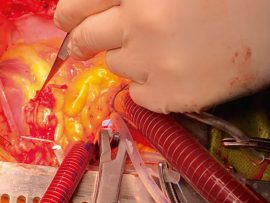
Abstract Objectives: Minimal extracorporeal circulation techniques and systems (MiECC) may reduce the negative side effects of conventional extracorporeal circulation (ECC). However, it is still unclear as to what this is caused..
Read More