
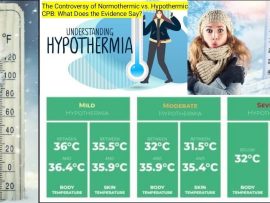

Introduction Cardiopulmonary bypass (CPB) has transformed cardiac surgery, allowing for safe and controlled procedures on the arrested heart. However, a long-standing debate in perfusion science is whether CPB should be..
Read More
Abstract Study Objective To determine the association of practitioner dashboard feedback of intraoperative and temperature control on maintenance of and normothermia. Design Retrospective review. Setting Single institution. Patients Patients over the age of..
Read More
Abstract Background Either deep hypothermia with circulatory arrest or hypothermic perfusion with antegrade selective cerebral perfusion is used during the Norwood procedure for hypoplastic left heart syndrome. Normothermic perfusion has..
Read More
Abstract BACKGROUND The evidence for temperature control for comatose survivors of cardiac arrest is inconclusive. Controversy exists as to whether the effects of hypothermia differ per the circumstances of the..
Read More
Abstract Importance The optimal approach to the use of venoarterial extracorporeal membrane oxygenation (ECMO) during cardiogenic shock is uncertain. Objective To determine whether early use of moderate hypothermia (33-34 °C) compared with..
Read More
Abstract BACKGROUND Targeted temperature management is recommended for patients after cardiac arrest, but the supporting evidence is of low certainty. METHODS In an open-label trial with blinded assessment of outcomes,..
Read More
Abstract Objective: In order to assess the current status of temperature management during cardiopulmonary bypass (CPB) in China and, thereby, implement standardized management protocols, the authors carried out a national..
Read More