


Abstract Background Children with end-stage lung disease are commonly managed with extracorporeal life support (ECLS) as a bridge to lung transplantation. A pumpless artificial lung (MLung) is a portable alternative..
Read More
Abstract Purpose Investigate inhaled nitric oxide’s influence on mortality rates, mechanical ventilation and cardiopulmonary bypass duration, and length of stay in the intensive care unit and hospital when administered during..
Read More
Abstract Background and aims: Cardiopulmonary bypass (CPB) utilized for cardiac surgeries has been associated with significant mortality and adverse outcomes. The benefits of incorporating nitric oxide (NO) into the CPB..
Read More
Abstract Background Extracorporeal life support (ECLS) has extensive applications in managing patients with acute cardiac and pulmonary failure. Two primary modalities of ECLS, cardiopulmonary bypass (CPB) and extracorporeal membrane oxygenation..
Read More
Abstract BACKGROUND: Right ventricular failure (RVF) is a leading driver of morbidity and mortality after major cardiac surgery for advanced heart failure, including orthotopic heart transplantation and left ventricular assist..
Read More
Abstract Objective Several human studies have associated nitric oxide administration via the cardiopulmonary bypass circuit with decreased incidence of cardiopulmonary bypass–associated acute kidney injury, but histopathologic and serologic evidence of..
Read More
Abstract Nitric oxide (NO) incorporation into the sweep gas of the extracorporeal life support (ECLS) circuit has been proposed as a strategy to ameliorate the insults caused by the systemic..
Read More
Abstract Importance In children undergoing heart surgery, nitric oxide administered into the gas flow of the cardiopulmonary bypass oxygenator may reduce postoperative low cardiac output syndrome, leading to improved recovery and..
Read More
Summary Current knowledge regarding mechanisms underlying cardiovascular complications in patients with COVID-19 is limited and urgently needed. We shed light on a previously unrecognized mechanism and unravel a key role..
Read More
Abstract Background: Clot formation on foreign surfaces of extracorporeal membrane oxygenation systems is a frequent event. Herein, we show an approach that mimics the enzymatic process of endogenous nitric oxide..
Read More
Abstract Objective To compare the incidence and severity of acute kidney injury following open heart surgery with cardiopulmonary bypass in children after administration of exogenous nitric oxide. Design Retrospective cohort..
Read More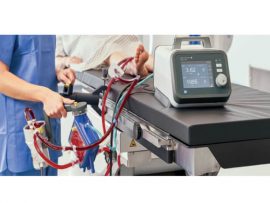
Abstract The aim of the study was to test the use of gaseous nitric oxide added to the extracorporeal membrane oxygenation (ECMO) system for treating critical acute heart failure after..
Read More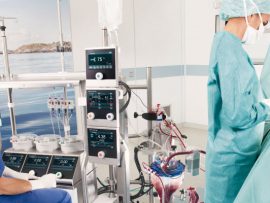
Abstract Introduction Cardiopulmonary bypass (CPB) is currently performed in infants and newborns for surgical correction of congenital heart diseases (CHDs).1 CPB exposes the body to extreme, nonphysiologic conditions that initiate a..
Read More
Abstract Background (NO) is an important signalling molecule in the cardiovascular system with protective properties in ischaemia–reperfusion injury. Inorganic nitrate, an oxidation product of endogenous NO production and a constituent..
Read More
Abstract Background: Myocardial preconditioning using volatile anesthetics such as isoflurane and sevoflurane have beneficial effects in decreasing morbidity in cardiac surgical patients. Studies in animal models have indicated that reactive oxygen..
Read More
Abstract Objectives: Cardiac surgery using cardiopulmonary bypass frequently provokes a systemic inflammatory response syndrome. This can lead to the development of low cardiac output syndrome (LCOS). Both of these can..
Read More
Abstract Extracorporeal membrane oxygenation is a life-saving intervention, but bleeding complications are frequent. Given that the combination of platelet loss and dysfunction is a major contributor to this acquired bleeding..
Read More
Abstract Clotting, anticoagulation, platelet consumption, and poor platelet function are major factors in clinical extracorporeal circulation (ECC). We have shown that nitric oxide-releasing (NOReL) coatings prevent thrombosis in a rabbit..
Read More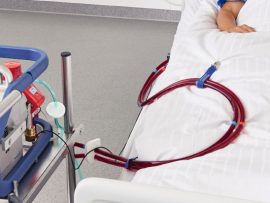
Abstract Low cardiac output syndrome and the systemic inflammatory response are consequences of the cardiac surgical perioperative course. The mechanisms responsible are multifactorial, but recent studies have shown that nitric..
Read More
Abstract AIM To evaluate the safety and efficacy of inhaled milrinone in acute respiratory distress syndrome (ARDS). METHODS Open-label prospective cross-over pilot study where fifteen adult patients with hypoxemic failure..
Read More
Abstract We describe our experience of 30 consecutive children supported with ECMO and receiving 20 ppm of nitric oxide in the oxygenator of the ECMO circuit. Administration of nitric oxide..
Read More
Abstract In this letter, the innate ability of nitric oxide (NO) to inhibit platelet activation/adhesion/thrombus formation is employed to improve the hemocompatibility and in vivo accuracy of an intravascular (IV) potentiometric PCO2 (partial pressure..
Read More
Abstract Purpose Cardiopulmonary bypass induces an ischaemia–reperfusion injury and systemic inflammatory response, which contributes to low cardiac output syndrome following cardiac surgery. Exogenous nitric oxide during cardiopulmonary bypass has shown..
Read More
Abstract Cardiopulmonary bypass causes a systemic inflammatory response reaction that may contribute to postoperative complications. One cause relates to the air/blood interface from the extracorporeal circuit. The modulatory effects of..
Read More
Abstract Background The effect of nitric oxide (NO) on renal function is controversial in critical illness. We performed a systematic meta-analysis and trial sequential analysis to determine the effect of..
Read More
Abstract In a randomized clinical trial in China of 244 adults undergoing elective, multiple valve replacement surgery, Lei and colleagues administered 80 parts per million nitric oxide (NO) gas during..
Read More
Abstract Objectives The aim of this pilot study was to elucidate the effects of exogenous (NO) supply to the circuit for cardioprotection against during (CABG) with (CPB). Methods A total of 60 patients with scheduled for..
Read More
Abstract Acute kidney injury (AKI) is a common and serious complication of cardiac surgical procedures that require prolonged (>90 min) cardiopulmonary bypass (CPB) (, ). Although the presence of AKI after..
Read More
Abstract Background: Vasopressin is essential for cardiovascular homeostasis, acting via the kidney to regulate water resorption, on the vasculature to regulate smooth muscle tone, and as a central neurotransmitter, modulating..
Read More
Abstract Background The role of vascular endothelial growth factor (VEGF)-induced 3 different nitric oxide synthase (NOS) isoforms in lung development and injury in the newborn (NB) lung are not known...
Read More