
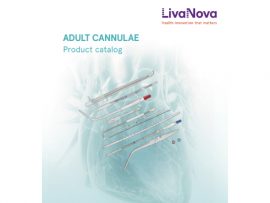

Abstract OBJECTIVES Peripheral cannula selection in minimally invasive cardiac surgery (MICS) is crucial, as venous drainage limitations during cardiopulmonary bypass (CPB) can impair end-organ perfusion and overall outcomes. This study..
Read More
Abstract OBJECTIVES Peripheral cannula selection in minimally invasive cardiac surgery (MICS) is crucial, as venous drainage limitations during cardiopulmonary bypass (CPB can impair end-organ perfusion and overall outcomes. This study..
Read More
Abstract Background Minimally invasive thoracotomies to repair selected congenital heart defects are considered only a cosmetic alternative approach by many; however, they represent the routine alternative in centers of expertise...
Read More
Abstract Introduction Sternotomy has been the most common approach for the correction of congenital cardiac defects, and questions arise surrounding the safety, feasibility, and cost-effectiveness of implementing minimally invasive techniques..
Read More
Abstract This case report discusses a rare and critical perfusion accident during a minimally invasive coronary artery bypass grafting (CAGB) procedure, where a Eurosets Skipper oxygenator burst 3 minutes after..
Read More
Abstract OBJECTIVES Minimally invasive cardiac surgery (MICS) struggles with effective caval isolation and cannulation for cardiopulmonary bypass (CPB). We aimed to develop a novel MICS venous cannula, eliminating external manipulations...
Read More
Abstract Objectives: Sternotomy is rarely performed for veterinary therapeutic or recovery models in quadrupeds because of difficulties with breathing, ambulation, and pain control. Central cannulation for cardiopulmonary bypass (CPB) is infrequent..
Read More
Abstract Objective Minimally invasive extracorporeal circulation has been shown to be non-inferior or even superior to conventional cardiopulmonary bypass circuits in isolated coronary artery bypass grafting, but there is little..
Read More
Abstract Background Minimally invasive cardiac surgery (MICS) has garnered significant attention for its potential benefits, including decreased surgical trauma, accelerated recovery, and improved aesthetic outcomes. This case series aims to..
Read More
Abstract Objectives Minimally invasive cardiac surgery techniques are increasingly used but have longer cardiopulmonary bypass time, which may increase inflammatory response and negatively affect coagulation. Our aim was to compare..
Read More
Abstract Background Conventional coronary artery bypass grafting (CCABG) tends to cause severe complications in patients with comorbid Coronary Artery Diseases (CAD) and diabetes. On the other hand, the Minimally Invasive..
Read More
Abstract Background and Objectives: Minimally invasive cardiac surgery (MICS) has been developing since 1996. Peripheral cannulation is required to perform MICS, and good venous drainage and a bloodless field are..
Read More
Abstract Background The quality of a myocardial protection of a single-dose del Nido cardioplegia versus multiple dose blood-based cardioplegia on myocardial injury, outcomes and operative times in patients undergoing minimally..
Read More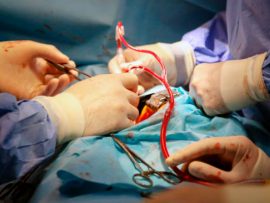
Abstract OBJECTIVES Minimally invasive access has become the preferred choice in mitral and/or tricuspid valve surgery. Reported outcomes are at least similar to classic sternotomy although aortic cross-clamp times are..
Read More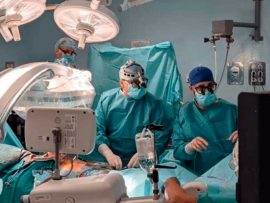
Abstract Background Insufflation of carbon dioxide (CO2) into the operative field to prevent cerebral or myocardial damage by air embolism is a well known strategy in open-heart surgery. However, here..
Read More
Abstract Traditionally, cardiac surgery has been practiced primarily through a median sternotomy; however, as instrumentation and experience continue to advance at exponential rates, the field of minimally invasive cardiac surgery..
Read More
Part of my presentation at AATS 2022 that I miss due to Marital Law.
Read More
Abstract Background There is now extension of minimally invasive techniques to involve concomitantly aortic and mitral valves through a single small incision. We share our experience in such surgeries through..
Read More
Educational video. 1. Thrombus or tumor? Even with MRI investigation we had questions: Does this mass contain myxoma? and How much of this mass is thrombus itself? 2. Mindset of..
Read More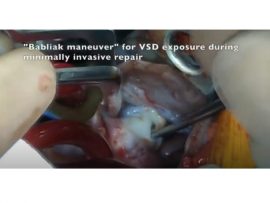
Educational video. The less traumatic and best cosmetic approach for children with congenital heart defects is Right Axillary Mini-Thoracotomy. The problem with complex defects repair through the Right Axillary MIni..
Read More
Ascending aorta could be safely reached in every patient through the 4th ICS. Access to the ascending aorta is one of the cornerstones of TCRAT technique - Total Coronary Revascularization..
Read More
MINIMALLY INVASIVE PERFUSIONINSPIRE® Min.I. is an innovative Minimally Invasive perfusion system bringing safety to the system level.INSPIRE® Min.I. allows a low hemodilution cardiopulmonary bypass (CPB).INSPIRE® Min.I. allows clinicians the choice..
Read More
Minimally invasive beating SVC as well as Cavoatrial junction endocarditis repair and dialysis catheter removal. Dr.Sam Zeraatian Nejad Davani, CEO of rockingham medical research ADKWA center as well as Head..
Read More
We are presenting the case of the minimally invasive total repair of Tetralogy of Fallot in a 2 months old male patient.
Read More
Abstract Objective The safety of minimally invasive mitral valve surgery (MIMVS) in elderly patients is still debated. Our objective was to perform a systematic review and meta-analysis of studies comparing..
Read More
This video demonstrates a case report of a 33-year-old man diagnosed with Tetralogy of Fallot (ToF). He had progressive exertional dyspnea with oxygen saturation 91% and NYHA class II-III. The..
Read More
Joe Basha, CCP lectures on the technology and use of minimally or less invasive hemodynamic monitoring of the Critical Care Unit patient and the advantages and limitations of less invasive..
Read More
Abstract Many centers reported positive outcome after left ventricular assist devices (LVADs) implantation using a minimally invasive approach. The main drawback of this minimally invasive approach is the feasibility of..
Read More
Abstract We describe an adverse event during minimally invasive cardiac surgery that resulted in a multi-disciplinary review of intra-operative errors and the creation of a procedural checklist. This checklist aims..
Read More
CURRENTLY, MINIMALLY INVASIVE cardiac surgery (MICS) is very popular. In most cases, cardiopulmonary bypass (CPB) is used with femoral arterial cannulation, and the whole body is perfused in a retrograde..
Read More