


Abstract Postinfarct ventricular septal defect (PIVSD) is associated with high mortality and the management of these patients has been a challenge with little improvement in outcomes. We commenced a protocol..
Read More
Abstract The Impella mechanical circulatory support (MCS) system is a catheter-based continuous flow cardiac assist device that is widely used in the treatment of cardiogenic shock in medical and surgical cardiac intensive..
Read More
Abstract Introduction Mechanical circulatory support (MCS) devices are increasingly used as a treatment option in resuscitation or in patients with cardiogenic shock (CS). Prophylactic implantation in high-risk percutaneous coronary interventions..
Read More
Survival and Factors Associated with Survival with Extracorporeal Life Support During Cardiac Arrest
Abstract The survival rate after cardiac arrest (CA) remains low. The utilization of extracorporeal life support is proposed to improve management. However, this resource-intensive tool is associated with complications and..
Read More
Abstract OBJECTIVES Implanting a durable left ventricular assist device (LVAD) in a patient on extracorporeal life support (ECLS) is challenging. The goal of this study was to compare..
Read More
Abstract Background Age over 70 years seems to confer poor prognosis for patients under mechanical circulatory support (MCS). Advanced age is usually a relative contraindication. Our objective was to assess the..
Read More
Abstract Background Single-center studies suggest that implementation of multidisciplinary (CS) teams is associated with improved CS survival. Objectives The aim was to characterize practice patterns and outcomes in the management of..
Read More
Abstract Objective: Children requiring multiple consecutive extracorporeal membrane oxygenation (ECMO) runs likely have ongoing cardiac pathology (eg, residual lesions, myocardial dysfunction) and are exposed to increased complications and end-organ failure...
Read More
Abstract Objective: Children requiring multiple consecutive extracorporeal membrane oxygenation (ECMO) runs likely have ongoing cardiac pathology (eg, residual lesions, myocardial dysfunction) and are exposed to increased complications and end-organ failure...
Read More
Abstract Background: Adverse neurological events during extracorporeal membrane oxygenation (ECMO) are common and may be associated with devastating consequences. Close monitoring, early identification and prompt intervention can mitigate early and..
Read More
Abstract Venoarterial extracorporeal membrane oxygenation (ECMO) is used in cardiogenic shock refractory to inotropic support and intra-aortic balloon pump (IABP) support. Peripheral ECMO can lead to ventricular distention, and IABP..
Read More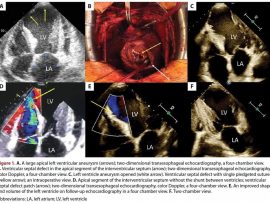
Referring to the discussion on effective methods of treatment for patients with a post-infarction left ventricular aneurysm and a ventricular septal defect (VSD) [1], we present the case of a..
Read More
Abstract Improvements in the care of children with cardiomyopathy, CHDs, and acquired heart disease have led to an increased number of children surviving with advanced heart failure. In addition, the..
Read More
Abstract Left ventricular (LV) distention and pulmonary congestion are major complications inherent to venoarterial extracorporeal membrane oxygenation (ECMO). This study aimed to quantitatively compare the hemodynamic differences between common circulatory..
Read More
Abstract Thrombosis is a potentially life-threatening complication in veno-arterial extracorporeal membrane oxygenation (ECMO) circuits, which may originate from the drainage cannula due to unfavorable blood flow dynamics. This study aims to..
Read More
Abstract The rationale for mechanical circulatory support (MCS) in cardiogenic shock is to restore cardiac output in selected patients when critically low or in case of refractory cardiac arrest. Furthermore,..
Read More
Abstract Background: The aim of this study was to evaluate the ipsilateral lower extremity (ILE) outcomes of patients who underwent bedside angiography via the distal perfusion catheter while on femoral..
Read More
Abstract Extracorporeal membrane oxygenation (ECMO) is increasingly deployed to provide percutaneous mechanical circulatory support despite incomplete understanding of its complex interactions with the failing heart and its effects on hemodynamics and perfusion...
Read More
Abstract The field of left ventricular assist devices (LVADs) witnessed an important boost after the introduction of the third-generation durable mechanical circulatory support devices. Among the technical improvements which contributed..
Read More
Abstract Extracorporeal membrane oxygenation (ECMO) has emerged as an invaluable tool for bridging severe isolated or combined failure of lung and heart. Due to massive technical improvements, the application of..
Read More
Abstract This article is one of ten reviews selected from the Annual Update in Intensive Care and Emergency medicine 2016. Other selected articles can be found online at . Further information..
Read More
Abstract Objective There are few data on the role of in patients with end-stage heart failure supported by mechanical . The aim of our study was to investigate predictors for in patients with..
Read More
Abstract Background: Veno-arterial (V-A) extracorporeal membrane oxygenation (ECMO) is increasingly being used for patients with refractory cardiopulmonary failure. This study evaluates the short-term (to discharge) and longer-term (1 year) survival..
Read More
Abstract Mechanical circulatory support devices have been approved as bridge to transplantation, as bridge to recovery, or as destination therapy to treat end-stage heart failure. The perioperative challenges for the..
Read More
Summary (CS) is a major challenge in contemporary cardiology. Despite a better understanding of the of CS, its management has only improved slightly. The prevalence of CS has remained stable over..
Read More
Abstract Introduction: Prophylactic intra-aortic balloon counterpulsation (pIABC) is recommended for high-risk patients undergoing coronary artery bypass grafting (CABG) surgery. Criteria for high-risk patients benefiting from pIABC are unclear. This study..
Read More
Abstract Extracorporeal membrane oxygenation (ECMO) has been used increasingly for both respiratory and cardiac failure in adult patients. Indications for ECMO use in cardiac failure include severe refractory cardiogenic shock,..
Read More
Venoarterial extracorporeal membrane oxygenation has emerged as a viable treatment for patients in cardiogenic shock with biventricular failure and pulmonary dysfunction. Advances in pump and oxygenator technology, cannulation strategies, patient selection and management, and durable mechanical circulatory support have..
Read More