


Abstract Ex vivo hemocompatibility testing is a vital element of preclinical assessment for blood-contacting medical devices. Current approaches are resource intensive; thus, we investigated the feasibility of accelerating hemocompatibility testing by standardizing..
Read More
Abstract Extracorporeal membrane oxygenation is a life-saving support therapy in the case of cardiopulmonary refractory failure. Its use is associated to complications due to the presence of artificial surfaces and..
Read More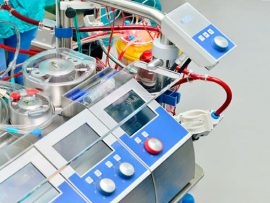
Abstract Extracorporeal circulation (ECC) procedures, such as cardiopulmonary bypass (CPB) and extracorporeal membrane oxygenation (ECMO), take over the function of one or more organs, providing clinicians time to treat underlying pathophysiological..
Read More
Abstract Hemolysis usually happens instantly when red blood cells (RBCs) rupture under a high shear stress. However, it is also found to happen gradually in the extracorporeal membrane oxygenation (ECMO)..
Read More
Abstract The Acute Respiratory Distress Syndrome (ARDS) is common in patients on the Intensive Care Unit and associated with significant mortality rates. In situations of severe respiratory insufficiency and failure..
Read More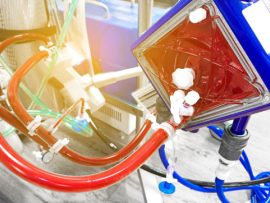
Abstract Objective: To describe factors associated with hemolysis during pediatric extracorporeal membrane oxygenation (ECMO), and the relationships between hemolysis, complications and mortality. Design: Secondary analysis of data collected prospectively by..
Read More
Abstract In vitro testing of hemolysis is essential for the validation and development of ventricular assist devices. However, as many factors influence hemolysis, such tests’ inter- and intralaboratory reproducibility is poor...
Read More
Abstract OBJECTIVES: To determine potential risk factors for severe hemolysis during pediatric cardiopulmonary bypass and examine whether supraphysiologic levels of oxygen and cardiopulmonary bypass duration are associated with hemolysis. DESIGN: ..
Read More
Abstract Introduction Extracorporeal membrane oxygenation (ECMO)–associated hemolysis still represents a serious complication. The present study aimed to investigate those predictive factors, such as flow rates, the use of anticoagulants, and..
Read More
Abstract The Impella CP (Abiomed Inc., Danvers, MA) is widely used in cardiac catheterization laboratories for patients presenting with cardiogenic shock, but it is also known to cause significant hemolysis. The risk..
Read More
Abstract Extracorporeal circulation (ECC) procedures, such as cardiopulmonary bypass (CPB) and extracorporeal membrane oxygenation (ECMO), take over the function of one or more organs, providing clinicians time to treat underlying..
Read More
Abstract Purpose Patients with (ECLS) are at risk for hemolysis-related complications. Therefore, monitoring of free hemoglobin (fHb) levels is indicated. Conventional methods for fHb are laborious and not always available. Here..
Read More
Abstract Background Elevated plasma free hemoglobin is associated with multi-organ injury. In this context, minimally invasive extracorporeal technologies represent a way to reduce this complication following cardiac surgery. Methods We..
Read More
Abstract Blood pumps have been increasingly used in mechanically assisted circulation for ventricular assistance and extracorporeal membrane oxygenation support or during cardiopulmonary bypass for cardiac surgery. However, there have always..
Read More
Abstract Objective The objective was to determine the optimal cell saver device settings (infusion rate and wash rate) at which hematocrit is preserved and potassium and lactate are removed from..
Read More
Abstract Highlights • Hemolysis due to CPB leads to an increase of serum free Hemoglobin(fHb) level. • Increase of serum fHb level had an independent association with postoperative AKI. •..
Read More
Abstract Giani et al. found low levels of carboxyhemoglobin (COHb) in a cohort of patients supported on veno-venous extracorporeal membrane oxygenation (VV ECMO) at their center. It is noteworthy that even on..
Read More
Abstract The American Society for Testing and Materials (ASTM) F1841 standard for the assessment of hemolysis in blood pumps recommends using phosphate-buffered saline (PBS) for hemodilution to standardize hematocrit (HCT)...
Read More
Abstract Supraphysiologic high shear stresses created in calcific aortic stenosis (AS) are known to cause hemostatic abnormalities, however, the relationship between the complex blood flows over the severity of AS..
Read More
Abstract Objective: The aim was to evaluate the performance of a newly developed magnetically suspended centrifugal pump head intended for use as a ventricular assistance device with a newly developed..
Read More
Platelet, Red Cell, and Endothelial Activation and Injury During Extracorporeal Membrane Oxygenation
Abstract Extracorporeal membrane oxygenation (ECMO) can be lifesaving but suffers from high rates of bleeding and repeated transfusions. Current monitoring of blood cell damage during ECMO is limited to platelet..
Read More
Abstract Hemolysis is a common complication of extracorporeal membrane oxygenation (ECMO) support and is associated with increased mortality. Frequent monitoring of markers of hemolysis is performed at ECMO centers. We..
Read More
Abstract Introduction: We have been developing a closed-circuit cardiopulmonary bypass (CPB) system (“Dihead CPB”) for application during coronary artery bypass grafting (CABG) and valve surgery. To strive for minimal hemolysis..
Read More
Abstract Introduction: We have been developing a closed-circuit cardiopulmonary bypass (CPB) system (“Dihead CPB”) for application during coronary artery bypass grafting (CABG) and valve surgery. To strive for minimal hemolysis..
Read More
Abstract Introduction: We have been developing a closed-circuit cardiopulmonary bypass (CPB) system (“Dihead CPB”) for application during coronary artery bypass grafting (CABG) and valve surgery. To strive for minimal hemolysis..
Read More
Abstract In a randomized clinical trial in China of 244 adults undergoing elective, multiple valve replacement surgery, Lei and colleagues administered 80 parts per million nitric oxide (NO) gas during..
Read More
Abstract Acute kidney injury (AKI) is a common and serious complication of cardiac surgical procedures that require prolonged (>90 min) cardiopulmonary bypass (CPB) (, ). Although the presence of AKI after..
Read More
Abstract Background: The major source of hemolysis during cardiopulmonary bypass (CPB) remains the cardiotomy suction.1 Previous research has shown that the combination of negative pressures and the massive air-blood interface exponentially..
Read More
Background Recent data suggest that contributes to (LVAD) , but the mechanism is unknown. In a clinical study, we measured plasma free hemoglobin (pfHgb) and the incidence of LVAD thrombosis. In an in..
Read More
Abstract Recent advances in ECLS technology have led to the adoption of centrifugal pumps for the majority of patients worldwide. Despite several advantages of centrifugal pumps, they remain controversial because..
Read More