


Abstract Background/Objective Traditional retrograde cerebral perfusion (RCP) parameters may be suboptimal for washout of debris during hemiarch replacement of the ascending aorta, so we have designed a protocol of increased..
Read More
Abstract Background Aortic arch disease is a major cause of acute dissections. Surgical replacement is the current curative treatment for aortic arch disease. While traditional aortic cannulation ensures lower body..
Read More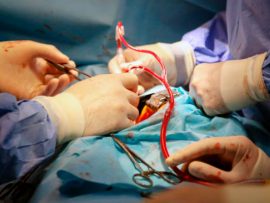
Abstract Background Aortic aneurysms involving the proximal aortic arch, which require hemiarch-type repair, typically require circulatory arrest with antegrade cerebral perfusion. Left carotid antegrade cerebral perfusion (LCP) via distal arch..
Read More
Abstract Objective: Controversy remains regarding the optimal neuroprotection strategy for elective hemiarch replacement (HEMI). This study sought to compare outcomes in patients who underwent HEMI utilizing the 2 most common..
Read More
This video demonstrates an efficient method for aortic hemiarch replacement termed the seven-minute technique. Elective aortic hemiarch replacement under hypothermic circulatory arrest is commonly performed for ascending aortic aneurysms with..
Read More
Patient with previous aortic dissection and ascending aorta replacement with tubular graft came with redissection and pseudos aneurysm of ascending aorta undergone redo operation and replacement of ascending aorta and..
Read More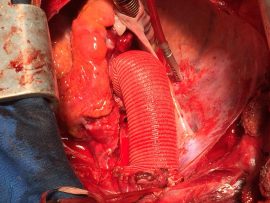
Abstract Background Selective antegrade cerebral perfusion (SACP) has become our preferred method for cerebral protection during open arch cases. While the initial approach involved sewing a graft to the innominate..
Read More
Abstract Background Moderate (MHCA) versus deep (DHCA) hypothermia for circulatory arrest in has been purported to reduce and bleeding complications, although there are limited data supporting this claim. This study aimed to..
Read More