


Abstract Despite increasing early rehabilitation and mobilisation (ERM) in paediatric intensive care, current evidence for ERM of neonatal and paediatric patients receiving extracorporeal membrane oxygenation (ECMO) is limited. The proposed..
Read More
Prognosis of Venoarterial Extracorporeal Membrane Oxygenation in Mixed, Cardiogenic and Septic Shock
Abstract Mixed cardiogenic-septic shock (MS), defined as the combination of cardiogenic (CS) and septic (SS) shock, is often encountered in cardiac intensive care units. Herein, the authors compared the impact of..
Read More
Abstract We read with great interest the EuroECMO-COVID study in The Lancet Respiratory Medicine. Roberto Lorusso and colleagues should be congratulated for this important research, which contributes to our understanding of the..
Read More
Abstract Objectives: Evidence of cerebrovascular complications in COVID-19 requiring venovenous extracorporeal membrane oxygenation (ECMO) is limited. Our study aims to characterize the prevalence and risk factors of stroke secondary to COVID-19 in patients on venovenous ECMO. Design: We analyzed..
Read More
Abstract BACKGROUND Obesity is an important health problem in cardiac surgery and among patients requiring post-cardiotomy veno-arterial extracorporeal membrane oxygenation (V-A ECMO). Still, it remains unclear whether these patients are..
Read More
Abstract The temporal trends in haematological parameters and their associations with blood product transfusion requirements in patients supported with extracorporeal membrane oxygenation (ECMO) are poorly understood. We performed a retrospective..
Read More
Abstract Veno-venous extracorporeal membrane oxygenation (VV ECMO) is used as a treatment modality in those who fail to respond to conventional care. Hypoxia and medications used in the intensive care unit..
Read More
Abstract Objectives: Extracorporeal membrane oxygenation (ECMO) has been used successfully to support adults with severe acute respiratory syndrome coronavirus 2 (SARS-CoV-2)-related cardiac or respiratory failure refractory to conventional therapies. Comprehensive..
Read More
Abstract Background Despite quick implementation of reperfusion therapies, a few patients with high-risk, acute, massive, pulmonary embolism (PE) remain highly hemodynamically unstable. Others have absolute contraindication to receive reperfusion therapies...
Read More
Abstract Introduction The risk, cost, and adverse outcomes associated with packed red blood cell (RBC) transfusions in patients with cardiopulmonary failure requiring extracorporeal membrane oxygenation (ECMO) have raised concerns regarding..
Read More
Abstract Refractory cardiogenic shock is increasingly being treated with veno-arterial extracorporeal membrane oxygenation (V-A ECMO), without definitive proof of improved clinical outcomes. Recently, pulsatile V-A ECMO has been developed to address some of the..
Read More
Abstract Background There are limited practical advanced life support algorithms to aid teams in the management of cardiac arrest in patients on extracorporeal membrane oxygenation (ECMO). Methods In our specialist..
Read More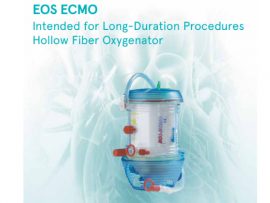
Abstract Severe acute respiratory distress syndrome (ARDS) confers significant in-hospital mortality despite implementation of evidence-based ventilatory strategies. Acute right ventricular (RV) injury characterized by abnormal RV and pulmonary vascular biomechanics is..
Read More
Abstract Background The management of the oxygenator can be prolonged in the long-term procedures especially during extracorporeal membrane oxygenation (ECMO) for bridge to transplant or bridge to recovery. Long-term use..
Read More
Abstract The use of extracorporeal membrane oxygenation (ECMO) circuit obligates the administration of systemic anticoagulation to avoid patient and circuit thrombosis. Identifying an optimal approach for achievement of target pharmacologic..
Read More
Abstract Background The preferred configuration for bridging patients with respiratory failure while awaiting is venovenous (VV ECMO). However, the protective effect of VV ECMO on the lung, as well as the underlying..
Read More
Abstract Metabolism management plays an essential role in extracorporeal technologies. There are different metabolic management devices integrated to extracorporeal devices; the most commonly used and accepted metabolic target in adult..
Read More
Abstract Fluid overload is common among pediatric cardiac patients receiving extracorporeal membrane oxygenation (ECMO) and is often treated with in-line ultrafiltration (UF) or continuous renal replacement therapy (CRRT). We assessed whether..
Read More
Abstract Extracorporeal membrane oxygenation (ECMO) is a rescue therapy for cardiovascular collapse during and after liver transplantation (LT). According to the most recent guidelines, patients with severe cardiomyopathy are excluded..
Read More
Introduction In patients with the acute respiratory distress syndrome(ARDS), mechanical ventilation can cause ventilator-induced lung injury (VILI) through multiple mecha-nisms, including volutrauma, barotrauma, atelectrauma,myotrauma, and biotrauma [1]. In the most..
Read More
Abstract Objectives Placement of the Impella 5.0 percutaneous left ventricular assist device may cause aortic regurgitation (AR) due to malcoaptation of the aortic leaflets. The authors investigated the prevalence and..
Read More
Abstract A 63-year-old man developed chest pain and dyspnea. Venoarterial-venous extracorporeal membrane oxygenation (ECMO) was applied to the patient due to failing heart after percutaneous coronary intervention. We used an..
Read More
Abstract Extracorporeal membrane oxygenation (ECMO) has strikingly progressed over the last 20 years in the management of adult and pediatric severe respiratory and cardiac dysfunctions refractory to conventional management. In this..
Read More
Abstract Background: Extracorporeal membrane oxygenation (ECMO) is a rescue treatment option for adult patients with severe cardiac dysfunction or respiratory failure. While short-term patient outcomes, such as in-hospital mortality and complications,..
Read More
Abstract Background: Extracorporeal membrane oxygenation (ECMO) is a form of life support that targets the heart and lungs. Extracorporeal membrane oxygenation for severe respiratory failure accesses and returns blood from the..
Read More
Abstract Background Extracorporeal membrane oxygenation (ECMO) is a rescue treatment option for adult patients with severe cardiac dysfunction or respiratory failure. While short-term patient outcomes, such as in-hospital mortality and..
Read More
Abstract Combined advances in haematopoietic cell transplantation (HCT) and intensive care management have improved the survival of patients with haematological malignancies admitted to the intensive care unit. In cases of..
Read More
Abstract Background: Exposure to hyperoxia, a high arterial partial pressure of oxygen (PaO2), may be associated with worse outcomes in patients receiving extracorporeal membrane oxygenator (ECMO) support. We examined hyperoxia in..
Read More
Abstract Extracorporeal membrane oxygenation (ECMO) is used in cases of severe respiratory failure refractory to medical management. Use of ECMO is increasing, along with new cannulation strategies including oxygenated right..
Read More