


Abstract OBJECTIVES Implanting a durable left ventricular assist device (LVAD) in a patient on extracorporeal life support (ECLS) is challenging. The goal of this study was to compare..
Read More
Abstract Background: The use of extracorporeal membrane oxygenation (ECMO) in coronavirus disease 2019 (COVID-19) for refractory respiratory failure, severe cardiac dysfunction, and bridge to lung transplantation has been steadily increasing..
Read More
Abstract Accidental hypothermia (AH) in Mediterranean countries often is underestimated. AH should be suspected in patients also in moderate climates throughout all seasons. Compared with other countries, the mortality rate..
Read More
Context Poisoning may lead to respiratory failure, shock, cardiac arrest, or death. Extracorporeal membrane oxygenation (ECMO) may be used to provide circulatory support, termed venoarterial (VA) ECMO; or respiratory support..
Read More
Abstract Objective: The aim was to evaluate the performance of a newly developed magnetically suspended centrifugal pump head intended for use as a ventricular assistance device with a newly developed..
Read More
Abstract Extra Corporeal membrane oxygenation (ECMO) is one of the most advanced forms of life support therapy in the Intensive Care Unit. It relies on the principle where an external..
Read More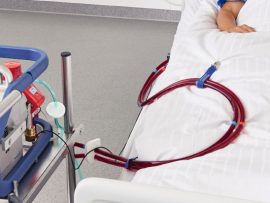
Abstract Low cardiac output syndrome and the systemic inflammatory response are consequences of the cardiac surgical perioperative course. The mechanisms responsible are multifactorial, but recent studies have shown that nitric..
Read More
Abstract Background Venoarterial extracorporeal membrane oxygenation (VA-ECMO) support under extracorporeal cardiopulmonary resuscitation (eCPR) is the last option and may be offered to selected patients. Several factors predict outcome in these..
Read More
Abstract Abstract: The article reviews cannulation strategy for different modes of extracorporeal life support. Technical aspects, pitfalls and complications are discussed for central and peripheral extracorporeal membrane oxygenation (VA, VV,..
Read More
Abstract Objectives The authors evaluated the outcome of adult patients with coronavirus disease 2019 (COVID-19)–related acute respiratory distress syndrome (ARDS) requiring the use of extracorporeal membrane oxygenation (ECMO). Design Multicenter..
Read More
Abstract Introduction: Extracorporeal life support (ECLS) patients are at risk for complications caused by gaseous microemboli (GME). GMEs can cause hypoxia, inflammation, coagulation, and end-organ damage. The objective of this..
Read More
Abstract Background and Aim of the Study Extracorporeal life support (ECLS) may be necessary in refractory postcardiotomy cardiogenic shock (PCS) unresponsive to optimal medical treatment. We sought to analyze the..
Read More
Abstract Introduction: Patients under the error-prone and complication-burdened extracorporeal membrane oxygenation (ECMO) are looked after by a highly trained, multidisciplinary team. Simulation-based training (SBT) affords ECMO centers the opportunity to..
Read More
Abstract Introduction: Increasing the hematocrit is considered to increase oxygen delivery to the patient, especially when hypoxic conditions exist and the patient may become more stable. The aim of this..
Read More
Abstract This review summarizes the European rules to control the market when introducing new products. In particular, it shows all the steps to achieve the European Conformity (CE Mark), a..
Read More
Abstract The use of ECMO for cardiovascular support continues to increase in the United States and around the world. It is not a benign endeavor as serious complications may occur...
Read More
Abstract Extracorporeal life support (ECLS) can result in complications due to increased left ventricular (LV) afterload. The percutaneous ventricular assist device (PVAD) and intra-aortic balloon pump (IABP) are both considered..
Read More