


Abstract Real-time, quantitative biosensing within extracorporeal perfusion (ECP) and extracorporeal membrane oxygenation (ECMO) systems is key to advancing this life-support technology beyond the hospital setting to emergency care. Measuring and..
Read More
Abstract Purpose Cardiac surgery requiring cardiopulmonary bypass (CPB) is frequently complicated by excessive bleeding because of coagulopathy. Contact of blood with the CPB circuit is a major contributor. While several..
Read More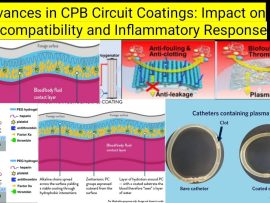
Introduction Cardiopulmonary bypass (CPB) is a lifesaving technology in cardiac surgery, but it introduces blood-material interactions that trigger inflammatory and coagulative responses. To address these issues, advancements in biocompatible CPB..
Read More
Abstract Introduction: Cardiopulmonary bypass is an essential component of cardiothoracic surgeries. However, significant complications such as systemic inflammatory response syndrome (SIRS) resulting from cardiopulmonary bypass (CPB) are a common occurrence..
Read More
Abstract As the key component of extracorporeal membrane oxygenation (ECMO), artificial lung membranes have low gas permeability and plasma leakage problems, and the contact between membrane materials and blood can..
Read More
Abstract Introduction The membrane oxygenator in extracorporeal circulation circuits is coated with acrylate-copolymer (ACP) or immobilized heparin (IHP) to enhance hemocompatibility. To evaluate the relative features of both coatings, we..
Read More
Abstract Limited data exist to guide antimicrobial therapy commonly prescribed to patients undergoing extracorporeal membrane oxygenation (ECMO). This study aimed to describe the kinetics of the cefazolin, doripenem, daptomycin, and levofloxacin in..
Read More
Abstract Introduction: Pulmonary endarterectomy (PEA) is the most effective treatment available for chronic thromboembolic pulmonary hypertension (CTEPH). Patient selection, surgical technique and perioperative management have improved patient outcomes, which are..
Read More