


Abstract Background: Current diagnostic strategies for acute kidney injury (AKI) after cardiac surgery with cardiopulmonary bypass (CPB) are nonspecific and limited. Previously, we demonstrated that circulating microparticles (MPs) in patients with..
Read More
Example of multiple Y grafts for total epicardial vessels revascularisation as you can see despite 6 grafts just two proximal anastomoses in the ascending aorta. Another type of SVG transverse..
Read More
Abstract Background: Acute kidney injury (AKI) is a common and serious complication faced by children following ventricular septal defect (VSD) surgery with cardiopulmonary bypass (CPB). The objective of this study was..
Read More
Abstract Purpose: To establish a model to predict the risk of acute respiratory distress syndrome (ARDS) after cardiac surgery. Methods: Data were collected on 132 ARDS patients, who received valvular or coronary..
Read More
Abstract Background Acute kidney injury is a severe complication following cardiopulmonary bypass (CPB) and is associated with capillary leakage and microcirculatory perfusion disturbances. CPB-induced thrombin release results in capillary hyperpermeability..
Read More
Abstract BACKGROUND: The standardized management of anticoagulation during the cardiopulmonary bypass seems inaccurate because of patients and surgeries variability. This study evaluates if an individualized management of heparin and protamine..
Read More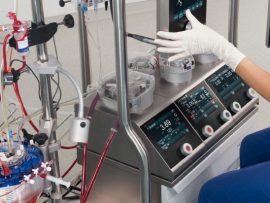
Abstract Aim: This study aimed to evaluate the efficacy of the resin hemoperfusion device (HA380 hemoperfusion cartridge) on inflammatory responses during adult cardiopulmonary bypass (CPB). Methods: Sixty patients undergoing surgical valve replacement..
Read More
Abstract Objective: Exposure to cerebral emboli is ubiquitous and may be harmful in cardiac surgery utilizing cardiopulmonary bypass. This was a prospective observational study aiming to compare emboli exposure in..
Read More
Abstract Successful management of Cesarean Delivery complicated by emergent CPB and AVR requires meticulous multidisciplinary planning. This case also represents the volatility that can arise from severe aortic regurgitation during..
Read More
Abstract To the editor, Retrograde autologous priming (RAP) is a non-drug blood protection method to reduce blood dilution by lowering the amount of crystal liquid priming., , But there is no unified..
Read More
Abstract Background Cerebral autoregulation mechanisms help maintain adequate cerebral blood flow (CBF) despite changes in cerebral perfusion pressure. Impairment of cerebral autoregulation, during and after cardiopulmonary bypass (CPB), may increase..
Read More

Abstract Cardiopulmonary bypass (CPB) exposes blood to artificial surfaces, which induces a systemic inflammatory activation.This may contribute to hypotension during CPB. A perceived difference between two membrane oxygenators was noted...
Read More

Abstract Development of minimally invasive cardiac surgery (MICS) served the purpose of performing surgery while avoiding the surgical stress triggered by a full median sternotomy. Minimizing surgical trauma is associated..
Read More
Abstract There is limited evidence as to the pharmacokinetic changes expected in adults with extracorporeal technologies. Drugs may be taken up by various components of the cardiopulmonary bypass circuit itself...
Read More
Abstract Although de‐airing procedures are commonly performed during cardiac surgery, use of these procedures is not necessarily based on evidence. Uncertainly remains around the size of bubbles that can be..
Read More
Abstract Background Acute Kidney Injury (AKI) adversely affects outcomes after cardiac surgery. A major mediator of AKI is the activation of leukocytes through exposure to the cardiopulmonary bypass circuit. We..
Read More
Abstract Background. To decrease the complications associated with cardiopulmonary bypass, novel biomaterials have been introduced that may be less thrombogenic than standard synthetic surfaces. Methods. Thirty-four patients undergoing coronary..
Read More
Abstract We present a dissection of the patent ductus arteriosus and pulmonary artery for surgical repair utilising cardiopulmonary bypass in the setting of vein of Galen malformation. Several strategies were..
Read More
Keith Samolyk, CCP discusses the physiology of fluid management and the importance of maintaining Colloid Oncotic Pressure (COP).
Read More
Abstract Background: Monitoring oxygen delivery to the oxygenator of a heart lung machine (HLM) is typically accomplished with an O2 analyzer connected to the gas inflow line. It is assumed when..
Read More
Abstract Objectives To evaluate recent practice and outcomes of reoperative cardiac surgery via re-sternotomy. Use of early versus late institution of cardiopulmonary bypass (CPB) before sternal re-entry was of particular..
Read More
Abstract OBJECTIVES: Monitoring cerebral autoregulation may help identify the lower limit of autoregulation in individual patients. Mean arterial blood pressure below lower limit of autoregulation appears to be a risk..
Read More
Abstract Objective To determine the predictors of postoperative acute kidney injury (AKI) following nonemergent cardiac surgery among patients with variable preoperative estimated glomerular filtration rate (eGFR) levels. Methods A retrospective..
Read More
Abstract The current practice of cardiopulmonary bypass (CPB) requires a preoperative priming of the circuit that is frequently performed with crystalloid solutions. Crystalloid priming avoids massive embolism but is unable..
Read More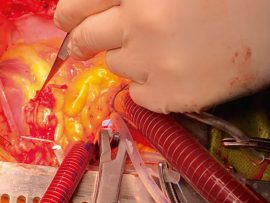
Abstract Introduction: Use of bilateral internal thoracic artery (BITA) as graft in coronary artery bypass grafting (CABG) is controversial because it is related to higher in-hospital mortality, incidence of sternal..
Read More
Abstract Carotid artery stenosis (CAS) and vertebral artery stenosis (VAS) are associated with cerebral infarction after cardiopulmonary bypass (CPB). We read with great interest the article “Cerebral Lesions in Patients..
Read More
Abstract Background: Early warning systems that utilize dense physiologic data and machine learning may aid prediction of decompensation after congenital heart surgery (CHS). The Compensatory Reserve Index (CRI) analyzes changing..
Read More
Abstract Introduction: In this study, we aimed to compare Del Nido cardioplegia (DNC) with blood cardioplegia (BC) in aortic valve replacement. Methods: A two-year single-institute retrospective cohort study was accomplished...
Read More