


Abstract Dynamic or hybrid configurations for extracorporeal membrane oxygenation (ECMO) are needed when patient physiology or clinical conditions change. Dynamic configurations included configurations converting from veno-arterial (V-A) ECMO or veno-venous..
Read More
Abstract Veno-arterial extracorporeal membrane oxygenation (VA-ECMO) provides a temporary support system for patients with cardiogenic shock refractory to conventional medical therapies. It has been reported that levosimendan may facilitate VA-ECMO..
Read More
Abstract Background RotaFlow and Levitronix CentriMag veno-arterial extracorporeal membrane oxygenation (ECMO) support systems have been investigated as treatment for refractory cardiogenic shock (CS). Methods Between 2004 and 2012, 119 consecutive..
Read More
Abstract Objectives We investigated whether intra-aortic balloon pump (IABP) combined with venoarterial extracorporeal membrane oxygenation (VA-ECMO) was associated with favourable neurological outcomes for patients after the return of spontaneous circulation..
Read More
Abstract Objective To explore whether pre-cannulation international normalized ratio (INR) is associated with in-hospital mortality in veno-arterial extracorporeal membrane oxygenation (VA-ECMO) patients. Design Retrospective observational cohort study. Setting Quaternary care..
Read More
Abstract In SARS-CoV-2 patients with severe acute respiratory distress syndrome (ARDS), Veno-Venous Extracorporeal Membrane Oxygenation (V-V ECMO) was shown to provide valuable treatment with reasonable survival in large multi-centre investigations...
Read More
Abstract Background: Extracorporeal cardiopulmonary resuscitation (ECPR) for refractory cardiac arrest has improved mortality in post-cardiac surgery patients; however, loss of neurologic function remains one of the main and devastating complications...
Read More
Abstract Treatment of end-stage heart failure has markedly evolved. With only a limited number of available heart transplants (24 in 2012) in our institution, mechanical circulatory support (MCS) has become..
Read More
Abstract Venoarterial extracorporeal membrane oxygenation (VA ECMO) is used to provide cardiopulmonary support in cardiogenic shock; however, high extracorporeal flow may increase left ventricular (LV) afterload leading to LV distention..
Read More
Abstract Cardiogenic shock (CS) remains the leading cause of death in patients hospitalised with acute myocardial infarction with mortality as high as 40%–50% prior to hospital discharge. The failure of..
Read More
Abstract Objectives: Refractory postcardiotomy cardiogenic shock complicating cardiac surgery yields nearly 100% mortality when untreated. Use of venoarterial extracorporeal membrane oxygenation for postcardiotomy cardiogenic shock has increased worldwide recently. The aim of the current..
Read More
Abstract Cardiogenic shock is an acute emergency, which is classically managed by medical support with inotropes or vasopressors and frequently requires invasive ventilation. However, both catecholamines and ventilation are associated..
Read More
Abstract Extracorporeal membrane oxygenation (ECMO) has emerged as an invaluable tool for bridging severe isolated or combined failure of lung and heart. Due to massive technical improvements, the application of..
Read More
Abstract Background Femoral venoarterial (VA-ECMO) is widely used to maintain blood flow in patients with . However, retrograde blood flow increases left ventricular (LV) afterload during femoral VA-ECMO. Additional support by means..
Read More
Abstract Objective There are few data on the role of in patients with end-stage heart failure supported by mechanical . The aim of our study was to investigate predictors for in patients with..
Read More
Abstract OBJECTIVES No guidelines for mechanical circulatory support in patients with therapy-refractory cardiogenic shock and multiorgan failure including ongoing cardiopulmonary resuscitation (CPR) exist. To achieve immediate cardiopulmonary stabilization, we established..
Read More
Abstract Addition of Impella on top of venoarterial extracorporeal membrane oxygenation (VA-ECMO) has gained wide interest as it might portend improved outcomes in patients with cardiogenic shock. This has been..
Read More
Abstract Although venoarterial extracorporeal membrane oxygenation (ECMO) was developed to rescue patients with cardiogenic shock, the impact of ECMO on hemodynamics is often unpredictable and can lead to hemodynamic collapse...
Read More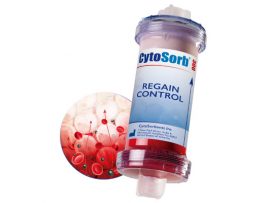
This case study reports on a 59-year-old patient who presented with dyspnea and weight gain of 12 kg at a peripheral hospital. [pdf-embedder url="https://perfusfind.com/wp-content/uploads/2021/02/Use-of-CytoSorb-in-a-patient-with-mitral-valve-dysfunction-atypical-pneumonia-and-mixed-cardiogenic-and-septic-shock_compressed.pdf" title="Use of CytoSorb in a..
Read More
Abstract To facilitate venoarterial extracorporeal membrane oxygenation (ECMO) insertion for cardiogenic shock, we recently adopted a strategy of using a 15F arterial cannula in all patients, rather than 1 designed..
Read More
Abstract Background Intra‐aortic balloon pump counterpulsation (IABP) is currently the most commonly used mechanical assist device for patients with cardiogenic shock due to acute myocardial infarction. Although there has been..
Read More
Cardiogenic Shock The unresolved clinical challenge. Cardiogenic shock (CS) can present in many different stages. It ranges from those at high risk of developing shock to those critically ill with..
Read More
Abstract Background and Aim of the Study Extracorporeal life support (ECLS) may be necessary in refractory postcardiotomy cardiogenic shock (PCS) unresponsive to optimal medical treatment. We sought to analyze the..
Read More
Abstract The objective of this study is to establish reliable markers for mortality in children with refractory cardiogenic shock who underwent extracorporeal membrane oxygenation. A retrospective observational cohort study was..
Read More
Abstract Venoarterial extracorporeal membrane oxygenation (VA-ECMO) has been used for refractory cardiogenic shock; however, it is associated with increased left ventricular afterload. Outcomes associated with the combination of a percutaneous..
Read More
Abstract Temporary mechanical circulatory support (TCS) is recommended for patients with profound cardiogenic shock (CS). Extracorporeal membrane oxygenation (ECMO) and Impella are possible TCS devices, but the device choice and the implantation..
Read More
Abstract Purpose of review Intraaortic balloon pump (IABP) has been the most widely used device to help patients recover from circulatory disorder mainly because of cardiogenic shock; however, no evidence-based..
Read More
Summary (CS) is a major challenge in contemporary cardiology. Despite a better understanding of the of CS, its management has only improved slightly. The prevalence of CS has remained stable over..
Read More
Abstract The use of veno-arterial (VA) extracorporeal membrane oxygenation (ECMO) to support patients with acute heart failure has been associated with ventricular distension and pulmonary edema, the mechanism of which..
Read More