
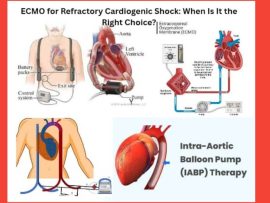

Introduction Refractory cardiogenic shock (RCS) is a life-threatening condition where the heart fails to supply adequate blood flow to the body's organs, despite maximal medical therapy. It is a major..
Read More
Abstract Background The impact of intra-aortic balloon pump (IABP) on survival and successful bridging to heart replacement therapies (HRT) in patients with heart failure–cardiogenic shock (HF-CS) remains unclear. Objectives The..
Read More
Abstract Background: Venoarterial extracorporeal membrane oxygenation (VA-ECMO) is increasingly used to treat cardiogenic shock. However, VA-ECMO might hamper myocardial recovery. The Impella unloads the left ventricle. This study aimed to..
Read More
Abstract Background Extracorporeal membrane oxygenation (ECMO) as rescue therapy for cardiogenic shock (CS) is highly dependent on timeliness and medical resources. Objectives Aimed to assess ECMO management and outcomes in..
Read More
Abstract Cardiogenic shock (CS) is a critical condition with high mortality, characterized by reduced cardiac output (CO) and tissue hypoperfusion, despite advancements in treatment. Traditional hemodynamic markers like CO measurements,..
Read More
Abstract Aims Knowing the upper time limit for successful weaning from temporary mechanical circulatory support in cardiogenic shock will help with decision‐making regarding advanced heart failure (HF) therapy or considering..
Read More
Abstract Cardiogenic shock (CS) is associated with significant mortality. Advances in pharmacological therapies and mechanical circulatory support (MCS) devices have markedly improved the therapeutic approach to CS, though treatment efficacy..
Read More
Abstract Cardiogenic shock represents a critical condition in which the heart is unable to maintain adequate circulation leading to insufficient tissue perfusion and end-organ failure. Temporary mechanical circulatory support offers..
Read More
Abstract Background Postcardiotomy cardiogenic shock (PCCS) in cardiac surgery is associated with a high rate of morbidity and mortality. Beside other therapeutic measures (e.g. intraaortic balloon pump (IABP)), extracorporeal life..
Read More
Abstract Venoarterial extracorporeal membrane oxygenation (VA-ECMO) has been utilized to treat massive pulmonary embolism (PE) accompanied by cardiac arrest or refractory cardiogenic shock. Our team opted for a femoral-femoral approach..
Read More
Abstract Cardiogenic shock is a complex and diverse pathological condition characterized by reduced myocardial contractility. The goal of treatment of cardiogenic shock is to improve abnormal hemodynamics and maintain adequate..
Read More
Abstract Background While left ventricular (LV) venting reduces LV distension in cardiogenic shock patients on venoarterial extracorporeal membrane oxygenation (VA-ECMO), it may also amplify risk of acute brain injury (ABI). We..
Read More
Abstract Cardiogenic shock (CS) is a highly complex clinical condition that requires a management strategy focused on early resolution of the underlying cause and the provision of circulatory support. In..
Read More
Abstract Cardiogenic shock (CS) is one of the most challenging areas in cardiology, where hard evidence is often limited. Several factors contribute to this scarcity. Patients with CS are typically..
Read More
Abstract Summary Cardiogenic shock is a complex syndrome defined by systemic hypoperfusion and inadequate cardiac output arising from a wide array of underlying causes. Although the understanding of cardiogenic shock..
Read More
Abstract Cardiogenic shock is a critical condition that affects up to 10% of patients hospitalized with acute myocardial infarction (AMI), representing the primary cause of death in this group [, ]...
Read More
Abstract Endothelial injury is usually considered as a major com-ponent of the systemic inflammatory response observed during veno-arterial extracorporeal membrane oxygena-tion (VA-ECMO) support. Yet, few data are avail-able to support..
Read More
Abstract Background Central venoarterial extracorporeal membrane oxygenation (VA-ECMO) is a commonly employed strategy to support patients in refractory postcardiotomy cardiogenic shock (RPCS). This support can be provided using either indirect..
Read MoreAbstract Endothelial injury is usually considered as a major com-ponent of the systemic inflammatory response observed during veno-arterial extracorporeal membrane oxygena-tion (VA-ECMO) support [1, 2]. Yet, few data are avail-able..
Read More
Abstract The management of cardiogenic shock is an ongoing challenge. Despite all efforts and tremendous use of resources, mortality remains high. Whilst reversing the underlying cause, restoring/maintaining organ perfusion and..
Read More
Introduction: Picture this: You're standing at the bedside of a critically ill patient in the ICU, their life hanging by a thread as cardiogenic shock takes hold. The monitors are..
Read More
Abstract Despite advances in therapy, the incidence of cardiogenic shock continues to increase, with significant mortality that has improved minimally over time. Treatment options for cardiogenic shock are complex and..
Read More
Abstract Despite multimodal treatment of patients with (CS) complicating (AMI), the outcome remains poor. Large retrospective analyses and animal models suggest that (ECLS) in CS-complicating AMI improves outcome . However, to date, no assessing the..
Read More
Abstract Purpose Veno-arterial extracorporeal life support (ECLS) is increasingly used in patients during cardiac arrest and cardiogenic shock, to support both cardiac and pulmonary function. We performed a systematic review..
Read More
Abstract Purpose of review Discussing the rationale and current evidence for left ventricular unloading in cardiogenic shock. Recent findings Microaxial flow pumps (MFP) and intra-aortic balloon pumps (IABP) augment cardiac..
Read More
Abstract Acute myocardial infarction-related cardiogenic shock (AMI-CS) carries a dismal prognosis. Short-term mortality is in the range of 40–50% []. Until recently, only treatment of the culprit lesion by percutaneous..
Read More
Abstract The use of mechanical circulatory support using percutaneous ventricular assist devices (pVAD) has increased rapidly during the last decade without substantial new evidence for their effect on outcome. In..
Read More
Abstract Background Women are at higher risk of mortality from many acute cardiovascular conditions, but studies have demonstrated differing findings regarding the mortality of cardiogenic shock in women and men...
Read More
Abstract Background Risk-stratifying patients with (CS) is a major unmet need. The recently proposed Society for Cardiovascular and Interventions (SCAI) staging system for CS severity lacks uniform criteria defining each stage. Objectives..
Read More
Abstract DESPITE MEDICAL ADVANCEMENTS, mortality in cardiogenic shock (CS) remains unacceptably high.The decreased cardiac output resulting in impaired oxygen delivery characteristic of CS triggers a dismal cascade culminating in tissue..
Read More