

Abstract Background Effective securement of extracorporeal membrane oxygenation (ECMO) cannulae, both at the insertion site and along the length of circuit tubing, may reduce the risk of cannula migration, dislodgement,..
Read More
Abstract OBJECTIVES Peripheral cannula selection in minimally invasive cardiac surgery (MICS) is crucial, as venous drainage limitations during cardiopulmonary bypass (CPB) can impair end-organ perfusion and overall outcomes. This study..
Read More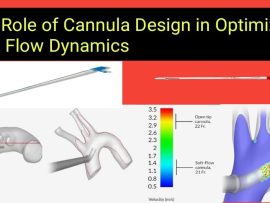
In the complex world of cardiopulmonary bypass (CPB), where precision, safety, and efficiency govern every aspect of patient care, the significance of flow dynamics cannot be overstated. While the primary..
Read More
Abstract Introduction Extracorporeal membrane oxygenation is a lifesaving treatment for patients with refractory acute respiratory, circulatory, or combined cardiopulmonary failure. The patient is cannulated with one or two cannulae for..
Read More
Abstract Background/Objectives: Secure large-bore cannula insertion is critical for effective extracorporeal membrane oxygenation (ECMO), as inadequate fixation can lead to complications such as infection, dislodgment, and life-threatening events. With inconsistent..
Read More
Abstract Background: Although the Avalon Elite bi-caval dual lumen catheter for veno-venous extracorporeal membranous oxygenation (ECMO) has many advantages, it requires precise positioning and dislodgement is common. Case presentation: A 2-year-old male..
Read More
Abstract Introduction The interaction between primary left ventricular output and Veno-arterial extracorporeal membrane pulmonary oxygenation (VA ECMO) flow may impede the perfusion of aortic vessels with hyperoxic blood, leading to..
Read More
Abstract CONTEXT: Conventional MRI is incompatible with extracorporeal membrane oxygenation (ECMO) cannulas and pumps. Ultra-low-field portable MRI (ULF-pMRI) with 0.064 Tesla may provide a solution, but its safety and compatibility..
Read More
Abstract Thrombotic complications during and after extracorporeal membrane oxygenation (ECMO) are commonly observed clinically. The incidences of cannula-associated deep vein thrombosis (CaDVT) post-ECMO support have predominantly focused on Caucasian demographics...
Read More
Abstract Background Large cannulae can increase cannula-related complications during venoarterial extracorporeal membrane oxygenation (VA ECMO). Conversely, the ability for small cannulae to provide adequate support is poorly understood. Therefore, we..
Read More
Abstract Extended duration extracorporeal membrane oxygenation (ECMO), using dual-lumen cannulas, is being used with increased frequency to support patients, including those with COVID-19; both as a bridge to transplant and..
Read More
Abstract Extracorporeal membrane oxygenation (ECMO) is required for patients with refractory cardiac or respiratory failure. Inadequate securement of ECMO cannulae may lead to adverse events, ranging from line kinking to..
Read More
Abstract This review highlights vital details that can be easily overlooked and discuss how to identify and fix failed cannulation from another novel insight. Appropriate arterial cannulation strategy during cardiopulmonary..
Read More
Abstract Thrombosis is a potentially life-threatening complication in veno-arterial extracorporeal membrane oxygenation (ECMO) circuits, which may originate from the drainage cannula due to unfavorable blood flow dynamics. This study aims to..
Read More
We are writing to point out a simple clinical sign in a pedagogic way, about recirculation in venovenous extracorporeal membrane oxygenation (ECMO). These last years, ECMO has emerged as a..
Read More
Abstract The Avalon dual lumen cannula is presently the cannula of choice for veno‐venous extracorporeal membrane oxygenation (VV‐ECMO) via right internal jugular cannulation. This cannula establishes VV‐ECMO with a single..
Read More