


Abstract Objectives Acute type A aortic dissection is a life-threatening condition with evidence suggesting a role for environmental triggers, particularly cold exposure. However, the impact of subjective, or derived thermal..
Read More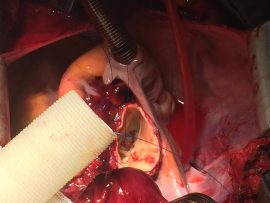
Abstract Background Management of acute aortic dissection (AAD) caused by retrograde perfusion through the femoral artery during minimally invasive cardiac surgery (MICS) remains controversial. We present a case of AAD..
Read More
Abstract The identification of individuals at risk for acute aortic disease, by virtue of its silent pathogenesis, is vital for patient outcome. However, ineffective screening methods hamper the efforts of..
Read More
Patient with acute type A aortic dissection and intimal flap rising undergone ascending aorta replacement and all arch branches replacement with trifurcated tubular graft and descending thoracic aorta with deployment..
Read More
Acute ascending aorta dissection undergone ascending aorta replacement and hemiarch arterial cannulation via innominate artery and venous from RA both proximal and distal anastomoses were reinforced by teflon felts and..
Read More
Acute ascending aorta dissection undergone ascending aorta replacement and hemiarch arterial cannulation via innominate artery and venous from RA both proximal and distal anastomoses were reinforced by teflon felts and..
Read More
Abstract OBJECTIVES The aim of this retrospective multicentre study was to investigate and compare clinical outcomes of unilateral and bilateral antegrade cerebral perfusion (ACP) strategies on cerebral protection during..
Read More