


The definitive management of combined aortic arch and descending aortic pathologies such as aneurysms and dissections is either a single or staged operation associated with high morbidity and mortality. Stroke,..
Read More
Abstract Bleeding following cardiac surgery is common and serious, yet a gap persists in understanding how experienced intensive care nurses identify and respond to such complications. Aim To describe the..
Read More
Abstract Administration of oxygen microbubbles (OMBs) has been shown to increase oxygen and decrease carbon dioxide in systemic circulation, as well as reduce lung inflammation and promote survival in preclinical..
Read More
Abstract Sternal reentry for repair of aortic pseudoaneurysms poses a unique technical challenge to prevent exsanguination. Initiation of peripheral cardiopulmonary bypass and deep hypothermic circulatory arrest prior to reentry are..
Read More
Abstract Objective The primary purpose of this study was to assess the practicability of predeposit autologous blood donation (PABD) in the practice of Rh(D)-negative pregnant women. Materials and Methods A..
Read More
Abstract Complex endovascular aortic repair (EVAR) requires the use of multiple small sheath cannulation inside a large sheath. Because the large sheath is not designed for multiple small sheath cannulation,..
Read More
Abstract Objective To assess whether bioimpedance spectroscopy analysis (BIA) can be used as a tool to guide postoperative fluid management in patients undergoing cardiac surgery. Design An observational study. Setting..
Read More
Abstract Background Neonatal Cardiac Surgery has developed significantly since its advent, with improved outcomes, survival, and physiological repair. Limited programs offer neonatal cardiac surgery in emerging economies. We report our..
Read More
Abstract Extracorporeal circulation (ECC) is frequently implemented in a vast array of modalities such as hemodialysis, cardiopulmonary bypass, extracorporeal membrane oxygenation (ECMO), and others. Patients receiving any such therapy are..
Read More
Abstract Introduction Surgical repair is the standard of care for most infants and children with congenital heart disease. Cardiopulmonary bypass (CPB) is required to facilitate these operations but elicits a systemic..
Read More
Abstract Congenital heart disease (CHD) can be complicated by pulmonary arterial hypertension (PAH). Cardiopulmonary bypass (CPB) for corrective surgery may cause endothelial dysfunction, involving endothelin-1 (ET-1), circulating endothelial cells (CECs),..
Read More
Abstract Objectives To describe perfusionist perspectives regarding waste (WAG) management during (CPB) and compare results to existing American Society of Technology (AmSECT) guidelines and the 2016 National Institute of Occupational Safety and Health..
Read More
Abstract Objectives The objective of this systematic review was to clarify the status of near-infrared spectroscopy (NIRS) in monitoring perioperative renal regional tissue oxygen saturation (rSO2) and determine whether there..
Read More
Abstract Background and Objectives Neonatal cardiac surgery requires careful consideration of cardiopulmonary bypass (CPB) priming fluid composition due to small blood volume and immature physiology. This study investigated the impact..
Read More
Abstract Shifts from deep to moderate hypothermic circulatory arrest (HCA) in aortic arch surgery necessitate an examination of their differential impacts on neurocognitive functions, especially structured verbal memory, given its..
Read More
Abstract Introduction: Although decannulation from ECMO is usually irrevocable, in rare circumstances, ECMO will be reinitiated. Data on outcomes after re-cannulation of ECMO are limited,1 so we studied our experience with ECMO..
Read More
Abstract We convened a group of cardiac surgeons, intensivists, and anesthesiologists with extensive experience in minimally invasive cardiac surgery (MICS) and perioperative care to identify the essential elements of a..
Read More
Abstract Background Bleeding during cardiac surgery may be refractory to standard interventions. Off-label use of factor eight inhibitor bypass activity (FEIBA) has been described to treat such bleeding. However, reports..
Read More
Abstract Background: This review explores the potential benefits of combining totally endoscopic and robotic-assisted cardiac surgery with minimally invasive extracorporeal circulation (MiECC). Robotic techniques herald a new era of surgical..
Read More
Abstract Based on a voluntary registry, founded by the German Society for Thoracic and Cardiovascular Surgery (DGTHG) in 1980, a well-defined but limited dataset of all cardiac and vascular surgery..
Read More
Abstract Introduction Postmortem heart specimens are essential for education and research on the anatomy, morphology, and pathology of congenital heart defects. However, such specimens are rarely obtained these days, and..
Read More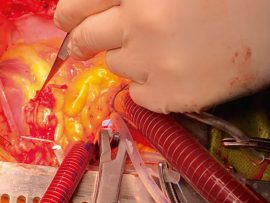
Paciente com 72 anos , 80 kg , 166 de altura, Asc 1.9 e 29 Imc . DM 2 . HAS . IAM csst . Obstrução Carotida E 60 %..
Read More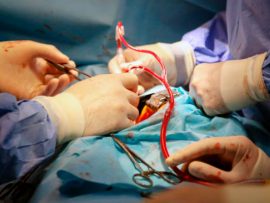
Paciente com 30 anos. Com 80 kg , 200 cm , Asc 2,1 e Imc 20 .História de HAS , Tabagismo e Marfan. Deu entrada no unidade com diagnóstico de..
Read More
Abstract Background Cardiovascular disease currently accounts for nearly half of non-communicable disease (NCDs).High rates of coronary heart disease in people of South Asian (Indian, Pakistani, and Bangladeshi) origin were first..
Read More
Abstract Medical errors are the third leading cause of death, right after cancer and heart diseases, causing around 250,000 deaths every year. Approximately 40% of these errors happen in the..
Read More
Abstract OBJECTIVES The optimal core temperature for hypothermic circulatory arrest during aortic arch surgery remains contentious. This study aims to evaluate patient outcomes under various temperatures within a large single-centre..
Read More
Abstract In high-risk high-stakes environments, such as the cardiac operating room (OR), the cognitive processes of each surgical team member, as well as alignments or misalignments between team members play..
Read More
Abstract In the 70-plus years of clinically applied cardiopulmonary bypass, the training of that specialist operator, or perfusionist, has been through several stages. Perfusion was not a field that was..
Read More
Abstract Guidelines informing energy and protein doses for critically ill patients are based largely on low-quality evidence and expert consensus recommendations [, ], but more recent randomized controlled trials (RCTs) have..
Read More
Abstract Background: Acute kidney injury (AKI) following cardiac surgery is a well-described phenomenon, usually associated with hemodynamic changes ultimately leading to ischemic injury to the kidneys. In this study, we assessed..
Read More