
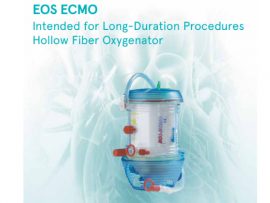

Abstract The use of veno-venous extracorporeal membrane oxygenation (VV-ECMO) has become increasingly prevalent, particularly in respiratory disease pandemics such as H1N1-influenza and SARS-CoV-2. This surge has emphasized the importance of..
Read More
Abstract This case report details a rare instance of total reversal of the pulmonary circulation (RPC) in a 56-year-old male patient on veno-arterial extracorporeal membrane oxygenation (V-A ECMO) during emergency..
Read More
Abstract Veno-arterial extracorporeal membrane oxygenation (VA-ECMO) is increasingly used for the management of refractory cardiogenic shock. Although VA-ECMO can stabilize hemodynamics and improve systemic flow, morbidity, and mortality on support..
Read More
Abstract Background: The utility and uptake of Del Nido cardioplegia in adult cardiac surgery is rapidly increasing. Cases with prolonged aortic cross-clamp times necessitate multi-dosing however an understanding of safe..
Read More
Abstract Background The use of extracorporeal membrane oxygenation (ECMO) during cardiopulmonary resuscitation (ECPR) is increasing. Prehospital ECPR (PH-ECPR) for out-of-hospital cardiac arrest (OHCA) may improve both equity of access and..
Read More
Abstract Difficult weaning from invasive mechanical ventilation is associated with adverse clinical outcome and increased use of limited health care resources. Difficult weaning, characterized by failure of multiple spontaneous breathing..
Read More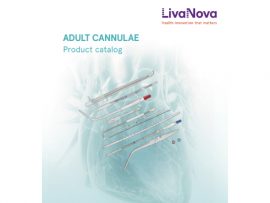
Abstract It remains controversial as to which optimal cannulation strategy ought to be employed in surgery for type A aortic dissection (TAAD). The aim of this study was to make..
Read More
Abstract A critical factor in thrombus formation during venoarterial extracorporeal membrane oxygenation (VA ECMO) is prothrombotic flow dynamics generated by the drainage cannula’s design. This study aimed to create and..
Read More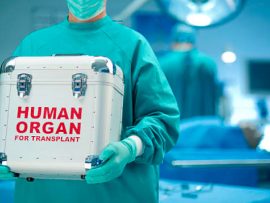
Abstract We performed a retrospective review comparing outcomes between traditional ice storage (ICE) with short ischemic times (<3 hours) to SherpaPak Cardiac Transport System (SCTS) with long ischemic times (>4..
Read More
Abstract Left ventricular assist devices (LVAD) have improved mortality and quality of life for patients with end-stage heart failure by providing an alternative to cardiac transplant or as a bridge..
Read More
Surgical Intraoperative Handoff Initiative: Standardizing Operating Room Communication Using SHRIMPS
BACKGROUND: Operating room (OR) handoffs are not universally standardized, although standardized sign outs have been proven to provide effective communication in other aspects of healthcare. We hypothesize that creating a..
Read More
It is well established that clinicians may decline requests for inappropriate interventions, including life-prolonging interventions. This position is supported by major professional organizations,, statutes and regulations, and case law. As such, the open..
Read More
Abstract Sodium bicarbonate has been used in the treatment of different pathologies, such as hyperkalemia, cardiac arrest, tricyclic antidepressant toxicity, aspirin toxicity, acute acidosis, lactic acidosis, diabetic ketoacidosis, rhabdomyolysis, and..
Read More
Abstract Introduction: Familial thoracic aortic aneurysm and aortic dissection (f/TAAD) is a genetic disease defined by disturbance in encoding the major proteins in the smooth muscle cells (SMC) contractile filaments..
Read More
Abstract Under the revised UNOS heart allocation system, waitlist and post-transplant outcomes among patients bridged to transplant with VA-ECMO (BTT-ECMO) have improved. However, it remains largely unknown if these early..
Read More
Abstract Cardiogenic shock is a complex and diverse pathological condition characterized by reduced myocardial contractility. The goal of treatment of cardiogenic shock is to improve abnormal hemodynamics and maintain adequate..
Read More
Abstract Background: Nurses play a vital role in caring for patients receiving extracorporeal membrane oxygenation (ECMO) for severe respiratory or cardiac failure. However, this area of nursing practice presents unique..
Read More
Abstract Membrane oxygenator failure remains a concern for perfusion teams. Successful outcomes for this low-frequency, high-risk intervention are predicated on having written institutional protocols for both the oxygenator change-out procedure..
Read More
Abstract Study objective To evaluate the associations between high and low intraoperative time-weighted average mean arterial pressures before, during and after cardiopulmonary bypass on postoperative delirium. Design Single center retrospective..
Read More
Abstract Introduction The efficacy and outcomes of on-pump and off-pump coronary artery bypass grafting (CABG) remain uncertain, especially in Latin America. Our study aims to explore survival and shortand mid-term..
Read More
Abstract Examining end-of-life care considerations within an Islamic context, the discussion delves into the intricate nuances surrounding ECMO patients. Drawing from Quranic teachings and Hadith principles, it underscores the sanctity..
Read More
Abstract In cardiac surgery, as with many endeavors, there is a point to which science can take you, and then art—namely observation, hands-on skill, craft, imagination, and mental imputation—must take..
Read More
Abstract Purpose: The selection and intensity of respiratory support for ARDS are guided by PaO 2/FiO2 . However, ventilator-induced lung injury (VILI) is linked to respiratory mechanics and ventilator settings...
Read More
Abstract Aim: We investigated in a single-center retrospective study early outcomes of intermittent warm blood and cold crystalloid St. Thomas cardioplegia in patients referred to CABG due to acute coronary..
Read More
Abstract Introduction The haemodynamic effects veno-arterial extracorporeal membrane oxygenation (VA-ECMO) remain inadequately understood. We investigated invasive left ventricular (LV) haemodynamics in patients who underwent treatment with an intensive care strategy..
Read More
Abstract Up to 50% of patients with pulmonary embolism (PE) experience hemodynamic instability and approximately 70% of patients who die of PE experience an accelerated cascade of symptoms within the..
Read More
Abstract While writing this editorial, we learned that Professor Luciano Gattinoni—a giant in our field—had passed away. “Giant” seems an inadequate descriptor for a physician-scientist whose profound insights have fundamentally..
Read More
Abstract Introduction Extracorporeal cardiopulmonary resuscitation (ECPR) is a treatment for refractory out-of-hospital cardiac arrest (OHCA), often due to acute coronary syndrome (ACS). However, the long-term impact of prehospital ECPR on..
Read More
Abstract Background Delirium is one of the most common neurological complications after cardiac surgery. The purpose of our study was to assess the relationship between perioperative blood pressure variability (BPV)..
Read More
Abstract Open-lung ventilation during cardiopulmonary bypass (CPB) in patients undergoing heart transplantation (HTx) is a potential strategy to mitigate postoperative acute respiratory distress syndrome (ARDS). We utilized an ovine HTx..
Read More