


Abstract To prevent uncontrolled activation of the hemostatic system and thrombin formation that could be triggered by cardiopulmonary bypass (CPB), unfractionated heparin (hereinafter heparin) is administered to induce profound anticoagulation. Effective..
Read More
Abstract Aims Cardiac surgery, as an intervention to repair cardiac pathology, may improve frailty, but the evidence is limited. This secondary analysis explored changes in frailty before and 6 months..
Read More
Abstract Perioperative low cardiac output syndrome (LCOS) remains a significant complication in adult cardiac surgery, contributing to substantial morbidity, prolonged intensive care, and increased mortality. Its incidence is expected to..
Read More
Abstract Background Pulsatile perfusion is a developing technique that attempts to mimic the natural pulsatile flow of blood during cardiopulmonary bypass (CBP). Purpose This systematic review and meta-analysis was conducted..
Read More

Sava Center, Milentija Popovica 9, Belgrado, Beograd, RS, 11070 Main Congress Hall
Read More
Abstract Background Extracorporeal cardiopulmonary resuscitation (ECPR) may reduce mortality and improve neurological outcomes in patients with cardiac arrest. We updated our existing meta-analysis and trial sequential analysis to further evaluate..
Read More
Abstract Background The optimal arterial cannulation strategy for establishing antegrade cerebral perfusion during aortic arch surgery remains a subject of ongoing debate. Our meta-analysis compares outcomes between axillary artery (AxA)..
Read More
Abstract Background Family members making decisions about ECMO initiation face high-stakes uncertainty, emotional stress and cultural–ethical dilemmas. However, existing research lacks a synthesised understanding of these decision-making experiences across contexts...
Read More
Abstract These European Resuscitation Council (ERC) Guidelines 2025 on Special Circumstances in Resuscitation are based on the 2025 Consensus on Science with Treatment Recommendations (CoSTR) of the International Liaison Committee..
Read More
Abstract Introduction Perfusion accidents still threaten the safety of perfusion during open-heart surgery. To prevent these accidents and increase perfusion safety, it is important to first determine the profile of..
Read More
Abstract Introduction Partial heart transplantation (PHT) represents a novel and adaptable approach to cardiac surgery, allowing for patient-specific and disease-specific interventions while expanding the donor pool and improving organ stewardship...
Read More
Abstract Background Extracorporeal membrane oxygenation (ECMO) is a critical, life-sustaining intervention often described as ‘a bridge to nowhere’ due to its transient nature and the ethical complexities it entails. This..
Read More
Abstract Background This study aimed to analyze the postoperative blood transfusion demand and safety of intraoperative cell salvage (ICS) without leukocyte depletion filters in cesarean sections complicated by placenta previa...
Read More
Abstract Objective: Coronary artery bypass grafting using cardiopulmonary bypass and cardioplegic arrest is an effective treatment for coronary artery disease. Research suggests supplementing the cardioplegia solution with propofol may be..
Read More
Abstract Objectives To evaluate whether autologous platelet-rich plasma (aPRP) improves blood conservation and postoperative outcomes in emergency surgery for acute type A aortic dissection (ATAAD). Design Systematic review and meta-analysis..
Read More
Abstract Background Cardiac surgery-associated acute kidney injury (CSA-AKI) is one of the most frequent and severe complications after cardiac surgery. The association between acute kidney injury and the mismatch between..
Read More
Abstract Background Cardiac arrest in trauma patients can occur from traumatic or non-traumatic aetiologies. Traditionally, trauma has been regarded a contraindication for extracorporeal life support, particularly extracorporeal cardiopulmonary resuscitation (ECPR)...
Read More
Abstract Objectives: An increasing number of pediatric centers use the femoral vein in neonates and smaller children to provide venovenous multisite (VVMS) extracorporeal membrane oxygenation (ECMO), but there are no..
Read More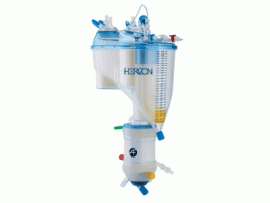
Oxigenador Horizon La solución para la reducción máxima de microémbolos (GME). Se adapta a las necesidades pequeñas de Adultos y Pacientes Adultos garantizando un rendimiento adecuado desde 0,5 L/min a..
Read More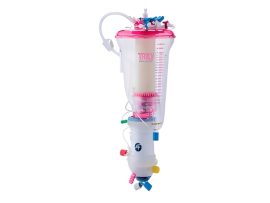
Trilly Infant-Pediatric Diseñado para optimizar la reducción de GME en pacientes pediátricos El oxigenador pediátrico Trilly, gracias a la dinámica de flujo optimizada, garantiza un rendimiento excepcional de 0,5 lpm..
Read More
PRO Cardioplegia, the intentional and temporary arrest of the heart during cardiac surgery, has been a cornerstone of modern heart transplantation, enabling myocardial protection during ischemic periods. Its use dates..
Read More
Abstract Background Cardiopulmonary bypass is widely used in cardiac surgery but often leads to lung ischemia–reperfusion injury, a major cause of morbidity and mortality. Despite advances in critical care, effective..
Read More
Abstract Extracorporeal membrane oxygenation (ECMO) is a last resort treatment for children with cardio-respiratory failure. Some of these patients will develop thrombocytopenia-associated multiple organ failure (TAMOF), which is sometimes managed..
Read More
Abstract Cardiac surgery patients may experience stress and anxiety, negatively impacting recovery. Pharmacological treatments are frequently used but may result in side effects. We aimed to assess the effectiveness of..
Read More
Abstract Background To evaluate the association between intraoperative end-tidal carbon dioxide (ETCO₂) levels and clinical outcomes in patients undergoing cardiac surgery. Methods This retrospective analysis included patients who underwent cardiac..
Read More
Abstract Remote ischemic preconditioning (RIPreC) has been regarded as a promising strategy to reduce ischemia-reperfusion injury to the heart and other organs caused by cardiopulmonary bypass. While RIPreC has demonstrated..
Read More
Abstract Objectives Early prediction is crucial for cardiac surgery-associated acute kidney injury (CSA-AKI). We aimed to develop and validate a simple, clinical- and laboratory-based risk score system for better CSA-AKI..
Read More
Abstract Introduction Neonatal aortic arch surgery is associated with neurological morbidity of varying severity which is detected and potentially limited through neuroprotective strategies. We conducted a survey of healthcare professionals..
Read More
Abstract Objectives Extracorporeal Life Support (ECLS) has evolved into an established treatment for severe cardiogenic shock. As most patients have residual antegrade left ventricular output toward the descending aorta that..
Read More