


Abstract Objectives: To identify factors associated with the development of death by neurologic criteria (DNC) in neonates treated with extracorporeal membrane oxygenation (ECMO). Design: Retrospective registry study. Setting: Data reported..
Read More
Abstract Background Controversies exist in anticoagulation practices in extracorporeal membrane oxygenation (ECMO). It is uncertain whether the intensity of anticoagulation affects ECMO outcomes. Objectives To conduct a meta-analysis to determine..
Read More
Abstract Objective: To describe those neonates with dextro-transposition of the great arteries (d-TGA) who undergo preoperative support with extracorporeal membrane oxygenation (ECMO) and to compare outcomes in those undergoing the..
Read More
Abstract The number of potential pediatric heart transplant recipients continues to exceed the number of donors, and consequently the waitlist mortality remains significant. Despite this, around 40% of all donated..
Read More
Abstract Objectives Del Nido cardioplegia has gained increasing popularity, evolving from its original use in paediatric and congenital heart surgery to widespread adoption in adult cardiac procedures. This review aims..
Read More
Abstract Objectives: Venovenous extracorporeal membrane oxygenation (ECMO) represents a standard and well-accepted modality of treating patients with refractory respiratory failure. Nevertheless, some patients might develop refractory hypoxemia, hemodynamic compromise or..
Read More
Abstract Background Donor discard rates for pediatric heart transplant (HT) remain high (≈40%), often driven by concerns about elevated donor troponin levels. This study evaluated the association between peak donor..
Read More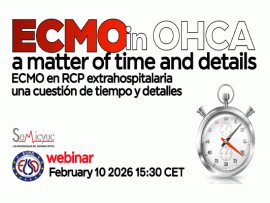
ECMO in Out-of-Hospital Cardiac Arrest: A Matter of Time and Details - ECMO en la parada cardiaca extrahospitalaria: una cuestión de tiempo y detalles This EuroELSO webinar is organized together..
Read More
Abstract Background: Prone positioning improves survival in patients with acute respiratory distress syndrome (ARDS) by reducing ventilator-induced lung injury and enhancing ventilation–perfusion matching. Whether these physiological benefits translate to patients..
Read More
Abstract Context: Veno-arterial extracorporeal membrane oxygenation (VA-ECMO) is a life-sustaining therapy for severe refractory cardiogenic shock. Although VA-ECMO provides various degrees of cardiopulmonary support, mortality rates remain high. Serum biomarkers have..
Read More
Abstract Introduction Ventricular assist devices (VADs) have emerged as essential tools for stage D heart failure, improving survival and quality of life by serving as a bridge to transplant, destination..
Read More
Abstract Objectives Cardiac surgery is associated with an increased dioxygen (O2) consumption (VO2) following cardiopulmonary bypass (CPB). But data on intraoperative VO2 variation during pulmonary endarterectomy (PEA) are scarce. We aimed..
Read More
Abstract Background Extracorporeal cardiopulmonary resuscitation (ECPR), an emerging resuscitative therapy following refractory cardiac arrests, is associated with hemorrhagic complications that potentially affect patient outcomes. Objectives This study evaluated the risks..
Read More
Abstract (ECMO) is an invaluable resource in the treatment of critically ill children with cardiopulmonary failure. To date, over 36,000 children have been placed on ECMO and the utilization of..
Read More
Abstract Background: Nosocomial infections are common in patients receiving extracorporeal membrane oxygenation (ECMO), with ECMO cannula‑site infections (ECMO‑CSI) being the most frequent infections directly related to the ECMO run. These..
Read More
Abstract Objective This scoping review systematically examines the use of intraoperative cell salvage in bacterially contaminated surgical settings, examining contamination levels, decontamination strategies, and clinical outcomes following the reinfusion of..
Read More
Abstract Background Amniotic fluid embolism (AFE) with cardiac arrest is an obstetric emergency with an exceedingly high maternal mortality. Early application of veno-arterial extracorporeal membrane oxygenation (VA-ECMO) may provide essential..
Read More
Abstract Therapeutic plasma exchange (TPE) is a cornerstone extracorporeal therapy with broad immunomodulatory effects across diverse immune-mediated and inflammatory diseases. By removing circulating pathogenic substances such as autoantibodies, immune complexes,..
Read More
Infusion strategy of del Nido cardioplegia for long aortic cross-clamp time in adult cardiac surgery
Abstract Background The del Nido cardioplegia (DNC) solution has been widely used for myocardial protection in adult cardiac surgery, however, its use remains unclear in cases with long aortic cross-clamp..
Read More
Abstract Aims The study explores the association between race, survival and neurological outcomes among out-of-hospital cardiac arrest (OHCA) patients listed in Minnesota metro and the University of Minnesota Extracorporeal Cardiopulmonary..
Read More
Abstract Managing refractory cardiogenic shock is individualized, with few aspects considered routine or universally contraindicated. Venoarterial extracorporeal membrane oxygenation (VA-ECMO) is a temporary mechanical circulatory support strategy, providing hemodynamic stabilization..
Read More
Abstract Introduction Contrast-induced acute kidney injury (CIAKI) is a common and serious complication of coronary angiography, caused by iodinated contrast agents. It significantly worsens cardiovascular prognosis and increases in-hospital morbidity..
Read More
Abstract Background The association between sex and cardiovascular risk and different responses to heart failure therapies is well established. However, sex related outcomes of different types of short-term mechanical circulatory..
Read More
Abstract Background Extracorporeal cardiopulmonary resuscitation (eCPR) is a new approach for cardiac arrest management and is regarded as a possible alternative for conventional cardiopulmonary resuscitation (cCPR). Aim Our systematic review..
Read More
Abstract Cardiovascular surgery with cardiopulmonary bypass (CPB) is associated with several potential complications, including the activation of inflammatory and coagulation pathways, which may lead to acute kidney injury (AKI). In..
Read More
Abstract Pressure-volume (PV) loop analysis remains the gold standard for studying cardiac physiology by offering a comprehensive analysis and quantitative assessment of the heart. The PV loop analysis uncovers the..
Read More
Abstract Background Extracorporeal membrane oxygenation (ECMO) is a life support technique used in patients with respiratory or cardiac failure. Despite the increased use of ECMO, the incidence and risk factors..
Read More
Abstract Myocardial protection during cardiac surgery is crucial for preventing ischemia-reperfusion injury and preserving myocardial function. Cardioplegia, a solution used to induce electromechanical cardiac arrest, is the fundamental method for..
Read More
Abstract Objectives: Extracorporeal membrane oxygenation (ECMO) plays a crucial role in the outcome of children following surgery for congenital heart disease. However, its availability and affordability are minimal across the globe...
Read More
Abstract Despite evidence-based guidelines to inform platelet transfusion practice, unnecessary platelet transfusion persists. We performed a multicentre retrospective analysis of adults admitted to general medicine, subspecialty medicine and critical care..
Read More