


Abstract Background The global adoption of extracorporeal cardiopulmonary resuscitation (ECPR) for cardiac arrest is accelerating, reflecting its potential to improve outcomes in select patient populations. Although research has increasingly focused..
Read More
Abstract Background Systemic Inflammatory Response Syndrome (SIRS) is a frequent and critical complication following cardiac surgery, particularly in patients undergoing cardiopulmonary bypass (CPB). Although SIRS is associated with increased morbidity..
Read More
Abstract Objective: To compare the effects of intermittent classical blood cardioplegia and single-dose modified Del Nido cardioplegia on postoperative serum lactate levels and extubation time in patients undergoing coronary artery bypass..
Read More
Abstract Background/Objectives: Venovenous extracorporeal membrane oxygenation (VV ECMO) supports reversible respiratory failure when mechanical ventilation fails. Technological advances and specialized teams now enable ECMO initiation at referring centers, even for high-risk..
Read More
Abstract Objectives To assess whether intravenous lidocaine reduces the systemic inflammatory response associated with cardiopulmonary bypass (CPB) and improves clinical outcomes in adult patients undergoing elective valvular and/or coronary cardiac..
Read More
Abstract A six-month-old, 3.3-kg, intact male American shorthair cat with a ventricular septal defect (VSD) underwent open-heart surgery using total cardiopulmonary bypass. Repair of the VSD was performed via a..
Read More
Abstract Introduction Regardless of its effectiveness, veno-arterial extracorporeal membrane oxygenation (VA-ECMO) support is not a risk-free method. Its use is associated with high complication and mortality rates, especially in patients..
Read More
Abstract Objectives This study aimed to investigate whether prebypass endogenous melatonin concentrations are associated with perioperative oxidative DNA injury, indexed by urinary 8-hydroxy-2′-deoxyguanosine (8-OHdG), and to explore their relationship with..
Read More
Abstract Objectives This study describes a single-institution experience of adult patients supported with multiple runs of extracorporeal membrane oxygenation (ECMO) during the same hospitalization. We aim to assess complication and..
Read More
Abstract Extracorporeal cardiopulmonary resuscitation (ECPR) using venoarterial extracorporeal membrane oxygenation (VA ECMO) is a life-saving intervention for selected patients in refractory cardiac arrest. Given the procedure’s technical complexity and time-critical..
Read More
Abstract Background Acute aortic dissection of the ascending aorta is a life-threatening disease that poses a significant challenge for cardiovascular surgeons. Dissection of the aorta typically occurs when the aortic..
Read More
Abstract Venoarterial extracorporeal membrane oxygenation (VA-ECMO) offers cardiopulmonary support with the tradeoff of increased left ventricular (LV) afterload and its adverse sequelae. LV decompression strategies include the use of intra-aortic..
Read More
Abstract Background Fulminant myocarditis is a severe cardiac condition characterized by rapid progression and high mortality. In recent years, advancements in medical technology, particularly the application of mechanical circulatory support,..
Read More
Abstract Background Effective myocardial protection during cardiac surgery is essential, yet the differential metabolic stress of the left (LV) and right ventricles (RV) to ischemia–reperfusion remains poorly characterized. Methods This..
Read More
Abstract Heparin is among the most widely used anticoagulants worldwide, with an annual market of ∼$4 billion. It also poses potential bleeding risks (0.5–5%), occasionally life-threatening, necessitating heparin reversal agents...
Read More
Abstract Background In cardiac surgery, intraoperative tranexamic acid (TXA) is commonly used and highly recommended approach for managing perioperative bleeding. Nevertheless, a standardized dose and administration protocol remains undefined. This..
Read More
Abstract Introduction Atrial fibrillation (AF) is the most common arrhythmia following cardiac surgery. Although many risk factors have been studied, none has emerged as a dominant and widely applicable prophylactic measure. Aim..
Read More
Abstract Objective: Whole blood oxygen saturation and hemoglobin concentration are key markers of health across a variety of clinical contexts. Extracorporeal systems (dialysis, cardiopulmonary bypass, ECMO, etc.) require close monitoring..
Read More
Abstract Background For patients presenting with cardiogenic shock due to acute myocardial ischaemia, veno-arterial extracorporeal membrane oxygenation (ECMO) is often the only potential lifesaving intervention remaining when revascularisation does not..
Read More
Abstract Introduction Lysine analog antifibrinolytics (LAAF) like tranexamic acid (TXA) and aminocaproic acid (EACA) reduce intraoperative blood loss, especially in cardiac surgery where bleeding risks are high. These LAAFs inhibit..
Read More

1. Donor Identification •Identify a potential DCD donor (Maastricht category III or II in some systems). •Patient has devastating neurologic or systemic injury but does not meet..
Read More
A redo Bentall operation for right coronary artery (RCA) ostial insufficiency represents one of the most technically demanding scenarios in complex aortic root surgery. This condition typically arises from progressive..
Read More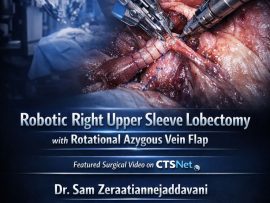
In this video, the authors demonstrate a robotic right upper sleeve lobectomy with a rotational azygos vein flap. The patient was a 68-year-old female presenting with a right supra-hilar non-small..
Read More
Abstract Time is critical in the diagnosis and treatment of cardiogenic shock, even more so than in septic shock. Early identification enables prompt circulatory support and restoration of tissue oxygenation. Baseline..
Read More
Abstract Normothermic regional perfusion (NRP) has emerged as one of the most consequential innovations in modern liver transplantation, particularly in the context of controlled donation after circulatory death (cDCD). Historically,..
Read More
Abstract Objective: Postoperative pneumonia (POP) is a frequent complication after cardiac surgery, which significantly worsens prognosis. This study aimed to identify preoperative and intraoperative factors independently associated with POP in..
Read More
Abstract Background Cardiac operations with cardiopulmonary bypass (CPB) trigger a systemic inflammatory response. To understand the underlying mechanisms behind the biological reactions during CPB, rat models that mimic clinical CPB..
Read More
Abstract Introduction: Red blood cell (RBC) transfusions are frequent in cardiac surgery and are associated with higher morbidity, mortality, prolonged hospitalization, and increased healthcare costs. Several patient- and procedure-related factors have..
Read More
Abstract Objectives To test the hypotheses that intraoperative hyperlactatemia is independently associated with increased postoperative infection risk in cardiac surgery with cardiopulmonary bypass (CPB). Methods This study involved 4970 cardiac..
Read More