
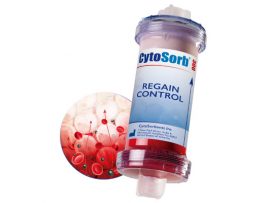

Abstract Introduction Patients subject to major surgery, suffering sepsis, major trauma, or following cardiopulmonary bypass exhibit a systemic inflammatory response. This inflammatory response involves a complex array of inflammatory polypeptide..
Read More
Abstract Background: Out-of-hospital cardiac arrest (OHCA) refractory to conventional high-quality cardiopulmonary resuscitation (CPR) may be rescued by extracorporeal CPR (eCPR) using veno-arterial extracorporeal membrane oxygenation (V-A ECMO). Even when trying..
Read More
Abstract Cardiac arrest is the most serious event among the complications associated with spinal anesthesia. Spinal anesthesia reduces the release of catecholamines and impairs neuroendocrine response following cardiac arrest, which..
Read More
Abstract Cardiogenic shock is an acute emergency, which is classically managed by medical support with inotropes or vasopressors and frequently requires invasive ventilation. However, both catecholamines and ventilation are associated..
Read More
V-A ECMO V-V ECMO Variation in V-V ECMO cannulae sites Central cannulation for V-A ECMO
Read More
Abstract Abstract: The article reviews cannulation strategy for different modes of extracorporeal life support. Technical aspects, pitfalls and complications are discussed for central and peripheral extracorporeal membrane oxygenation (VA, VV,..
Read More
Abstract In acute respiratory distress syndrome (ARDS) with refractory septic shock, isolated veno–venous (VV) or veno–arterial (VA) extracorporeal membrane oxygenation (ECMO) may lead to differential hypoxia or inadequate tissue perfusion..
Read More
Abstract Extracorporeal membrane oxygenation (ECMO) has emerged as an invaluable tool for bridging severe isolated or combined failure of lung and heart. Due to massive technical improvements, the application of..
Read More
The Relationship Between Oxygen Reserve Index and Arterial Partial Pressure of Oxygen During Surgery
Abstract BACKGROUND: The use of intraoperative pulse oximetry (Spo2) enhances hypoxia detection and is associated with fewer perioperative hypoxic events. However, Spo2 may be reported as 98% when arterial partial pressure..
Read More
Abstract Abstract: Here we report two cases of extracorporeal membrane oxygenation (ECMO) support in pediatric patients following orthotopic heart transplantation due to low cardiac output and inability to separate from..
Read More
Abstract Background Survival of children experiencing cardiac arrest refractory to conventional cardiopulmonary resuscitation (CPR) is very poor. We sought to examine current era outcomes of extracorporeal CPR (ECPR) support for..
Read More
Abstract Background Debilitating brain injury occurs in 1.6–5 % of patients undergoing cardiac surgery with cardiopulmonary bypass. Diffusion-weighted magnetic resonance imaging studies have reported stroke-like lesions in up to 51 % of..
Read More
Abstract Introduction Acute respiratory distress syndrome (ARDS) with concomitant impairment of oxygenation and decarboxylation represents a complex problem in patients with increased intracranial pressure (ICP). Permissive hypercapnia is not an..
Read More
Abstract PURPOSE: Cardiopulmonary bypass (CPB) procedures are thought to activate systemic inflammatory reaction syndrome (SIRS). Strategies to curb systemic inflammation have been previously described. However, none of them is adequate,..
Read More
Abstract OBJECTIVES This study investigates the effects of high glucose content on patients undergoing cold crystalloid versus cold blood cardioplegia in terms of early clinical results, functional myocardial recovery and..
Read More
Abstract Minimal invasive extracorporeal circulation (MiECC) systems have initiated important efforts within science and technology to further improve the biocompatibility of cardiopulmonary bypass components to minimize the adverse effects and..
Read More
Abstract Background and Aims: Cardiopulmonary bypass induces a systematic inflammatory response, which is partly understood by investigation of peripheral blood cytokine levels alone; the lungs may interfere with the net..
Read More
Abstract This article is one of ten reviews selected from the Annual Update in Intensive Care and Emergency medicine 2016. Other selected articles can be found online at . Further information..
Read More
Since its first clinical use in the 1950s, the set-up and management of the heart-lung machine (HLM) has been the responsibility of the perfusionist, who has a documented competency..
Read More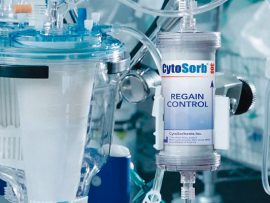
Abstract Sepsis is aggravated by an inappropriate immune response to invading microorganisms, which occasionally leads to multiple organ failure. Several lines of evidence suggest that the ventricular myocardium is depressed..
Read More
Abstract OBJECTIVES We sought to evaluate the effect of centre volume on survival when extracorporeal membrane oxygenation (ECMO) is used as a bridge to lung transplantation (LTx). METHODS We performed..
Read More
Abstract Background Extracorporeal membrane oxygenation (ECMO) represents a valuable and rapidly evolving therapeutic option in patients with severe heart or lung failure following cardiovascular surgery. However, despite significant advances in..
Read More
Abstract Traditional venovenous (VV) extracorporeal membrane oxygenation (ECMO) for respiratory failure requires deep sedation and immobilization of patients, both of which carry high morbidity and mortality rates. Technological innovation has..
Read More
Abstract Background Extracorporeal carbon dioxide removal (ECCO2R) has been gaining interest to potentially facilitate gas transfer and equilibrate mild to moderate hypercapnic acidosis, when standard therapy with non-invasive ventilation is..
Read More
Abstract OBJECTIVES Aortic valve replacement (AVR) with sutureless bioprostheses has become an alternative to conventional AVR for patients with intermediate to high operative risk. However, this technique is associated with..
Read More
Abstract Background Fibrinogen supplementation has been proposed both to prevent and treat postoperative bleeding in cardiac surgery. The optimal fibrinogen concentration trigger and target values and the fibrinogen concentrate dose..
Read More
Abstract OBJECTIVES To investigate the sterility and biocompatibility of a stored open-reservoir cardiopulmonary bypass circuit maintained on standby. METHODS A total of four cardiopulmonary bypass circuits were assembled, primed and..
Read More
Abstract OBJECTIVES Chronic thromboembolic pulmonary hypertension is the only curable form of pulmonary arterial hypertension. Pulmonary endarterectomy (PEA) has been established as the treatment of choice in these patients producing..
Read More
Abstract Background. Transfusion of allogeneic blood influences outcome after surgery. Despite widespread availability of transfusion guidelines, transfusion practices might vary among physicians, departments, hospitals and countries. Our aim was to..
Read More
Abstract Background. The mechanisms causing increased endothelial permeability after cardiopulmonary bypass (CPB) have not been elucidated. Using a bioassay for endothelial barrier function, we investigated whether endothelial hyperpermeability is associated..
Read More