


This special program is designed for surgeons, anesthesia, perfusion, autotransfusion specialists, and nurses. The lecture portion will be presented by Dr. Hany Samir. Dr. Samir is a transplant anesthesiologist, intensivist..
Read More
John Ingram, CCP lectures on the differences between PH stat and Alpha stat techniques for blood gas management and the advantages and disadvantages of each during norm and hypothermic bypass..
Read More
Joe Basha, CCP lectures on the history and the contemporary use of blood transfusions in medicine.
Read More
Joe Basha, CCP and John Ingram, CCP lecture and discuss the risks and benefits of blood transfusions and also explore and discuss the blood banking industry.
Read More
Minh Tran, CCP and Joe Basha, CCP discuss the use of passive antibody therapy, also referred to as convalescent plasma. An old therapy making a resurgence in the treatment of..
Read More
Joe Basha, CCP and Nathanial Bedair, CCP discuss the use of pump standby and the need to remain vigilant as things can happen quickly.
Read More
Stephanie Ibus, CCP and Joe Basha, CCP provide lecture and discussions on the perfusion management of Surgical Aortic Valve Replacement (SAVR) patients.
Read More
Dr. Borut Gersak lectures on the benefits of minimally invasive aortic valve surgery and describes the Perceval sutureless valve implantation.
Read More
Katie Kim, RN describes and discusses hemodynamic monitoring in the critical care unit. Katie and the panel dive into advanced hemodynamic monitoring and how these monitoring practices help improve outcomes..
Read More
The learner will be able to describe the physiologic principles of urine production and discuss how cardiopulmonary bypass effects urine production and the potential development of Acute Kidney Injury (AKI)...
Read More
Joe Basha, CCP discusses the use of Continuous Renal Replacement Therapy CRRT in the critical care unit and how in selected patients, CRRT (Continuous Renal Replacement Therapy) may be superior..
Read More
Excellent discussion and review of opinions and data from key opinion leaders in the area cardiac surgery. Discussions about patient outcomes, safety, effectiveness, advantages, disadvantages, appropriateness and when an off..
Read More
Intensivist, Juan Carlos Zubieta, MD discusses common electrolyte disturbances seen in the critical care unit patient and how to address these for improved patient outcomes. Dr. Zubieta discusses how to..
Read More
The learner will be able to discuss what Acute Kidney Injury (AKI) is and factors that influence its development. The learner will be able to discuss the RIFLE, AKIN, and..
Read More
John Ingram, CCP lectures and discusses how organs interact with each other with hormonal signals.
Read More
How ECMO contributes to maintaining kidney dysfunction and casually participates in the development of AKI (Acute Kidney Injury).
Read More
Super lecture and discussion around management of the Critical Care Unit patient. Common problems if the ICU patient. What is the role of the CRRT (Continuous Renal Replacement Therapy).
Read More
Differences between Continuous Veno-Venous Hemofiltration (CVVH) and Intermittent Hemodialysis (IHD)
Joe Basha, CCP and Minh Tran, CCP review what Continuous Veno-Venous Hemofiltration (CVVH) is and the differences between CVVH and Intermittent Hemodialysis (IHD). Also described are the differences in diffusive..
Read More
Nathan Bedair, CCP and Joe Basha, CCP take a deeper look at Continuous Veno-Venous Hemofiltration and examine the advantages of CVVH over Intermittent Hemodialysis for the removal of pro-inflammatory mediators..
Read More
Renal Function, AKI, and Fluid Balance for the Perfusionist - 2.0
Read More
Renal Function, AKI, and Fluid Balance for the perfusionist.
Read More
Summary The COVID-19 pandemic strained health-care systems throughout the world. For some, available medical resources could not meet the increased demand and rationing was ultimately required. Hospitals and governments often..
Read More
The COVID-19 pandemic has raised challenging questions about the rationing of intensive care unit (ICU) beds, mechanical ventilators, and extracorporeal membrane oxygenation (ECMO). Experts have recommended that ECMO be..
Read More
Caso clínico Paciente mujer de 2 años diagnosticada con doble salida del ventrículo derecho. En los monitoreos de control, la paciente presentó signos y síntomas de hipoxemia: agitación,..
Read More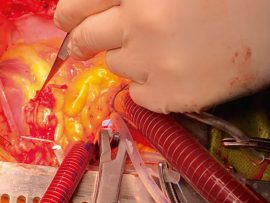
Abstract Introduction: Use of bilateral internal thoracic artery (BITA) as graft in coronary artery bypass grafting (CABG) is controversial because it is related to higher in-hospital mortality, incidence of sternal..
Read More
Abstract Carotid artery stenosis (CAS) and vertebral artery stenosis (VAS) are associated with cerebral infarction after cardiopulmonary bypass (CPB). We read with great interest the article “Cerebral Lesions in Patients..
Read More
Abstract Introduction: Stroke is a complication that causes considerable morbidity and mortality during the heart surgery postoperative period (incidence: 1.3 to 5%; mortality: 13 to 41%). Models for assessing the..
Read More
Abstract Atrial septal aneurysm (ASA) is an uncommon but wellrecognized cardiac abnormality. This educational text reviews the case of a 54-year-old female presenting an ASA related to a small ostium..
Read More
Abstract OBJECTIVES: With evidence of benefits of pediatric palliative care (PPC) integration, we sought to characterize subspecialty PPC referral patterns and end of life (EOL) care in pediatric advanced heart..
Read More
Abstract A 32-month-old girl with patent ductus arteriosus, false tendon of left ventricle, mild pulmonary hypertension, and chronic cardiac insufficiency (cardiac function level I-II) was misdiagnosed with Marfan Syndrome and..
Read More