


Abstract Background Hemorrhagic events remain a major concern in patients under extracorporeal membrane oxygenation (ECMO) support. We tested the association between anticoagulation levels and hemorrhagic events under ECMO using anti-Xa..
Read More
Abstract OBJECTIVES Hearts donated after circulatory determination of death are usually preserved with normothermic machine perfusion prior to transplantation. This type of preservation is costly, requires bench time adding to..
Read More
Abstract Background: To report and compare the characteristics and outcomes of COVID-19 patients on extracorporeal membrane oxygenation (ECMO) to non-COVID-19 acute respiratory distress syndrome (ARDS) patients on ECMO. Methods: We..
Read More
Abstract Cardiopulmonary bypass (CPB) is very commonly performed among the cardiovascular surgeries, and delayed recovery (DR) is a kind of serious complications in patients with CPB. It is necessary to..
Read More


Abstract UNLABELLED:Hemodilution during cardiopulmonary bypass (CPB) is a primary risk factor for blood transfusion in cardiac surgical patients. Priming of the CPB circuit with the patients' own blood (retrograde autologous..
Read More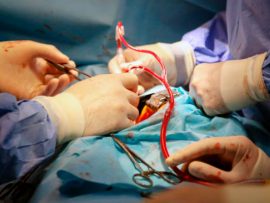
Abstract Vasoplegic syndrome is a common occurrence following cardiothoracic surgery and is characterized as a high-output shock state with poor systemic vascular resistance. The pathophysiology is complex and includes dysregulation..
Read More
Abstract The current practice of cardiopulmonary bypass (CPB) requires a preoperative priming of the circuit that is frequently performed with crystalloid solutions. Crystalloid priming avoids massive embolism but is unable..
Read More
Lectures and discussion on common congenital cardiac defects and the surgical correction of congenital cardiac defects. Perfusion techniques for pediatric perfusion. Best practices for pediatric ECMO.
Read More
Delivery of Oxygen and Acute Renal Injury, Making the Connection Cardiopulmonary Bypass; is our use of Phenylephrine Causing Acute Kidney Injury? ECMO economics Discussion
Read More
ECMO and CRRT ECMO patient selection ECMO cannulation strategies Discussion
Read More
ECMO and survival Pediatric ECMO ECMO - The tools to deliver Discussion
Read More
ECMO and coagulation ECMO circuit design and safety ECMO staffing Discussion
Read More
Perfusion program director at Vanderbilt University discusses staffing models for ECMO departments. Nursing Based ECMO Staffing Model Respiratory Therapist Based ECMO Staffing Model Perfusion Based ECMO Staffing Model Hybrid Base..
Read More
Comprehensive discussions about the various devices used to deliver ECMO therapy.
Read More
Lively lecture and discussion about Extracorporeal Membrane Oxygenation (ECMO) survival data and how patient selection and timing of ECMO initiation contributes to improving ECMO outcomes.
Read More
The learner will be able to discuss anticoagulation strategies for patients on ECMO.
Read More
Joe Basha, CCP lectures on Extracorporeal Membrane Oxygenation (ECMO) safety and discussions on ECMO circuit design to minimize risks.
Read More
The learner will be able to discuss plasma adsorption therapy and how this benefits patients suffering Systemic Inflammatory Response Syndrome (SIRS). Our bodies are very good at fighting infections. The..
Read More
The learners will be able to describe where Extracorporeal Membrane Oxygenation (ECMO) cannulas can be placed to achieve specific respiratory and circulatory support goals.
Read More
Kimberlee Spurlin, RN lectures and discusses the use of Continuous Renal Replacement Therapy (CRRT) and Continuous Veno Venous Hemofiltration (CVVH) integrated into the ECMO circuit. CRRT fundamentals. Extracorporeal Membrane Oxygenation..
Read More
Matt Warhoover, CCP of Vanderbilt University lectures and discusses economics of ECMO therapy and cost control/quality improvement strategies.
Read More
How ECMO contributes to maintaining kidney dysfunction and casually participates in the development of AKI (Acute Kidney Injury).
Read More
The PerfWeb panel discusses the ECMO (Extracorporeal Membrane Oxygenation) team. How an ECMO team is formed, and how it is maintained.
Read More
Patrick O'Toole, CCP, and Chris Lusby, CCP present and discuss issues surrounding the use of ECMO specialists for monitoring and/or staffing ECMO programs.
Read More
Dr. Eric Skipper lectures and discusses the importance of patient selection by ELSO guidelines to ensure a successful and beneficial ECMO (Extracorporeal Membrane Oxygenation) program.
Read More
Chris Lusby, CCP and Joe Basha, CCP discuss ECMO delivery techniques and share the differences in practice protocols between them.
Read More
Thomas MacGillivray, MD and Mr. Curt Shelley, MEd, RRT-NPS lecture and discuss congenital heart disease and adulthood. The use of ECMO in pediatric patients.
Read More