


Abstract Study objective Low (BIS) values have been associated with adverse postoperative outcomes. However, trials of optimizing BIS by titrating anesthetic administration have reported conflicting results. One potential explanation is that may..
Read More
Endocarditis related to PM-lead infection is a rare but serious complication of permanent transvenous pacing. The reported incidence after permanent endocardial PM implantation varies in the literature from 0.13% to..
Read More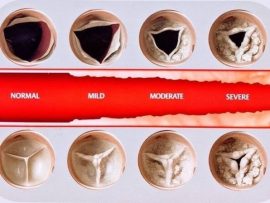


Abstract Over 50 years ago, visionary researchers began work on an extracorporeal artificial placenta to support premature infants. Despite rudimentary technology and incomplete understanding of fetal physiology, these pioneering scientists..
Read More
Patient with MS and MR and MVR with cardiamed valve. [playlist ids="16525"] Dr.Sam Zeraatian Nejad Davani, CEO of rockingham medical research ADKWA center as well as Head of IUMS transplant..
Read More
Abstract Successful management of Cesarean Delivery complicated by emergent CPB and AVR requires meticulous multidisciplinary planning. This case also represents the volatility that can arise from severe aortic regurgitation during..
Read More
Abstract Purpose of review The collection of shed blood and its reinfusion has been termed ‘cell salvage’ or ‘autotransfusion’. This review will summarize the historical foundation of cell salvage and summarize recent..
Read More
Abstract Purpose: This studywas designed to optimize the latestgeneration venovenous (vv)-extra-corporeal membrane oxygenation(ECMO)-circuit configuration andsettings based on the evaluation ofblood oxygenation and CO 2 removaldeterminants in patients with severeacute respiratory..
Read More
Abstract Highlights • Hemolysis due to CPB leads to an increase of serum free Hemoglobin(fHb) level. • Increase of serum fHb level had an independent association with postoperative AKI. •..
Read More
Abstract Background Cardiac surgeries are high risk procedures that require specialized care and access to these procedures is often limited in resource-poor countries. Although fatalities for surgical patients across Africa..
Read More
Abstract Background Recently adopted mini-thoracotomy approach for surgical aortic valve replacement has shown benefits such as reduced pain and shorter recovery, compared to more conventional mini-sternotomy access. However, whether limited..
Read More
Blood transfusion is a critical and life-saving facet of the care for cardiothoracic surgery patients. Inherent to the transfusing of blood is the understanding of the preservation of blood as..
Read More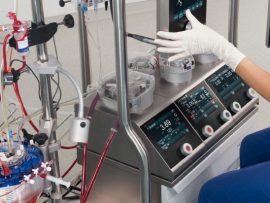
Abstract To the editor, Retrograde autologous priming (RAP) is a non-drug blood protection method to reduce blood dilution by lowering the amount of crystal liquid priming., , But there is no unified..
Read More
Abstract OBJECTIVES: To compare current practices within the United States of anticoagulation management and blood transfusion in neonatal and pediatric extracorporeal membrane oxygenation patients with a 2013 international report. DESIGN: ..
Read More
Abstract Patients with inherited anemia and hemoglobinopathies (such as sickle cell disease and β-thalassemia) are treated with red blood cell (RBC) transfusions to alleviate their symptoms. Some of these patients..
Read More
Abstract Acute respiratory distress syndrome (ARDS) after cardiac surgery is reported with a widely variable incidence (from 0.4%-8.1%). Cardiac surgery patients usually are affected by several comorbidities, and the development..
Read More
Patient with massive PTE due to brain tumor.Asterocytoma and dyspnea as well as hypoxemia and hypotension undergone bicaval cannulation Zeraatian's single incision technique in pulmonary embolectomy of both LPA and..
Read More
Abstract Giani et al. found low levels of carboxyhemoglobin (COHb) in a cohort of patients supported on veno-venous extracorporeal membrane oxygenation (VV ECMO) at their center. It is noteworthy that even on..
Read More
Abstract Misalignment of measures, measurement and analysis with the goals and methods of quality improvement efforts in healthcare may create confusion and decrease effectiveness. In healthcare, measurement is used for..
Read More
Abstract Patient blood management (PBM) has been proposed as a standard of care in modern . PBM-related interventions usually are implemented as bundles, but randomized controlled trials on the implementation of..
Read More
Abstract Extracorporeal membrane oxygenation (ECMO) plays an important role in the coronavirus disease 2019 (COVID-19) pandemic. Management of thrombi in ECMO is generally an important issue; especially in ECMO for..
Read More
Abstract Background Extracorporeal membrane oxygenation (ECMO) is a resource-intense modality of care whose use has grown exponentially. We examined volume and utilization trends to identify the financial break-even point that..
Read More
Abstract Clinical guidelines play an increasingly important role in care of patients with cardiovascular disease. Approaches to guideline development reflect the need to integrate a complex and ever-expanding evidence base..
Read More
Abstract Various anticoagulant properties have been associated with hydroxyethyl starch (HES). However, the mechanism remains unclear and it has not been fully considered whether these properties are beyond the dilutional..
Read More
Abstract Introduction Vasoplegia denotes a state of low tissue perfusion characterized by hypotension, tachycardia, and low systemic vascular resistance. This state results in increased mortality and morbidity following cardiac surgery...
Read More
Abstract Our current understanding of flow through the circuit of left ventricular assist device (LVAD), left ventricle and ascending aorta remains incompletely understood. Computational fluid dynamics, which allow for analysis..
Read More
Abstract Prone position quickly imposed as a cornerstone in the management of patients with acute respiratory distress syndrome (ARDS) induced by coronavirus disease 2019 (COVID-19) [, ]. The response to prone..
Read More
Abstract Background Approximately 20% to 30% of patients awaiting cardiac surgery are anemic. Anemia increases the likelihood of requiring a red cell transfusion and is associated with increased complications, intensive care,..
Read More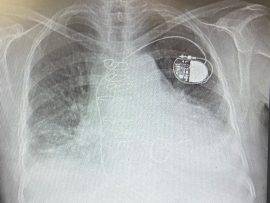
Patient with recently inserted Cardiamed valve from Dastavard sina company and trans valve pacing wire [gallery ids="16400,16403"] [playlist ids="16406"] Dr.Sam Zeraatian Nejad Davani, CEO of rockingham medical research ADKWA center..
Read More