

This case reports on a 66-year-old female patient who presented to hospital for elective surgical treatment of a large right-sided renal pelvic stone. [pdf-embedder url="https://perfusfind.com/wp-content/uploads/2021/07/CoW_30_2021_E_web_compressed.pdf"]
Read More
Patient with very very low LVEF not suitable candidate for transplant with laminated as well as mobike LV clot undergone SVR surgical ventricular reconstruction as well ad LV clot evacuation...
Read More
Patient with Anterior mediastinal Mass complete adherent to pulmonary artery trunc undergone complete resection with just minimally opening in the pericardial layer. Dr.Sam Zeraatian Nejad Davani, CEO of rockingham medical..
Read More
Penetrating Trauma to the Heart which Passed lung through and through as well as RV and LAD artery and Tamponade undergone total repair. Dr.Sam Zeraatian Nejad Davani, CEO of rockingham..
Read More
Ascending Aorta Aneurysm undergone complete root replacement as bentall operation. [gallery ids="17457,17463,17466,17469"] Dr.Sam Zeraatian Nejad Davani, CEO of rockingham medical research ADKWA center as well as Head of IUMS transplant..
Read More
Ascending Aorta Dissection with external Hematoma undergone Ascending Aorta Replacement and Hemiarch reconstruction. [gallery ids="17438,17441,17444,17447,17450,17453"] Dr.Sam Zeraatian Nejad Davani, CEO of rockingham medical research ADKWA center as well as Head..
Read More
Patient with Ascending Aorta Aneurysm undergone Supracoronary Aortic Replacement as well as Valve resuspension with Native Valve. [gallery ids="17431,17428,17425,17434"] Dr.Sam Zeraatian Nejad Davani, CEO of rockingham medical research ADKWA center..
Read More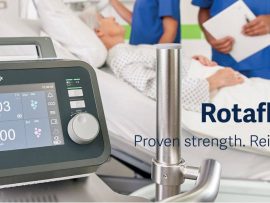
Abstract During 50 years of extracorporeal life support (ECLS), this highly invasive technology has left a considerable imprint on modern medicine, and it still confronts researchers, clinicians and policymakers with multifarious..
Read More
Abstract Pulmonary hemorrhage (PH) is an infrequent and potentially fatal event in term neonates. Reports of successful management of PH on extracorporeal membrane oxygenation (ECMO) are limited, given the accentuated..
Read More
Advanced technique of cardiac harvest in pediatric population with adequate tissue salvage as well as procurement Dr.Sam Zeraatian Nejad Davani, CEO of rockingham medical research ADKWA center as well..
Read More
The Rotaflow II System is a reliable, high quality extracorporeal life support (ECLS) system that gives you the flexibility you need to provide quality patient care. As pioneers in the..
Read More
1 year TOF with pericardial agenesis CT: signs of pericardial agenesis 1) Extreme levocardia. 2) Interposed lung between AO&PA. Thick coronal-reformatted average (mean) projection (X-ray like) >>snoopy sign. [gallery ids="17355,17358,17361,17364"]..
Read More
[playlist ids="17391"] Dr.Sam Zeraatian Nejad Davani, CEO of rockingham medical research ADKWA center as well as Head of IUMS transplant and cardiovascular surgery department. ..
Read More
Repair infundibular stenosis in pulmonary and RVOT undergone subvalvular resection as well as pericardial patch repair. Dr.Sam Zeraatian Nejad Davani, CEO of rockingham medical research ADKWA center as well as..
Read More
Resection of anterior mediastinal mass completely adhered to pulmonary trunc final pathology was in concordance with sarcoma tumor completely shaved from pulmonary trunc on beating heart and underlying pulmonary artery..
Read More
Abstract OBJECTIVES Management of resternotomy is often a difficult challenge in patients with congenital diseases who have undergone multiple sternotomies. Our goal was to report our single-centre experience with carotid..
Read More
Abstract Introduction Thoracic endovascular aortic repair (TEVAR) is the first treatment option for many thoracic aortic pathologies. Especially after aortic dissections, it is possible to have progression during follow-up with..
Read More
Abstract Placement of extracorporeal membrane oxygenation (ECMO) in obese patients has been challenging; however, cannulation risk in obese patients has not been clearly investigated. We therefore explored ECMO cannulation complications in this..
Read More
Abstract Background and aim Thoracotomy approaches to left ventricular assist device (LVAD) implantation may reduce surgical morbidity and, through preservation of the pericardial restraint over the right heart, may reduce..
Read More
Abstract Background Acute kidney injury is a severe complication following cardiopulmonary bypass (CPB) and is associated with capillary leakage and microcirculatory perfusion disturbances. CPB-induced thrombin release results in capillary hyperpermeability..
Read More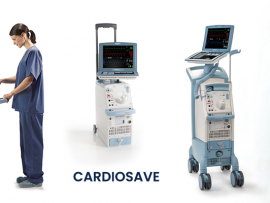
Abstract The modern day CPB circuit consists of a series of tubing, pumps, oxygenator, heat exchanger, and numerous safety and electrical components that allow for complete circulatory support, regulation of..
Read More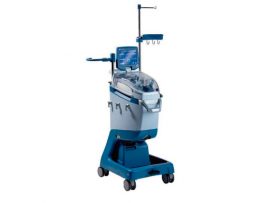
Abstract Objectives: The objective of this work was to carry out a systematic review of clinical practice guidelines (CPGs) pertaining to intraoperative red blood cell (RBC) transfusions, in terms of..
Read More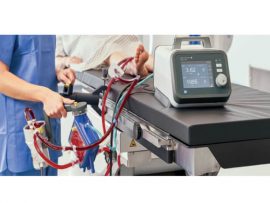
Abstract Neonatal extracorporeal membrane oxygenation (ECMO) is a life-saving procedure for critically ill neonates suffering from a potentially reversible disease, causing severe cardiac and/or respiratory failure and refractory to maximal..
Read More
Tricuspid valve replacement without cardioplegia beating basis bicaval cannulation in patient with complete valve destruction. Dr.Sam Zeraatian Nejad Davani, CEO of rockingham medical research ADKWA center as well as Head..
Read More
Sutureless preceval aortic valve which eroded ascending aorta and undergone reconstruction with dacron graft on beating basis and brain protection. Dr.Sam Zeraatian Nejad Davani, CEO of rockingham medical research ADKWA..
Read More
CABG and innominate artery bypass in patient with 3 vessels disease and simultaneous origin of innominate artery stenosis bypassed with ringed goretex. Dr.Sam Zeraatian Nejad Davani, CEO of rockingham medical..
Read More
Patient with previous preceval sutureless valve came with ascending aorta perforation due to stent outgrow of highly fragile aorta undergone redo sternotomy and site repair with dacron graft. Dr.Sam..
Read More
Pulmonary valve replacement in patient with sever pulmonary valve insufficiency due to previous trans annular patch for TF correction in continuous manner and anterior wall reconstruction with autologous pericardial patch..
Read More
Patient with SVCS or superior venal cava syndrome undergone stent but unfortunately during stent deployment SVC ruptured and patient arrested due to massive pericardial effusion urgently transferred to OR and..
Read More
Abstract BLEEDING is a well-documented and frequently encountered complication after cardiac surgery, affecting roughly 2%-to-10% of all patients. Major bleeding is a known risk factor for significant morbidity and mortality..
Read More