


Abstract Background: Acute kidney injury (AKI) is a common and serious complication faced by children following ventricular septal defect (VSD) surgery with cardiopulmonary bypass (CPB). The objective of this study was..
Read More
Abstract Background: Cardiac surgery–associated acute kidney injury (AKI) is an adverse outcome that increases morbidity and mortality in patients undergoing cardiac surgical procedures. To date, the use of serum creatinine..
Read More
Abstract Extracorporeal membrane oxygenation (ECMO) provides lifesaving circulatory support and gas exchange, although hematologic complications are frequent. The relationship between ECMO and severe thrombocytopenia (platelet count <50 × 109/L) remains ill-defined. We performed..
Read More
Abstract Although machine perfusion has gained momentum as an organ preservation technique in liver transplantation, persistent organ shortages and high waitlist mortality highlight unmet needs for improved organ salvage strategies...
Read More
Abstract Dear Editor, In the earliest phases of the pandemic, the use of extracorporeal life support in patients with severe coronavirus disease 2019 (COVID-19) was associated with disastrous outcomes. However,..
Read More
Abstract Dynamic or hybrid configurations for extracorporeal membrane oxygenation (ECMO) are needed when patient physiology or clinical conditions change. Dynamic configurations included configurations converting from veno-arterial (V-A) ECMO or veno-venous..
Read More
Abstract Extracorporeal membrane oxygenation (ECMO) is an invaluable means of supporting critically ill children with refractory respiratory or cardiac failure. Controversy remains; however, whether roller or centrifugal pumps are superior,..
Read More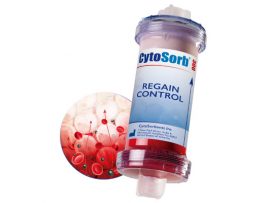
Abstract Hemodynamic instability due to dysregulated host response is a life-threatening condition requiring vasopressors and vital organ support. Hemoadsorption with Cytosorb has proven to be effective in reducing cytokines and..
Read More
Abstract Hemostasis and thrombosis are believed to be so intricately linked that any strategies that reduce thrombosis will have an inevitable impact on hemostasis. Consequently, bleeding is viewed as an unavoidable..
Read More
Abstract Objectives (AKI) is common after cardiac surgery. We quantified the mortality and costs of varying degrees of AKI using a population-based cohort in Alberta, Canada. Methods A cohort of..
Read More
Amyloidosis is caused by an accumulation of abnormal protein, called amyloid deposits. If these build up in your body they can cause problems, depending on where in your body they..
Read More
Preamble Guidelines summarize and evaluate available evidence with the aim of assisting health professionals in proposing the best management strategies for an individual patient with a given condition. Guidelines and..
Read More
Abstract Knowledge of mitral valve (MV) anatomy has been accrued from anatomic specimens derived by cadavers, or from direct inspection during open heart surgery. However, today two-dimensional and three-dimensional transthoracic..
Read More
Abstract Background: The aim of this study was to compare three different blood washing techniques and describe the differences for the composition of the washed red blood cells (RBC). Methods:..
Read More
Abstract Adequate and durable recovery in patients supported with venoarterial (VA) extracorporeal membrane oxygenation (ECMO) can be challenging to predict. Extracorporeal membrane oxygenation weaning is the process by which the..
Read More
Abstract Extracorporeal membrane oxygenation (ECMO) is a last resort therapy for patients with terminal respiratory failure. In the current worldwide surge of critically ill patients with novel coronavirus disease (COVID-19),..
Read More
Abstract Extracorporeal membrane oxygenation is a modified form of cardiopulmonary bypass and a complex adult critical care therapy. No evidence appears to exist on sustaining relevant quality nursing standards during..
Read More
Abstract The Priming volume of the oxygenators has been reduced by 75% during the last two decades and it is now possible to go safely on bypass with a priming..
Read More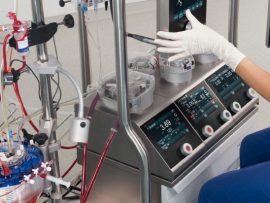
Abstract Commercial 0.9% saline solution for infusion has a pH around 5.5. There are many reasons for this acidity, some of them still obscure. It is also true that infusion..
Read More
Learning points: The tricuspid valve is the largest of the heart valves . Its anatomical structure is complex and constituted of the 3 leaflets, the annulus, the chordae, the papillary..
Read More
Patient with severe dyspnea and chest pain undergone TTE and CMR which confirmed presence of huge RV mass with relation to both LV as well as RV undergone mass resection..
Read More
Abstract Objective: Compare the use of blood products and intravenous fluid management in patients scheduled for coronary artery bypass surgery and randomized to minimal invasive extracorporeal circulation (MiECC) and conventional..
Read More
Congenital diseases Prof. Mamdouh Mahfouz
Read More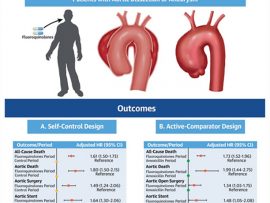
Acquired diseases Aortic aneurysm Prof. Mamdouh Mahfouz
Read More
Abstract Background Acute kidney injury (AKI) is a common complication of cardiac surgery. An intraoperative monitor of kidney perfusion is needed to identify patients at risk for AKI. The authors..
Read More
Abstract Dexmedetomidine (DEX) is a sedative used in combination with other drugs in neonates and infants undergoing cardiac surgery using cardiopulmonary bypass (CPB). This study aimed to evaluate the disposition..
Read More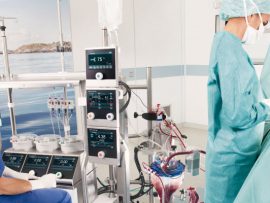
Abstract Background Guidelines recommend evaluation for electrographic seizures in neonates and children at risk, including after cardiopulmonary bypass (CPB). Although initial research using screening electroencephalograms (EEGs) in infants after CPB..
Read More
Abstract Aim Renal tissue hypoxia during cardiopulmonary bypass could contribute to the pathophysiology of acute kidney injury. We tested whether renal tissue hypoxia can be alleviated during cardiopulmonary bypass by..
Read More
Abstract Background: Patients with acute type A aortic dissection are usually transferred to the intensive care unit (ICU) after surgery. Prolonged ICU length of stay (ICU-LOS) is associated with higher level..
Read More
Abstract Introduction: The intra-aortic balloon pump (IABP) and Impella are left ventricular unloading devices with peripheral venoarterial extracorporeal membrane oxygenation (VA-ECMO) in place and later serve as bridging therapy when..
Read More