
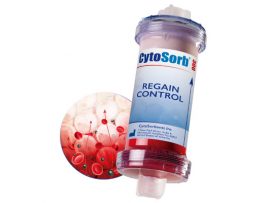

This case reports on a 28-year-old female patient who was referred intubated and ventilated from an intensive care unit (ICU) of another tertiary care hospital to Sir Gangaram Hospital, Delhi,..
Read More
Abstract Background A meta-analysis of randomized controlled trials was recently published in BMC Surgery that compared the use of human albumin with 6% hydroxyethyl starches 130/0.4 for cardiopulmonary bypass prime..
Read More
Abstract Background Ever since COVID-19 was declared a pandemic, the world medical landscape has changed dramatically. As cardiac surgeons we not only have the duty to protect our patients and..
Read More
Abstract Acute brain injury (ABI) occurs frequently in patients receiving venoarterial extracorporeal membrane oxygenation (VA-ECMO). We examined the association between peri-cannulation arterial carbon dioxide tension (PaCO2) and ABI with granular..
Read More
Abstract Background Extracorporeal circulation (ECC) is now being increasingly used in critical care settings. Epileptic seizures are a recognized but under reported complication in patients receiving this care. Acute symptomatic post-operative..
Read More
Abstract Introduction Advanced age is a known risk factor for poor outcomes after veno-arterial extracorporeal membrane oxygenation (V-A ECMO) for cardiac support. The use of ECMO support in patients over..
Read More
Abstract Factor XII (FXII) deficiency is a congenital disorder inherited as an autosomal recessive condition. In his heterozygous form, it is relatively common in the general population. However, a total..
Read More
Abstract Background Thrombocytopenia (platelet count below 150 x 103/μL) is a common finding after open-heart surgery and can lead to various complications, including patient death. This study aimed to determine..
Read More
Abstract Background Brain injury and neurodevelopmental impairment remain a concern in children with complex congenital heart disease (CHD). A practice guideline on neuromonitoring, neuroimaging, and neurodevelopmental follow-up in CHD patients..
Read More
Abstract Objective Cardiopulmonary bypass (CPB) is a requisite for correction of congenital heart disease by open-heart surgery and induces a systemic inflammatory response that can lead to complications such as..
Read More
Abstract Objective To evaluate the effectiveness of the 5-minute test (FMT), developed to record the amount of pericardial bleeding in patients undergoing general cardiac surgery, and determine the relationship between..
Read More
Abstract Background Research evaluating hemostatic agents for the treatment of clinically significant bleeding has been hampered by inconsistency and lack of standardized primary clinical trial outcomes. Clinical trials of hemostatic..
Read More
Abstract OBJECTIVES Following cardiac surgery, postoperative cognitive decline (POCD) is a common complication that can impair the quality of life and increase mortality. The aim of this study..
Read More
Redo PVR with bovine pericardial patch and biological valve and usage of gluebran during final phase of anastomoses. Dr.Sam Zeraatian Nejad Davani, CEO of rockingham medical research ADKWA center as..
Read More
Classic routine heart harvest using UW solutions but not deploying cross clamp to waste circulating UW solution in the heart up to final steps. > Dr.Sam Zeraatian Nejad Davani, CEO..
Read More
Abstract Three-dimensional echocardiography is the only that offers the ability to image the complex right heart in its complete dimensionality. Over the years, the benefits of three-dimensional echocardiography to improve..
Read More
Abstract The Coronary Artery Surgery Study (CASS) trial, which compared the medical and surgical treatment of patients with chronic, stable coronary artery disease, revealed that coronary artery bypass graft (CABG)..
Read More
Patient with severe pulmonary artery stenosis and tracheal stenosis post COVID 19 vaccination undergone off pump patch pulmonoplasty and tracheal resection and end to end anastomoses for both trachea and..
Read More
Abstract We aimed to evaluate the outcomes of post‑traumatic acute respiratory distress syndrome (ARDS)in young patients with and without Extracorporeal membrane oxygenation (ECMO) support. A retrospective analysis was conducted for..
Read More
Abstract Importance Post–cardiopulmonary bypass (CPB) coagulopathy and bleeding are among the most common reasons for blood product transfusion in surgical practices. Current retrospective data suggest lower transfusion rates and blood loss..
Read More
Dr. Alberto Forteza Gil - Hospital Universitario Puerta Hierro Majadahonda. Rotación de 1 mes para: Residentes en los últimos 2 años de formación. Fellows en último año. Cirujanos cardíacos Contacto:..
Read More
Mitral valve replacement with mechanical valve in patient with severe bacterial endocarditis and annulus destruction just with one cardioplegia and two stage cannulation. Dr.Sam Zeraatian Nejad Davani, CEO of rockingham..
Read More
Patient with PAPVC of LT lung upper lobe undergone total correction off pump with LT SVC to LAA anastomoses. Dr.Sam Zeraatian Nejad Davani, CEO of rockingham medical research ADKWA center..
Read More
Abstract Purpose: To evaluate if preoperative assessment with A Quick Test of Cognitive Speed (AQT) could increase the accuracy of predicting delirium after cardiac surgery compared to Mini-Mental State Examination (MMSE),..
Read More
Abstract Systemic is necessary before (CPB) in cardiac surgery, and administration to neutralize heparin for is required at the end of CPB. Because protamine is an allogeneic protein extracted from the sperm of specific..
Read More
Abstract Background: The benefit of extracorporeal membrane oxygenation (ECMO) for patients with severe acute respiratory distress from coronavirus disease 2019 refractory to medical management and lung-protective mechanical ventilation has not been..
Read More
Abstract Objective Currently, there is no risk scores built to predict risk in thoracic aortic surgery. This study aims to develop and internally validate a risk prediction score for patients..
Read More
Abstract Objective: The study aimed to evaluate the effect of mild and moderate hemodilution during CPB on the neurocognitive dysfunction in patients undergoing coronary artery bypass grafting. Design: A randomized clinical study. ..
Read More
Abstract Objectives To evaluate the effect of urinary trypsin inhibitor (UTI) or Ulinastatin on postoperative course and clinical outcomes in patients with cardiopulmonary bypass. Methods We searched PubMed, Embase, Web..
Read More
Abstract Objective: Extracorporeal membrane oxygenation (ECMO) use in adult patient populations has grown rapidly with wide variation in practices and outcomes. We evaluated the impact on patient outcomes, resource use, and..
Read More