


EuroELSO Webinar Transition from V-A ECMO to more advanced therapies (VAD or Heart Transplant) in adults: the actual numbers and results Speaker: Roberto Lorusso (Maastricht) Mara Scandroglio (Milan) Udo Boeken..
Read More
Day 1— Journal Club How to Do It: A Safe Bedside Protocol for Dual-Lumen ECMO catheter Joe Basha, CCP discusses an article describing a safe approach to insertion of..
Read More
Day 1— Journal Club and COVID ECMO Outcomes Joe Basha, CCP reviews an article published from the Cleaveland Clinic. The article reviews the use of ex-vivo lung perfusion and..
Read More
Patient with Aortic stenosis and severe MR 90 years old and AF undergone AVR plus MVR with continued manner both from aortotomy. Dr.Sam Zeraatian Nejad Davani, CEO of rockingham..
Read More
Meandering Pulmonary Vein is a very rare pulmonary venous anomaly with less than 20 reported cases in literature and this case is the 21th case. [gallery ids="32003,31999"] Mohamed Gibreel ,..
Read More
CT Angiography. Patent axillobifemoral bypass in a patient with Leriche syndrome. Dr. Mario Finazzo : General radiologist with more than 20 years ofexperience in the public and private sector. Expertise..
Read More
36Y male with chest pain, CT coronary shows a very rare anomaly. Twin LCX, (less than 10 cases in literature ). The original LCX originates from LMCA , it supplies..
Read More
Patient with SVCS and BE undergone SVC mass excision and SVC reconstruction off pump. [playlist ids="31916"] Dr.Sam Zeraatian Nejad Davani, CEO of rockingham medical research ADKWA center as well..
Read More
Redo PVR in patient with previous TOF and severe PI undergone PVR with resillia inspiris Valve beating! Partial CPB. Dr.Sam Zeraatian Nejad Davani, CEO of rockingham medical research ADKWA center..
Read More
Different usage of resillia inspiris valve in aortic position with concomitant CABG or aortoplasty courtesy of Sam Zeraatian Nejad Davani ADKWA RMRC. Dr.Sam Zeraatian Nejad Davani, CEO of rockingham..
Read More
Abstract Objectives A paucity of data supports the use of transesophageal echocardiography (TEE) for bedside extracorporeal membrane oxygenation (ECMO) cannulation. Concerns have been raised about performing TEEs in patients with..
Read More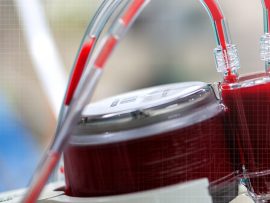
Abstract Background and objective: In this clinical trial, we evaluated if a short-acting nucleoside, adenosine, as a high-dose bolus injection with blood cardioplegia induces faster arrest and provides better myocardial..
Read More
Subclavian artery aneurysm which was not suitable for endovascular repair undergone trap door incision of sternum as well supra clavicular incision with complete control from proximal and distal and interposition..
Read More
7th EuroFusion hosted by Germany REVIEW!!
Read More
Minimally invasive cardiac surgery such as a mitral valve procedure requires femoral arterial cannulation for extracorporeal circulation access. Currently, surgical cutdown and arterial puncture under direct vision comprise the predominant..
Read More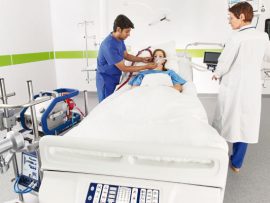
Implementing Nurse Extracorporeal Membrane Oxygenation Specialists to Maintain a Sustainable Program
Abstract Extracorporeal membrane oxygenation (ECMO) offers hope for patients with acute respiratory distress syndrome when other treatment methods fail. However, ECMO requires continuous hourly management leading to extremely high operating costs...
Read More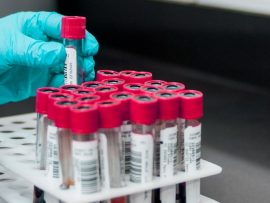
Abstract Introduction Extracorporeal circulation (ECC) in cardiac surgery is performed under systemic heparinization. Adequacy of heparin therapy and anticoagulation during ECC is assessed by activated clotting time (ACT), although there..
Read More
Impella 5.5 Support beyond 50 Days as Bridge to Heart Transplant in End-Stage Heart Failure Patients
Abstract Prolonged mechanical circulatory support (MCS) for severe left ventricular dysfunction in cardiogenic shock as a bridge to heart transplantation (HTx) generally requires a surgical procedure. Typically, a surgically implanted..
Read More
Abstract The increasing prevalence of chronic lung disease worldwide, combined with the emergence of multiple pandemics arising from respiratory viruses over the past century, highlights the need for safer and..
Read More
Abstract Advancements in cardiac arrest and post-cardiac arrest care have led to improved survival to hospital discharge. While survival to hospital discharge is an important clinical outcome, neurologic recovery is..
Read More
Abstract Medical devices that require substantial contact between blood and a foreign surface would be dramatically safer if constructed from materials that prevent clot formation and coagulation disturbance at the..
Read More
Abstract Background Interest in the usefulness of machine learning (ML) methods for outcomes prediction has continued to increase in recent years. However, the advantage of advanced ML model over traditional (LR)..
Read More
Patient with SVC syndrome undergone SVC reconstruction with bovine pericardial patch reformed as a tube with wrapping around chest tube no 36 all of operation performed off pump and Glubran..
Read More
Abstract Venoarterial extracorporeal membrane oxygenation (VA-ECMO) provides cardiovascular and respiratory support for patients in cardiogenic shock; yet, complications are a frequent source of morbidity and mortality. Limb ischemia can be..
Read More
Abstract Introduction: Clot formation, infection, and biofouling are unfortunate but frequent complications associated with the use of blood-contacting medical devices. The challenge of blood-foreign surface interactions is exacerbated during medical..
Read More
Abstract Background: The mortality rate for a patient with a refractory cardiogenic shock on venoarterial (VA) extracorporealmembrane oxygenation (ECMO) remains high, and hyperoxia might worsen this prognosis. The objective of..
Read More
Abstract Controlled donation after circulatory death (cDCD) has contributed to increasing donor numbers all over the world. Experiences published in the last years confirm that the outcomes after lung transplantation..
Read More
DOES18 Las Vegas — Burnout is a hot topic in today's workplace, given its high costs for both employees and organizations. What causes this problem? And what can be..
Read More
Abstract Heart Pumps: A Life-Extending Option for Thousands Historically, many advanced heart failure patients who don't qualify for a heart transplant rely on medication or are referred to palliative care..
Read More
Abstract The optimal setting to achieve a suitable PaCO2 value of 35–45 mmHg upon initiating cardiopulmonary bypass (CPB) in the pediatric population is undefined in the literature. Sweep gas is set..
Read More