


Abstract Background Training nursing students on quality and patient safety (PS) is crucial to ensuring safe healthcare practices given the key role nurses play on the healthcare team. The aim..
Read More
Abstract The purpose of this report was to estimate the additional annual cost to the U.S. healthcare system attributable to preventable medication errors (MEs) in the operating room. The ME..
Read More
Abstract Background Little evidence exists on the relationship between the estimated heparin sensitivity index (HSI) based on commonly available clinical and laboratory data and observed HSI in the adult population...
Read More
Abstract Introduction Cardiovascular disease is the leading cause of pregnancy-related mortality, and it has gradually increased over time; this rise has been attributed to numerous reasons including the growing number..
Read More
Abstract Cardiopulmonary bypass (CPB) has revolutionized cardiac surgery but poses challenges such as hemodynamic instability and adverse clinical outcomes. Achieving optimal perfusion during CPB ensures adequate oxygen delivery to vital..
Read More
Abstract Refractory vasodilatory shock (RVS) following massive calcium channel blocker (CCB) overdose remains a challenging clinical entity. Peripheral venoarterial extracorporeal membrane oxygenation (ECMO) has proven useful in several cases of..
Read More
Abstract Background Extracorporeal cardiopulmonary resuscitation (ECPR) has been shown to improve neurologically favorable survival for patients with refractory ventricular tachycardia (VT)/ventricular fibrillation (VF) out-of-hospital cardiac arrest. Prior studies of the impact of age..
Read More
Abstract Venoarterial extracorporeal membrane oxygenation (VA-ECMO) exposes the patient to infectious complications related to the cannulas or the site of insertion. The aim of the current study was to investigate..
Read More
Abstract Background: Cardiogenic shock is associated with high mortality. In refractory shock, it is unclear if mechanical circulatory support (MCS) devices improve survival. We conducted a systematic review and network meta-analysis..
Read More
Abstract Near-infrared spectroscopy is routinely used in the monitoring of cerebral regional oxygen saturation (crSO2) in neonates following congenital heart surgery. Decreased postoperative crSO2 variability in these patients is associated with..
Read More
Abstract Background While venoarterial extracorporeal membrane oxygenation (V‑A ECMO) provides lifesaving supportfor cardiopulmonary failure, complications may increase mortality, with few studies focusing on ischemic/hemor‑rhagic stroke. We aimed to determine the..
Read More
Abstract Introduction: The need for preoperative extracorporeal membrane oxygenation (ECMO) support prior to left ventricular assist device(LVAD) therapy has been associated with increased mortality. Our study investigated the impact of de-escalating..
Read More
Abstract OBJECTIVES: Extracorporeal membrane oxygenation (ECMO) is an advanced treatment for acute severe respiratory failure. Patients on ECMO are frequently maintained sedated and immobilized until weaning from ECMO, first, and..
Read More
Abstract Introduction There are several types of surface treatments (coatings) aimed at improving the biocompatibility of cardiopulmonary bypass (CPB) circuit. Some coatings appear to require higher doses of heparin to..
Read More
Abstract Acute hypoxemic respiratory failure (AHRF) and its more severe form, acute respiratory distress syndrome (ARDS), imply a decrease in the ability to exchange oxygen and carbon dioxide by the..
Read More
Abstract Extracorporeal membrane oxygenation (ECMO) as a bridge to lung transplant (BTT) has been used for critically ill candidates with excellent outcomes, but data on this strategy in older recipients..
Read More
Abstract Post-infarct ventricular septal defect (PIVSD) is a rare, life-threatening complication following acute myocardial infarction (MI), associated with high overall mortality. Interventions include medical management, percutaneous closure, and/or surgical closure...
Read More
Abstract Background: Venoarterial Extracorporeal Membrane Oxygenation (VA-ECMO) is used to support patients with cardiac and respiratory failure. The relationship between obesity and VA-ECMO outcomes is unknown. Objectives: To determine the relationship between..
Read More
Normothermic regional perfusion in DCD organ donors, a primer: first EuroELSO webinar on ECLS in donors undergoing determination of death according to circulatory criteria. Moderators: Marius Berman & Eduardo Miñambres..
Read More
Abstract This study described the outcomes of patients receiving topical, nebulized, endobronchial, or systemic tranexamic acid (TXA) for bleeding events while on extracorporeal membrane oxygenation (ECMO). We performed a single-center..
Read More
Abstract Background The perioperative risk factors that cause severe morbidity and prolongation of postoperative hospital stay after cardiac surgery should be determined. Various scores have been used to predict morbidity..
Read More
Abstract We have read with interest the work by Helms et al., a single-center study with 30 patients (16 on veno-venous and 14 on veno-arterial extracorporeal membrane oxy-genation (ECMO)), with..
Read More
[playlist type="video" ids="41303"] Built on LivaNova’s 50-year legacy of safety and reliability, Essenz supports the Perfusionist in doing what is best for each patient, and allows the entire heart team..
Read More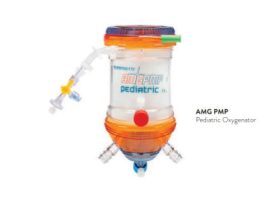
PRODUCT HIGHLIGHTS Hollow-fiber oxygenator with integrated heat exchanger able to oxygenate the blood, remove carbon dioxide from the blood and regulate blood temperature in pediatric patients. It is designed for..
Read More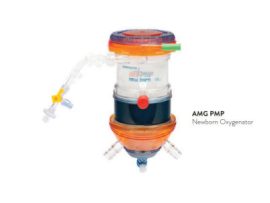
PRODUCT HIGHLIGHTS Hollow-fiber oxygenator with integrated heat exchanger able to oxygenate the blood, remove carbon dioxide from the blood and regulate blood temperature in infant patients. It is designed for..
Read More
CentriMag Acute Circulatory Support System CentriMag Pre-connected Pack Set up CentriMag Acute Circulatory Support Pre-connected Pack Priming Video
Read More
Abstract Summary The importance of temporary mechanical circulatory support for treating acute heart failure with cardiogenic shock is increasingly recognized, and Impella (Abiomed, Danvers, MA, USA) has received particular attention..
Read More
Abstract The two hypnotic agents currently used for the maintenance of general anesthesia during cardio-pulmonary bypass (CPB) are propofol and sevoflurane. Propofol can be administered directly in the cardiotome of..
Read More
Abstract The International Liaison Committee on Resuscitation engages in a continuous review of new, peer-reviewed, published cardiopulmonary resuscitation and first aid science. Draft Consensus on Science With Treatment Recommendations are..
Read More
Abstract Rationale: Definitive guidelines for anticoagulation management during veno-venous extracorporeal membrane oxygenation (VV ECMO) are lacking, while bleeding complications continue to pose major challenges. Objectives: To describe anticoagulation modalities and..
Read More