

Introduction For centuries, the field of medicine has centred its attention on the function of end organs. The shift in perception that recognizes the ‘aorta as an organ’ in its..
Read More
Abstract Purpose of review The worldwide leading cause of maternal death is severe maternal hemorrhage. Maternal hemorrhage can be profound leading to an entire loss of blood volume. In the..
Read More
Abstract In rural settings worldwide, many people live in effective blood deserts without access to any blood transfusion. The traditional system of blood banking is logistically complex and expensive for..
Read More
This enlightening online event is strategically designed for hospital executives and stakeholders facing the financial intricacies of the post-pandemic landscape. , the strategic advisor to IEC, will lead the discussion..
Read More
Abstract It is believed that a lower temperature setting of hypothermic circulatory arrest (HCA) in thoracic aortic surgery causes coagulopathy, resulting in excessive bleeding. However, experimental studies that eliminate clinical..
Read More
Abstract Objective: We aimed to evaluate the effects of cardiopulmonary bypass (CPB) machines used in coronary artery bypass grafting surgeries on cerebral perfusion by performing cerebral oximetry monitoring [near-infrared..
Read More
Abstract Since the risk factors for heparin resistance (HR) before cardiopulmonary bypass (CPB) have not been fully clarified, this study investigated the contributing factors for HR after the initial unfractionated..
Read More
Abstract Objective This study aimed to determine the maximum safe dose of intranasal insulin administration during cardiac surgery. Methods This open-label, Phase 1, single-center, dose-escalation clinical trial recruited patients scheduled..
Read More
Abstract BACKGROUND: Platelet transfusion is common in cardiac surgery, but some studies have suggested an association with harm. Accordingly, we investigated the association of perioperative platelet transfusion with morbidity and..
Read More
Abstract Background Up to 42% of patients develop acute kidney injury (AKI) after cardiac surgery. The aim of this study was to describe the relationship between preoperative microcirculatory function and..
Read More
Abstract Background: mRNA vaccines against severe acute respiratory syndrome coronavirus 2 (SARS-CoV-2) became common. We investigated the optimal timing for inoculation against SARS-COV-2 in the candidates for cardiac surgery under..
Read More
Abstract Introduction Along with cardiopulmonary bypass time, aortic cross-clamping time is directly related to the risk of complications after heart surgery. The influence of the time difference between cardiopulmonary bypass..
Read More
Abstract Background Albumin continues to be used routinely by cardiac anaesthesiologists perioperatively despite lack of evidence for improved outcomes. The Multicenter Perioperative Outcomes Group (MPOG) data ranked our institution as one..
Read More
Abstract Background Mortality after congenital heart surgery is an important metric across benchmarking, quality, and reporting initiatives. All rely on estimates from prior years, and how well these reflect current..
Read More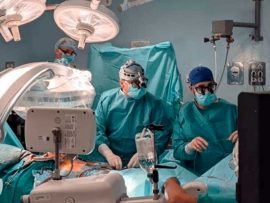
Abstract A group of enthusiastic surgeons and engineers working together in Stanford introduced the idea of “port access” cardiac surgery in humans in 1995. Despite the initial enthusiasm from many surgical..
Read More
Abstract Objective Right ventricular (RV) dysfunction in cardiac surgery can lead to RV failure, which is associated with increased morbidity and mortality. Abnormal RV function can be identified using RV..
Read More
Levels of Circulating Ketone Bodies in Patients Undergoing Cardiac Surgery on Cardiopulmonary Bypass
Abstract Ketone bodies (KBs) are energy-efficient substrates utilized by the heart depending on its metabolic demand and substrate availability. Levels of circulating KBs have been shown to be elevated in..
Read More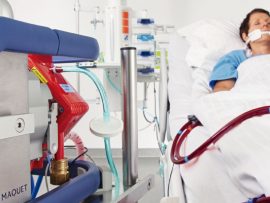
Abstract Purpose Skin pigmentation influences peripheral oxygen saturation (SpO2) compared to arterial saturation of oxygen (SaO2). Occult hypoxemia (SaO2 ≤ 88% with SpO2 ≥ 92%) is associated with increased in-hospital..
Read More
Abstract The purpose of this study was to evaluate the feasibility and accuracy of remote Video Plethysmography (VPPG) for contactless measurements of blood pressure (BP) and heart rate (HR) in..
Read More
Abstract Objectives: Most post-cardiotomy (PC) extracorporeal membrane oxygenation (ECMO) runs last less than 7 days. Studies on the outcomes of longer runs have provided conflicting results. This study investigates patient..
Read More
Abstract Burn patients face cardiopulmonary failure risks, with recent observational studies suggesting promising outcomes for extracorporeal membrane oxygenation (ECMO). However, the effectiveness and long-term survival remain unclear. Our study aims..
Read More
Introducing a free-breathing MRI method to assess peri-operative myocardial oxygenation and function
Abstract BACKGROUND Induction of general anaesthesia has many potential triggers for peri-operative myocardial ischaemia including the acute disturbance of blood gases that frequently follows alterations in breathing and ventilation patterns...
Read More
Abstract Purpose Pulse Decomposition Analysis (PDA) uses integration of the systolic area of a distally transmitted aortic pulse as well as arterial stiffness estimates to compute cardiac output. We sought..
Read More
Abstract Background: Access to quality healthcare education across the world is disproportionate. This study explores the potential for Cardiovascular Perfusion education to be delivered online to reach international students. Methods:..
Read More
Abstract Background Conventional coronary artery bypass grafting (CCABG) tends to cause severe complications in patients with comorbid Coronary Artery Diseases (CAD) and diabetes. On the other hand, the Minimally Invasive..
Read More
Abstract Valvular heart disease is common and its prevalence is rapidly increasing worldwide. Effective medical therapies are insufficient and treatment was historically limited to the surgical techniques of valve repair..
Read More
Abstract OBJECTIVES Intestinal ischaemia–reperfusion injury induced by cardiopulmonary bypass causes intestinal epithelial barrier dysfunction, leading to dysbiosis and bacterial translocation. We conducted a randomized prospective study with 2 objectives: (i)..
Read More
Abstract Venoarterial extracorporeal membrane oxygenation (VA-ECMO) has been increasingly used to treat refractory cardiogenic shock (CS) or cardiac arrest (CA) over the past decades. Peripheral VA-ECMO increases left ventricular (LV)..
Read More
Abstract Objective To demonstrate the value of a viscoelastic-based intraoperative transfusion algorithm to reduce non-RBC product administration in adult cardiac surgical patients. Design A prospective observational study. Setting At a..
Read More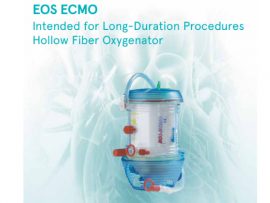
Abstract Extracorporeal membrane oxygenation (ECMO) is a cardiac or pulmonary function support system that is used in cases of refractory organ failure in addition to conventional treatment. Currently, Level I..
Read More