
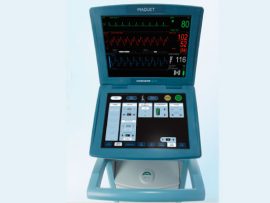

Abstract ECMO is the most frequently used mechanical support for patients suffering from low cardiac output syndrome. Combining IABP with ECMO is believed to increase coronary artery blood flow, decrease..
Read More
Abstract Aim Patients with cardiogenic shock or ARDS, for example, in COVID-19/SARS-CoV-2, may require extracorporeal membrane oxygenation (ECMO). An ECLS/ECMO model simulating challenging vascular anatomy is desirable for cannula insertion..
Read More
Abstract This retrospective cohort study describes all children transported on extracorporeal life support (ECLS) by the Stollery Children’s Hospital Pediatric Transport team (SCH-PTT) between 2004 and 2018. We compared outcomes..
Read More
Abstract Extracorporeal membrane oxygenation (ECMO) employs vascular cannulation and a gas exchange circuit to provide support to patients with severely compromised cardiopulmonary function. ECMO is often the last intervention taken..
Read More
Abstract Background Extra-corporeal membrane oxygenation (ECMO) is a life-saving intervention for severe respiratory and cardiac diseases. However, 50% of survivors have abnormal neurologic exams. Current ECMO management is guided by..
Read More
Abstract È l’Ospedale Pediatrico Bambino Gesù, in collaborazione con 5 società scientifiche internazionali, a mettere per la prima volta a disposizione di rianimatori e oncoematologi le Linee Guida per il trattamento con ossigenazione extracorporea..
Read More
Abstract Background: There has been increasing use of extracorporeal membrane oxygenation (ECMO) as bridge to heart transplant (orthotopic heart transplant [OHT]) or left ventricular assist device (LVAD) over the last..
Read More
Abstract Use of extracorporeal membrane oxygenation (ECMO) in children receiving haematopoietic cell transplantation (HCT) and immune effector cell therapy is controversial and evidence-based guidelines have not been established. Remarkable advancements..
Read More
Abstract Background The effects of adrenaline on cerebral blood vessels during cardiopulmonary resuscitation (CPR) are not well understood. We developed an extracorporeal CPR model that maintains constant low systemic blood..
Read More
Abstract We aimed to investigate the incidence of limb amputation due to vascular complications related to extracorporeal membrane oxygenation (ECMO) therapy among survivors and examine its association with long-term mortality in these..
Read More
Abstract Acute brain injury (ABI) increases morbidity and mortality in patients with veno-arterial extracorporeal membrane oxygenation (VA-ECMO). Optimal neurologic monitoring methods have not been well-explicated. We studied the use of..
Read More
Abstract Background Inflammatory and endothelial activation responses during extracorporeal membrane oxygenation (ECMO) support in children are poorly understood. In this study, we aimed to determine if circulating inflammatory, endothelial activation,..
Read More
Abstract Thrombosis in extracorporeal membrane oxygenation (ECMO) circuits remains a frequent complication. We characterize the location, extent, structure, and clinical implications of thrombi in 53 ECMO circuits from 46 pediatric patients...
Read More
Abstract OBJECTIVES Implanting a durable left ventricular assist device (LVAD) in a patient on extracorporeal life support (ECLS) is challenging. The goal of this study was to compare..
Read More
Abstract Background Cerebral autoregulation (CA) impairment is associated with neurological complications among children supported by extracorporeal membrane oxygenation (ECMO). Severe variations of arterial CO2 (PaCO2) and O2 (PaO2) tension after ECMO onset..
Read More
Abstract Background Chronic obstructive pulmonary disease, cystic fibrosis and usual interstitial pneumonia are three most common indications for lung transplantation (LuTx) in Poland. As a result of irreversible destruction of..
Read More
Abstract Background: The decision about whether to use venoarterial extracorporeal membrane oxygenation (VA-ECMO) in patients with cardiac graft dysfunction (GD) is usually made on a case-by-case basis and is guided by..
Read More
Abstract Introduction and objectives Lactate and its evolution are associated with the prognosis of patients in shock, although there is little evidence in those assisted with an extracorporeal venoarterial oxygenation..
Read More
Abstract Background Age over 70 years seems to confer poor prognosis for patients under mechanical circulatory support (MCS). Advanced age is usually a relative contraindication. Our objective was to assess the..
Read More
Abstract Stroke has potentially devastating consequences for patients receiving veno-arterial extracorporeal membrane support (VA-ECMO). Arterial cannulation sites for VA-ECMO include the ascending aorta, axillary artery, and femoral artery. However, the..
Read More
Abstract Rapid reductions in PaCO2 during extracorporeal membrane oxygenation (ECMO) are associated with poor neurologic outcomes. Understanding what factors determine PaCO2 may allow a gradual reduction, potentially improving neurologic outcome. A simple..
Read More
Abstract The level of evidence of expert recommendations for starting extracorporeal cardiopulmonary resuscitation (ECPR) in refractory out-of-hospital cardiac arrest (OHCA) and in-hospital cardiac arrest (IHCA) is low. Therefore, we reported..
Read More
Abstract Drugs intoxications often lead to severe vasoplegia and cardiogenic shock, and VA-ECMO represents a viable therapy option. However, as cardiopulmonary support is not contributing to the removal of the..
Read More
Abstract Purpose Patients with (ECLS) are at risk for hemolysis-related complications. Therefore, monitoring of free hemoglobin (fHb) levels is indicated. Conventional methods for fHb are laborious and not always available. Here..
Read More
Abstract Newswise — November 22, 2021 – – with no increased risk of transmitting COVID-19 transmission to ECMO transport team members following standard precautions, reports a study in the , official journal of..
Read More
Abstract Introduction (ICU)-acquired weakness is developed by 40%–46% of patients admitted to ICU. Different studies have shown that Early Mobilisation (EM) is safe, feasible, cost-effective and improves patient outcomes in..
Read More
Abstract Background: Veno-arterial extracorporeal membrane oxygenation (VA-ECMO) is the rescue treatment proposed to patients with refractory cardiogenic shock. The VA-ECMO implantation promotes inflammation and ischemia-reperfusion injuries through the VA-ECMO flow, causing..
Read More
Abstract Oxygenator thrombosis during extracorporeal membrane oxygenation (ECMO), is a complication that necessitates component replacement. ECMO centers monitor clot burden by intermittent measurement of pressure drop across the oxygenator. An..
Read More
Abstract Postcardiotomy shock (PCS) is an uncommon and life-threatening . (ECMO) is the first line of mechanical for treating PCS when medical therapies are insufficient. Reaching a “therapeutic ceiling” or a “bridge to..
Read More
Abstract Objective Current guidelines consider obesity to be a relative contraindication to veno-arterial extracorporeal membrane oxygenation (VA-ECMO) for refractory cardiogenic shock. The authors investigated the effect of body mass index..
Read More