


Abstract Objective The Awake Extracorporeal Life Support (ECLS) practice combined with physiotherapy is increasing. However, available evidence for this approach is limited, with unclear indications on timing, management, and protocols...
Read More
Abstract Introduction It remains unclear whether patients who will not accept allogeneic blood transfusion can be managed successfully with veno-arterial (V-A) extracorporeal membrane oxygenation (ECMO). The objective of our study..
Read More
Abstract Approximately 350,000 adults per year in the US experienced out-of-hospital cardiac arrest (OHCA). Only about 10% of such patients survive their initial hospitalization. The key drivers of successful resuscitation..
Read More
Abstract Purpose of the review The aim of this review is to present the latest evidence regarding the prevention, diagnosis and treatment of nosocomial infections during extracorporeal membrane oxygenation (ECMO)..
Read More
Abstract Extracorporeal membrane oxygenation (ECMO) is increasingly being used for patients with severe respiratory failure and has received particular attention during the coronavirus disease 2019 (COVID-19) pandemic. Evidence from two..
Read More
Abstract Background Extracorporeal membrane oxygenation (ECMO) has been used increasingly for cardiopulmonary rescue. Despite recent advances however, post-cardiotomy shock (PCS)-ECMO survival remains comparatively poor. We sought to evaluate outcomes and..
Read More
Abstract Venoarterial extracorporeal membrane oxygenation (V-A ECMO) is increasingly used in cardiogenic shock for rapid stabilization and bridging towards recovery, long-term mechanical circulatory support or transplant. Although technological advances have..
Read More
Abstract In appropriately selected patients with COVID-19 acute respiratory distress syndrome, venovenous extracorporeal membrane oxygenation (VV ECMO) may offer a promising bridge to lung recovery or lung transplantation if lung recovery..
Read More
Abstract Background In 2020, the Extracorporeal Life Support Organization education task force identified seven extracorporeal membrane oxygenation (ECMO) educational domains that would benefit from international collaborative efforts. These included research..
Read More
Abstract Purpose of review Surgery is an important option to consider in patients with massive and submassive pulmonary emboli. Earlier intervention, better patient selection, improved surgical techniques and the use of..
Read More
Abstract Purpose of Study: Availability of mechanical circulatory support of both sides of the heart for pediatric patients has been limited due to size constraints. By combining 2 scaled down ventricular..
Read More
Abstract Thrombosis in extracorporeal membrane oxygenation (ECMO) circuits remains a frequent complication. We characterize the location, extent, structure, and clinical implications of thrombi in 53 ECMO circuits from 46 pediatric patients...
Read More
Abstract Background Severe COVID-19 induced acute respiratory distress syndrome (ARDS) often requires extracorporeal membrane oxygenation (ECMO). Recent German health insurance data revealed low ICU survival rates. Patient characteristics and experience..
Read More
Abstract Extracorporeal hemoadsorption with the CytoSorb adsorber is increasingly being used during the past years. The use in combination with extracorporeal membrane oxygenation (ECMO) is feasible, but frequency of its use and..
Read More
Abstract Purpose: To evaluate unfractionated heparin (UFH) dosing guided by antifactor Xa levels during targeted temperature management (TTM) post-cardiac arrest. Methods: Single-center, retrospective, observational study between January 1, 2014 and..
Read More
Abstract First described early in the pandemic, coronavirus disease 2019 (COVID-19)-associated fulminant myocarditis can present with arrhythmias and cardiogenic shock, but may be treatable with mechanical circulatory support, such as..
Read More
Abstract Background The rates, outcomes, and long-term trends of stroke complicating the use of extracorporeal membrane oxygenation (ECMO) have been inconsistently reported. We compared the outcomes of pediatric ECMO patients..
Read More
Abstract Venoarterial extracorporeal membrane oxygenation (ECMO) is used in cardiogenic shock refractory to inotropic support and intra-aortic balloon pump (IABP) support. Peripheral ECMO can lead to ventricular distention, and IABP..
Read More
Abstract Early preterm birth < 34 gestational weeks (GA) and birth weight (BW) <2 kg are relative contraindications for extracorporeal membrane oxygenation (ECMO). However, with improved technology, ECMO is presently managed..
Read More
Abstract During refractory cardiogenic shock and cardiac arrest, veno‑arterial extracorporeal membrane oxygenation (VA‑ECMO) is used to restore a circulatory output. However, it also impacts significantly arterial oxygenation. Recentguidelines of the..
Read More
Abstract Hematological malignancies (HM) have been, until recently, viewed as contraindications to extracorporeal membrane oxygenation (ECMO) due to bleeding and infectious complications. However, conflicting literature regarding whether ECMO should be..
Read More
Abstract Introduction Left ventricular distension is a major concern with postcardiotomy veno-arterial extracorporeal membrane oxygenation (VA-ECMO) supporting a critical heart failure after cardiac surgery. This porcine study evaluates the effects..
Read More
Abstract Surgical decannulation for venoarterial extracorporeal membrane oxygenation (VA-ECMO) is recommended as a standard weaning strategy considering large-sized cannulas (14-22 French) are inserted in VA-ECMO. However, we should be aware..
Read More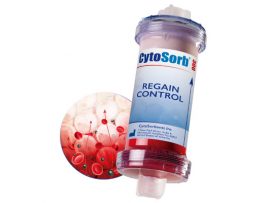
Abstract El síndrome de dificultad respiratoria del adulto (SDRA) por el virus SARS-CoV-2 tiene una alta morbi-mortalidad secundaria al severo compromiso pulmonar sumado a una respuesta inmune disregulada, causal de..
Read More
Abstract Extracorporeal Membrane Oxygenation (ECMO) is associated with significant mortality. Provision of high-quality end-of-life (EOL) care for patients supported on ECMO entails specific physiological, pharmacological, and technical considerations. Limited guidance..
Read More
Abstract Background: The optimal monitoring strategy for anticoagulation management in extracorporeal membrane oxygenation (ECMO) remains a clinical controversy. The Extracorporeal Life Support Organization Anticoagulation Guidelines suggest that multiple anticoagulation assays..
Read More
Abstract Objectives To evaluate the clinical outcomes and perioperative complications associated with complete percutaneous decannulation of femoral venoarterial extracorporeal membrane oxygenation (VA-ECMO) with the MANTA closure device. Methods This is..
Read More
Abstract Acute Respiratory Distress Syndrome (ARDS) accounts for 10% of ICU admissions and affects 3 million patients each year. Despite decades of research, it is still associated with one of..
Read More
Abstract Venoarterial extracorporeal membrane oxygenation (VA ECMO) has been increasingly applied in patients with cardiogenic shock in recent years. Nevertheless, many patients cannot be successfully weaned from VA ECMO support..
Read More
Abstract Identify complications related to extracorporeal membrane oxygenation in the literature and map the nursing diagnoses in the face of this problem. Methodology: An integrative review study with a descriptive..
Read More