


Abstract Background: The Extracorporeal Life Support Organization Supplies Platform () was created out of Extracorporeal Membrane Oxygenation (ECMO) disposable product shortage prior to and during the Coronavirus Disease 2019 (COVID-19)..
Read More
Abstract Objective: To investigate the preventive effect of distal perfusion catheters (DPCs) on vascular complications in patients undergoing venous artery extracorporeal membrane oxygenation (VA-ECMO). Methods: Patients who underwent VA-ECMO through a femoral..
Read More
Abstract Objective The use of mechanical circulatory support (MCS) in lung transplantation has been steadily increasing over the prior decade, with evolving strategies for incorporating support in the preoperative, intraoperative,..
Read More
Abstract Extracorporeal membrane oxygenation (ECMO) has been extensively used during both the H1N1 influenza pandemic and COVID-19 pandemic. When the number of patients receiving ECMO support and ECMO centres sharply..
Read More
Abstract Persistent hypoxemia during veno-venous extracorporeal membrane oxygenation (VV-ECMO) for supporting acute respiratory distress syndrome (ARDS) patients is a clinical challenge for intensive care medical providers. Prone positioning is an..
Read More
Abstract Background: Cardiovascular perfusion is a dynamic healthcare profession where new practices are frequently introduced. Despite the emergence of evidence-based clinical practice guidelines, little is known about their dissemination at..
Read More
Abstract VENOVENOUS EXTRACORPOREAL MEMBRANE OXYGENATION (VV ECMO) represents a rescue form of life support for refractory respiratory failure, shown to confer a mortality benefit. Although relative contraindications to VV ECMO..
Read More
Abstract There has been a substantial increase in the use of extracorporeal membrane oxygenation (ECMO) support in critically ill adults. Understanding the complex changes that could affect drugs’ pharmacokinetics (PK)..
Read More
Abstract Background Anticoagulation is critical in patients supported on extracorporeal membrane oxygenation (ECMO). The appropriate monitoring strategies for heparin remain unclear. Objectives This systematic review aimed to compare the accuracy..
Read More
Abstract Boudreaux et al. are to be commended for their publication in this month’s ASAIO regarding the utility of early tracheostomy in 150 patients placed on venovenous (VV) extracorporeal membrane oxygenation (ECMO) for respiratory failure. Thirty-five of the..
Read More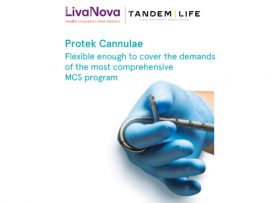
Abstract Venovenous extracorporeal membrane oxygenation (ECMO) can be performed with two single lumen cannulas (SLCs) or one dual-lumen cannula (DLC) where low recirculation fraction (Rf) is a key performance criterion...
Read More
Abstract A neonate with pulmonary hypertension was supported with extracorporeal membrane oxygenation (ECMO). During ECMO support, the patient developed Enterococcus faecalis bacteremia, treated with targeted antibiotics. Despite the maximum dose of antibiotics, routine blood..
Read More
Abstract Objectives Extracorporeal cardiopulmonary resuscitation (eCPR) is increasingly used due to its beneficial outcomes and results compared to conventional CPR. After cardiac arrest, the overall ejection fraction is severely impaired;..
Read More
Abstract We aimed to describe the clinical outcomes of veno-arterial extracorporeal membrane oxygenation (VA-ECMO) therapy in our institution considering clinical context and pH at cannulation. All patients treated by VA-ECMO during the..
Read More
Abstract Background: Physical therapy (PT) utilization in patients requiring mechanical circulatory support (MCS) and extracorporeal membrane oxygenation (ECMO) has been reported; however, little is known about intensive rehabilitation and associated..
Read More
Abstract Obtaining arterial access for cardiac catheterization can be both challenging and morbid in patients supported by venoarterial extracorporeal membrane oxygenation (VA-ECMO). While catheterization performed by obtaining endovascular access through..
Read More
Abstract Interhospital transport of acute respiratory distress syndrome (ARDS) patients bears transport-associated risks. It is unknown how interhospital extracorporeal membrane oxygenation (ECMO) transfer of COVID-19 patients by mobile ECMO units affects ARDS mortality. We compared the outcome..
Read More
Abstract Venlafaxine is a serotonin and noradrenalin reuptake inhibitor prescribed as an antidepressant. Overdose clinically manifests with neurological, cardiovascular and gastrointestinal abnormalities based on, amongst others, serotonin syndrome and can..
Read More
Abstract Membrane oxygenator failure during venovenous (V-V) extracorporeal membrane oxygenation (ECMO) can lead to life-threatening hypoxia, high replacement costs, and may be associated with a hyperfibrinolytic state and bleeding. The current understanding..
Read More
High- versus Low-Flow Extracorporeal Respiratory Support in Experimental Hypoxemic Acute Lung Injury
Abstract Rationale: In the EOLIA (ECMO to Rescue Lung Injury in Severe ARDS) trial, oxygenation was similar between intervention and conventional groups, whereas V˙V˙e was reduced in the intervention group. Comparable reductions in..
Read More
Abstract Objectives To compare the safety and efficacy of del-Nido cardioplegia (DNC) with traditional 4:1 cold blood cardioplegia (CBC) in coronary artery bypass grafting and/or valve surgeries in elderly patients...
Read More
Abstract Background The high-quality evidence on managing COVID-19 patients requiring extracorporeal membrane oxygenation (ECMO) support is insufficient. Furthermore, there is little consensus on allocating ECMO resources when scarce. The paucity..
Read More
Abstract Objective: The aim of this study was to describe decisions about the escalation and withdrawal of treatment for patients on extracorporeal membrane oxygenation (ECMO). Summary Background Data: Interventions premised..
Read More
Abstract Although uncommon, oxygenator thrombosis in extra-corporeal membrane oxygenation (ECMO) devicesremains a potential reason for exchanging the circuit,the risk of thrombosis increases with the duration ofECMO therapy and with procoagulant..
Read More
Abstract Objectives: To investigate outcomes associated with conventional roller or centrifugal pumps during neonatal venovenous extracorporeal membrane oxygenation (ECMO). Our primary hypothesis is that in comparison with conventional roller-pump support, centrifugal pump use is..
Read More
Abstract Patients on extracorporeal membrane oxygenation (ECMO) often require prolonged periods of bed rest owing to the severity of their illness. Care is also required to maintain the position and..
Read More
Abstract OBJECTIVES Upper gastrointestinal bleeding (UGIB) is a common complication in adults treated with veno-arterial extracorporeal membrane oxygenation (VA-ECMO) for refractory cardiogenic shock or cardiac arrest. We aimed to determine..
Read More
Abstract Introduction The use of (ECMO) in the management of severe (ARDS) has been well established in recent years, , , but the ongoing (COVID-19) pandemic has presented new limitations in knowledge and has complicated the..
Read More
Abstract Objectives The objective was to compare primary between adult ECMO patients and cardiac surgical patients before and . Furthermore, the authors explored whether in vitro treatment of ECMO patient blood samples with (vWF)..
Read More
Abstract Background The use of a venoarterial extracorporeal membrane oxygenation (ECMO) in the postcardiotomy shock setting (PC-ECMO) can be life-saving. Risk stratification for patients under PC-ECMO is currently challenging. The..
Read More