


Abstract Objective: To characterize surface-bound proteins and to measure the thickness of fibrin fibers bound to extracorporeal membrane oxygenation (ECMO) circuits used in children. Design: Single-center observational prospective study, April..
Read MoreAbstract Background Veno-venous extracorporeal membrane oxygenation (V-V ECMO) is a rapidly expanding life-support technique worldwide. The most common indications are severe hypoxemia and/or hypercapnia, unresponsive to conventional treatments, primarily in..
Read More
Abstract The efficacy and safety of extracorporeal membrane oxygenation (ECMO) support during transcatheter aortic valve replacement (TAVR) remains unknown. We conducted a meta-analysis to compare benefit and risk of ECMO..
Read More
Abstract Low pulse pressure (PP) in venoarterial-extracorporeal membrane oxygenation (VA-ECMO) is a marker of cardiac dysfunction and has been associated with acute brain injury (ABI) as continuous-flow centrifugal pump may..
Read More
Abstract Objective To evaluate the association of RBC transfusions with thrombosis in pediatric patients on extracorporeal membrane oxygenation (ECMO) and compare this with the transfusion of other blood products and..
Read More
Abstract The authors of the study ‘Outcome after extracorporeal membrane oxygenation therapy in Norwood patients before the bidirectional Glenn operation’ should be congratulated for their very good results of Norwood..
Read More
Abstract Introduction Polymethylpentene (PMP) oxygenators serve as the primary oxygenator type utilized for ECMO. With the number of PMP oxygenators available, it has become increasingly important to determine differences among..
Read More
Abstract Background Cardiac arrest is associated with high mortality rates and severe neurological impairments. One of the underlying mechanisms is global ischemia-reperfusion injury of the body, particularly the brain. Strategies..
Read More
Abstract Cardiac arrest is a hyper-acute condition with a high mortality that requires rapid diagnostics and treatment. As such, point-of-care ultrasound (POCUS) has become a valuable tool in the assessment..
Read More
Abstract Obesity is often considered a contraindication to extracorporeal membrane oxygenation (ECMO) candidacy due to technical challenges with vascular access, higher cardiac output requirements, and known associations between obesity and..
Read More
Abstract Objective The mismatch between the demand for and supply of organs for transplantation is steadily growing. Various strategies have been incorporated to improve the availability of organs, including organ..
Read More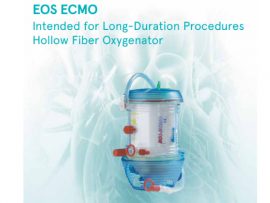
Abstract Despite multimodal treatment of patients with (CS) complicating (AMI), the outcome remains poor. Large retrospective analyses and animal models suggest that (ECLS) in CS-complicating AMI improves outcome . However, to date, no assessing the..
Read More
Abstract Venoarterial extracorporeal membrane oxygenation (VA-ECMO) support is a lifesaving tool in cardiovascular care, providing excellent hemodynamic assistance for numerous indications, such as cardiogenic shock or periprocedural support in patients..
Read More
Abstract We read with great interest Pavlov’s letter to the editor on oxygenation targets and optimization of mechanical ventilation (MV) during extracorporeal membrane oxygenation. Adding FiO2 titration strategy would have been..
Read More
Abstract Blood surface interfacing that occurs within the extracorporeal membrane oxygenation (ECMO) circuit initiates contact activation, an important hemostatic pathway initiated by the Hageman factor, also called factor XII. Factor..
Read More
Abstract Purpose Veno-arterial extracorporeal life support (ECLS) is increasingly used in patients during cardiac arrest and cardiogenic shock, to support both cardiac and pulmonary function. We performed a systematic review..
Read More
Abstract OBJECTIVES: To examine trends in utilization and outcomes among patients with the acute respiratory distress syndrome (ARDS) requiring prolonged venovenous extracorporeal membrane oxygenation (VV ECMO) support. DESIGN: Retrospective observational..
Read More
Abstract Purpose of review Discussing the rationale and current evidence for left ventricular unloading in cardiogenic shock. Recent findings Microaxial flow pumps (MFP) and intra-aortic balloon pumps (IABP) augment cardiac..
Read More
Abstract We sought to develop and validate a new risk stratification score for mortality for children supported with a ventricular assist device (VAD). This retrospective, multicenter study used data from..
Read More
Abstract Acute myocardial infarction-related cardiogenic shock (AMI-CS) carries a dismal prognosis. Short-term mortality is in the range of 40–50% []. Until recently, only treatment of the culprit lesion by percutaneous..
Read More
Abstract Introduction Antithrombin (AT) is a natural anticoagulant essential to enhancing the unfractionated heparin (UFH) anticoagulant effect. Its supplementation in the management of UFH-based anticoagulation during veno-venous extracorporeal membrane oxygenation..
Read More
Abstract Massive/high-risk pulmonary embolism (PE) is associated with a 30-day mortality rate of approximately 65%. In searching for strategies that may make a dent on this dismal mortality rate, investigators..
Read More
Abstract The use of mechanical circulatory support using percutaneous ventricular assist devices (pVAD) has increased rapidly during the last decade without substantial new evidence for their effect on outcome. In..
Read More
Abstract Background Patients requiring biventricular support (BIVAD) face higher morbidity than those undergoing durable left ventricular assist device (LVAD) implantation alone. The goal of the current study was to evaluate..
Read More
Abstract OBJECTIVES Dual-lumen cannulas for veno-venous (VV) extracorporeal membrane oxygenation (ECMO) support are typically inserted in the right internal jugular vein (RIJV); however, some scenarios can make this venous route..
Read More
Abstract Introduction Venovenous extracorporeal membrane oxygenation (VV ECMO) is used for refractory hypoxemia, although despite this, in high cardiac output states, hypoxaemia may persist. The administration of beta-blockers has been..
Read More
Abstract In 1900, Fiedler first reported autopsy cases with peculiar inflammation of the myocardium, which he named interstitial myocarditis. He postulated an isolated cardiac inflammation of the myocardium in the..
Read More
Abstract Background It is common for patients on venovenous extracorporeal membrane oxygenation (VV ECMO) to require continuous renal replacement therapy (CRRT). This can be done using separate vascular access for..
Read More
Abstract Background: Antithrombin (AT) replacement is occasionally utilized in the setting of extracorporeal membrane oxygenation (ECMO)-associated heparin resistance. Although past studies emphasized the high costs and limited clinical benefit..
Read More
Abstract Background: Venovenous extracorporeal membrane oxygenation (VV-ECMO) is a therapy for patients with refractory respiratory failure. The decision to decannulate someone from extracorporeal membrane oxygenation (ECMO) often involves weaning trials..
Read More