
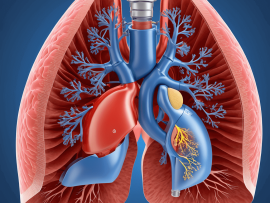

Abstract Objective: Massive pulmonary embolism (PE) remains a life-threatening condition, often leading to acute respiratory and cardiac failure. This study evaluates the role of extracorporeal membrane oxygenation (ECMO) as a..
Read More
Abstract Aim of the study Predictive factors for poor outcomes in hypothermic cardiac arrest (HCA) differ from those in normothermic out-of-hospital cardiac arrest (OHCA). This study aimed to evaluate the..
Read More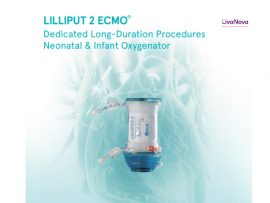
Abstract Pediatric extracorporeal membrane oxygenation (ECMO) provides lifesaving cardiopulmonary support for patients with a multitude of clinical diagnoses, resulting from cardiac and/or respiratory failure refractory to conventional supports (). The..
Read More
Abstract Extracorporeal membrane oxygenation (ECMO) is a life-saving intervention for patients with circulatory and/or pulmonary failure; however, the rate of complications remains high. ECMO induces systemic inflammation, which may activate..
Read More
Abstract BACKGROUND Patients with severe traumatic brain injury (TBI) are at an increased risk of respiratory failure refractory to traditional therapies. The safety of extracorporeal membrane oxygenation (ECMO) in this..
Read More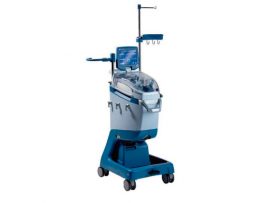
Abstract Background Veno-venous extracorporeal membrane oxygenation (VV-ECMO) is a supportive therapy for acute respiratory failure with increased risk of packed red blood cells (PRBC) transfusion. Blood cell salvage (BCS) aims..
Read More
Abstract Introduction: Pediatric extracorporeal membrane oxygenation (ECMO) management presents unique challenges in acute care settings, requiring specialized expertise to manage critically ill children. Medical and surgical fellows often manage these patients,..
Read More
Abstract Background The pathology of primary hemostasis is a common complication of extracorporeal membrane oxygenation (ECMO) support. Scientific data describing its changes in patients on short-term ECMO support and the..
Read More
Abstract Background Clinical blood resources are scarce and autologous blood transfusion for extracorporeal membrane oxygenation (ECMO) withdrawal is less studied. Objectives To assess the use of staged autotransfusion during ECMO..
Read More
Abstract The use of extracorporeal life support (ECLS) throughout the perioperative phase of lung transplantation requires nuanced planning and execution by an integrated team of multidisciplinary experts. To date, no..
Read More
Abstract Introduction This study aimed to identify characteristics associated with survival during and post Extra Corporeal Membrane Oxygenation (ECMO) therapy, in patients with acute respiratory distress syndrome (ARDS) during the..
Read More
Abstract Background: This study examines the results of autopsy examinations specifically aimed at documenting complications arising from the implantation phase and treatment with veno–arterial extracorporeal membrane oxygenation (VA-ECMO) in patients with..
Read More
Abstract Introduction The interaction between primary left ventricular output and Veno-arterial extracorporeal membrane pulmonary oxygenation (VA ECMO) flow may impede the perfusion of aortic vessels with hyperoxic blood, leading to..
Read More
Abstract As the medical complexity of pregnant patients increases, the rate of maternal morbidity has risen. Maternal cardiovascular disease is a leading cause of maternal morbidity and mortality followed closely..
Read More
Abstract Background The use of Extracorporeal Membrane Oxygenation (ECMO) remains associated with high rates of complications, weaning failure and mortality which can be partly explained by a knowledge gap on..
Read More
Abstract Extracorporeal membrane oxygenation (ECMO) is a type of mechanical circulatory support that is increasingly utilized in the United States for severe respiratory and/or cardiac failure refractory to conventional therapies...
Read More
Abstract Introduction The mobilization and ambulation of patients with severe cardiogenic shock supported with peripheral veno-arterial extracorporeal membrane oxygenation (pVA-ECMO) and concomitant femoral intra-aortic balloon pump (IABP) support is not..
Read More
Abstract Introduction A well-known complication of veno-arterial extracorporeal membrane oxygenation (VA ECMO) is differential hypoxia, in which poorly-oxygenated blood ejected from the left ventricle mixes with and displaces well-oxygenated blood..
Read More
Abstract Background Extracorporeal membrane oxygenation (ECMO) utilization has surged in recent years, particularly amidst the COVID-19 pandemic, yet standardization of ECMO-associated infection (EAI) reporting remains lacking. Methods This systematic review..
Read More
Abstract Extracorporeal life support (ECLS), including extracorporeal membrane oxygenation (ECMO) and continuous renal replacement therapy (CRRT), is a lifesaving therapy for critically ill children. Despite this, these modalities carry frustratingly..
Read More
Abstract We would like to express our gratitude to Aravind Bommiasamy and his coauthors for their detailed analysis on the physiological impacts of cardiac output (CO) on oxygen supply in..
Read More
Abstract Background Cerebral microbleeds (CMBs) are common and varied in patients receiving extracorporeal membrane oxygenation (ECMO). Here, the authors describe CMB findings in patients receiving ECMO and their association with..
Read More
Abstract Objective Extracorporeal membrane oxygenation (ECMO) requires systemic anticoagulation to reduce the risk of thromboembolic events. Despite its historic role, activated clotting time (ACT) remains a widely used heparin monitoring..
Read More
Abstract Extracorporeal cardiopulmonary resuscitation (ECPR) is an advanced technique using extracorporeal membrane oxygenation (ECMO) to support patients with refractory cardiac arrest. Age significantly influences ECPR outcomes, with younger patients generally..
Read More
Abstract Objective may influence candidacy for venovenous (VVECMO) support. Indeed, (BMI) >40 is considered to be a relative contraindication due to increased mortality observed in patients with BMI above this value. There..
Read More
Abstract Background: This study aims to assess the outcomes and complications of patients who received veno-arterial extracorporeal membrane oxygenation (VA-ECMO) and intra-aortic balloon pump (IABP) support after cardiac surgery at..
Read More
Abstract Extracorporeal membrane oxygenation (ECMO) is a mechanical support treatment modality used in patients with refractory cardiac and/or pulmonary failure. Bleeding and thrombotic complications associated with ECMO are inherent concerns..
Read More
Abstract The application of venovenous (VV) extracorporeal membrane oxygenation (ECMO) has gained wide acceptance for the treatment of acute severe respiratory failure. Since no rat model of VV ECMO therapy..
Read More
Abstract Introduction The Protek Duo (PtD) dual lumen, single cannula was developed as a percutaneous system for temporary mechanical support, inserted through the internal jugular vein (IJ) for both atrial..
Read More
Abstract Background:The study objective was to characterize compliance with Standardized Therapy after ECMO Program (STEP), an intentional discharge pathway for extracorporeal membrane oxygenation (ECMO) survivors in a US pediatric hospital. ..
Read More