


Abstract Background: Early warning systems that utilize dense physiologic data and machine learning may aid prediction of decompensation after congenital heart surgery (CHS). The Compensatory Reserve Index (CRI) analyzes changing..
Read More
Abstract Minimally invasive extracorporeal technologies (MiECT) are in great expansion in the literature and have an impact in adult cardiac surgery, however, a future challenge will be to expand MiECT..
Read More
Abstract Background In this study, the effects of pulsatile and non-pulsatile on-pump surgery (CABG) and off-pump CABG techniques on the were investigated. Methods Forty-five patients who planned to elective coronary artery bypass..
Read More
Abstract Background Zero‐balance ultrafiltration (Z‐BUF) is considered a significant method during cardiopulmonary bypass (CPB), and has always received support regarding its key role in monitoring electrolyte abnormalities including potassium and..
Read More
Abstract Objective Extracorporeal membrane oxygenation (ECMO) has recently replaced cardiopulmonary bypass (CPB) as the preferred option for providing circulatory support during lung transplantation. This review aimed to summarize the previous..
Read More
Abstract Introduction: Cardiopulmonary bypass (CPB) is associated with hyperlactatemia, which leads to adverse clinical outcomes. No study has examined the effect of different clamping techniques on postoperative hyperlactatemia (PHL). Thus,..
Read More
Abstract Factor XII (FXII) deficiency presents as a prolonged activated partial thromboplastin time (aPTT) but is not associated with clinically significant bleeding. Activated clotting time (ACT) is used routinely to..
Read More
Abstract Temperature management is an essential element of cardiopulmonary bypass (CPB), as indicated in the Guide to Good Practice in Clinical Perfusion, ‘The safe conduct of CPB requires the clinical..
Read More
Abstract To evaluate the effectiveness of retrograde autologous priming (RAP) based on miniaturized cardiopulmonary bypass (CPB) circuit in children undergoing open heart surgery. We performed a retrospective analysis of all..
Read More
Abstract Objective: To investigate whether the miniaturized cardiopulmonary bypass (CPB) system decreased the usage of ultrafiltration (UF), and to explore whether the non-UF with miniaturized CPB strategy could get..
Read More
Abstract Cardiopulmonary bypass (CPB) results in short-term (3–5 h) exposure to flow with diminished pulsatility often referred to as “continuous flow”. It is unclear if short-term exposure to continuous flow..
Read More
Abstract Cardiac surgery with cardiopulmonary bypass (CPB) induces an acute inflammatory response that may lead to a systemic inflammatory response syndrome. The interest in procalcitonin (PCT) in the diagnosis of..
Read More
Abstract Background Autophagy is an integral component of cellular and metabolism. The exact mechanism of impaired autophagy in diabetes mellitus is unknown. Forkhead Box O3 (FOXO3α) is a key regulator of..
Read More
Abstract OBJECTIVES Following paediatric cardiac surgery with cardiopulmonary bypass (CPB), there is a tendency for fluid accumulation. The colloid osmotic pressure of plasma (COPp) and interstitial fluid (COPi) are determinants..
Read More
Abstract Background There is no consensus on which lung-protective strategies should be used in cardiac surgery patients. Sparse and small randomized clinical and animal trials suggest that maintaining mechanical ventilation..
Read More
Abstract Background: From 1990-2005 at Ochsner Medical Center in New Orleans, LA, cardiopulmonary bypass (CPB) was used only when necessary during lung transplantation surgeries. Ochsner's lung transplant program was closed..
Read More
Abstract Background: Cardiopulmonary bypass (CPB) is necessary for most cardiac surgery, which may lead to postoperative lung injury. The objective of this paper is to systematically evaluate whether ventilation during..
Read More
Abstract Objective. The purpose of this study is to determine the changes in oxidative damage and antioxidant parameters in open heart surgeries with cardiopulmonary bypass (CPB) in preoperative and early..
Read More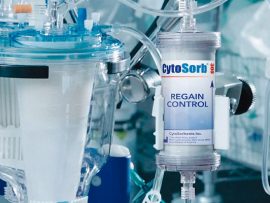
Abstract Background On-pump cardiac surgery triggers a significant postoperative systemic inflammatory response, sometimes resulting in multiple-organ dysfunction associated with poor clinical outcome. Extracorporeal cytokine elimination with a novel haemoadsorption (HA)..
Read More
Abstract Introduction: Cardiopulmonary bypass (CPB) can cause stress response that increases levels of cytokine and catecholamine in plasma, resulting in hyperglycemia. In adults, it has been demonstrated that remifentanil infusion..
Read More
Abstract The protective effects of preprocedural esmolol on myocardial injury and hemodynamics have not, to date, been investigated in patients who were scheduled for cardiac surgeries under a cardiopulmonary bypass..
Read More
Abstract Abstract: Here we report two cases of extracorporeal membrane oxygenation (ECMO) support in pediatric patients following orthotopic heart transplantation due to low cardiac output and inability to separate from..
Read More
Abstract PURPOSE: Cardiopulmonary bypass (CPB) procedures are thought to activate systemic inflammatory reaction syndrome (SIRS). Strategies to curb systemic inflammation have been previously described. However, none of them is adequate,..
Read More
Abstract Background. The mechanisms causing increased endothelial permeability after cardiopulmonary bypass (CPB) have not been elucidated. Using a bioassay for endothelial barrier function, we investigated whether endothelial hyperpermeability is associated..
Read More
Abstract Modern day cardiac surgery evolved upon the advent of cardiopulmonary bypass machines (CPB) in the 1950s. Following this development, cardiac surgery in recent years has improved significantly. Despite such..
Read More
Abstract A high neutrophil-lymphocyte ratio (N/L ratio) was associated with the development of acute kidney injury (AKI) in patients with severe sepsis. We sought to investigate the association between the..
Read More
Abstract Introduction: Propofol has been suggested as a useful adjunct to cardiopulmonary bypass (CPB) because of its potential protective effect on the heart mediated by a decrease in ischemia-reperfusion injury..
Read More
Abstract Objective The present study is to describe the clinical impact of S100 and S100β for the evaluation of cerebral damage in cardiac surgery with or without the use of..
Read More
Abstract Objective To share our experience highlighting the additional use of cardiopulmonary bypass (CPB) in cases other than the conventional ischemic, congenital and valvular heart diseases. Methodology All patients undergoing..
Read More
Abstract A best evidence topic in cardiac surgery was written according to a structured protocol. The question addressed was whether patients with haematological malignancy (HM) who need cardiopulmonary bypass (CPB)..
Read More