


Abstract Congenital heart defect (CHD) surgeries are performed with cardiopulmonary bypass (CPB) and are complicated by several factors that affect the child’s brain. However, to date, the number of studies..
Read More
Abstract Objective No recent prospective studies have analyzed the accuracy of standard coagulation tests and thromboelastography (TEG) to identify patients with excessive microvascular bleeding following cardiopulmonary bypass (CPB). The aim..
Read More
Abstract Objective Cognitive impairment is a common neurologic complication after cardiac surgery with cardiopulmonary bypass (CPB). This study evaluated postoperative cognitive function to determine predictors of cognitive dysfunction, including intraoperative..
Read More
Abstract Objective: Postoperative delirium (POD) is common after cardiac surgery. We have previously identified plasma sodium concentration and the volume of infused fluids during surgery as possible risk factors. Both..
Read More
Abstract BACKGROUND: Postoperative use of platelet function testing to rule out microvascular bleeding due to platelet dysfunction after cardiac surgery still lacks strong reference data and reliable cutoff values, yielding..
Read More
Abstract Objective To determine the effect of severe acute blood loss anemia (ABLA) on postoperative outcomes in Jehovah's Witness (JW) patients undergoing cardiac surgery. Design This was a of adult JW..
Read More
Abstract Viscoelastic coagulation tests have been increasingly used for hemostasis management in cardiac surgery. The ClotPro system is a novel viscoelastic device based on principles of rotational thromboelastometry. We aimed..
Read More
Abstract In normal patients, we typically observe a greater systolic arterial pressure (SAP) in peripheral arteries than in the aorta, while the mean arterial pressure (MAP) is the same in..
Read More
Abstract Background The purpose of this Neonatal and Pediatric Heart and Renal Outcomes Network study was to describe the and outcomes of cardiac surgery–associated (CS-AKI) after cardiac surgery without (non-CPB). Methods We performed..
Read More
Abstract BACKGROUND Unbalanced fluid solutions cause metabolic acidosis and could be associated with impaired coagulation and increased blood loss. OBJECTIVE To investigate whether the use of a balanced colloid compared..
Read More
Abstract Introduction: Patients with chronic thromboembolic pulmonary hypertension (CTEPH) and decompensated right heart failure (DRHF) have worse outcomes after pulmonary endarterectomy (PEA). We reviewed the role of central veno-arterial extracorporeal membrane..
Read More
Abstract Objectives The basic materials and structure of a hemoconcentrator incorporated into cardiopulmonary bypass (CPB) circuits are similar to those of hemodialyzers. Gravity drainage hemodiafiltration (GHDF) is an easy-to-use intraoperative..
Read More
Abstract Background The aim of this study was to construct a nomogram model for discriminating the risk of delirium in patients undergoing cardiovascular surgery. Methods From January 2017 to June..
Read More
Abstract Objectives To study the timing, threshold, and duration of intraoperative hypotension (IOH) associated with the risk of (POD). Design A single-center retrospective observational study. Setting University teaching hospital. Participants A..
Read More
Abstract Albumin has been used in clinical medicine for more than seven decades. At the time of circulation and deairing of asanguineous primes during CPB, many programs will first remove..
Read More
Abstract Surgical pulmonary embolectomy is a procedure that is often used to rescue patients with massive pulmonary embolism (PE) and circulatory collapse that have failed or may not be ideal..
Read More
Abstract Objective is a common after cardiac surgery with (CPB). This study evaluated postoperative cognitive function to determine predictors of cognitive dysfunction, including intraoperative cerebral regional tissue (rSO2). Design A prospective observational . Setting..
Read More
Abstract Metabolism management plays an essential role in extracorporeal technologies. There are different metabolic management devices integrated to extracorporeal devices; the most commonly used and accepted metabolic target in adult..
Read More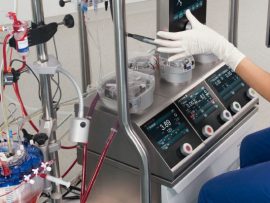
Abstract Background: New era of cardiac surgery aims to provide an enhanced postoperative recovery through the implementation of every step of the process. Thus, perfusion strategy should adopt evidence-based measures..
Read More
Abstract Introduction We hypothesized that perioperative fibrinogen level, platelet count, and rotational thromboelastometry (ROTEM) data values decrease in proportion to cardiopulmonary bypass (CPB) time, particularly in patients who underwent deep..
Read More
Abstract Background Heart transplantation in donation after circulatory death (DCD) relies on warm perfusion using either in situ normothermic regional perfusion (NRP) or ex situ normothermic machine perfusion. In this..
Read More
Abstract Introduction Glycemic control is essential for improving the prognosis of cardiac surgery, although precise recommendations have not yet been established. Under a constant blood glucose level, the insulin infusion..
Read More
Abstract Background: Ventricular fibrillation (VF) is a common arrhythmia that occurs after the release of aortic cross-clamp (ACC) in patients undergoing cardiopulmonary bypass (CPB) surgery. Repeated defibrillation and long duration..
Read More
Abstract Background The adverse effects of cardiopulmonary bypass during open cardiac surgery, including hemodilution, seem to be inevitable, especially for patients who generally have a relatively lower BMI with relatively..
Read More
Abstract Objectives To compare the effects of 3 ventilation strategies during cardiopulmonary bypass (CPB) on arterial oxygenation and postoperative pulmonary complications (PPCs). Design A prospective, randomized, controlled study. Setting A..
Read More
Abstract Background Anti-human leukocyte antigen (HLA)-antibody production represents a major barrier to heart transplantation, limiting recipient compatibility with potential donors and increasing the risk of complications with poor waiting-list outcomes...
Read More
Abstract Cardiopulmonary bypass (CPB) is a complex biomechanical engineering undertaking and an essential component of cardiac surgery. However, similar to all complex bioengineering systems, CPB activities are prone to a..
Read More
Abstract Introduction Cardiac surgery associated acute kidney injury (CSA-AKI) has a number of preoperative and intraoperative risk factors. Cardiopulmonary bypass (CPB) factors have not yet been elucidated in a single..
Read More
Abstract Currently 30-day mortality is commonly used as a quality indicator for cardiac surgery; however, prediction models have not included the role of cardiopulmonary bypass (CPB). We hypothesized that reproducing..
Read More
Abstract Background Cardiac surgery is performed worldwide. Most types of cardiac surgery are performed using cardiopulmonary bypass (CPB). Cardiac surgery performed with CPB is associated with morbidities. CPB needs an..
Read More