


Abstract Cardiopulmonary bypass (CPB) in cardiac surgery is associated with a high risk of postoperative neurological complications. Perioperative use of vasopressors is common to counteract arterial hypotension in this setting...
Read More
Abstract Background: Post-cardiopulmonary bypass (CPB) blood processing is an important component of blood management during cardiac surgery. Purpose: The purpose of this study is to evaluate several methods of processing post-CPB..
Read More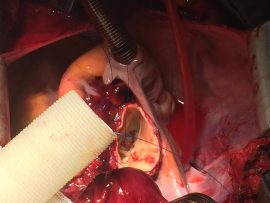
Abstract Background Management of acute aortic dissection (AAD) caused by retrograde perfusion through the femoral artery during minimally invasive cardiac surgery (MICS) remains controversial. We present a case of AAD..
Read More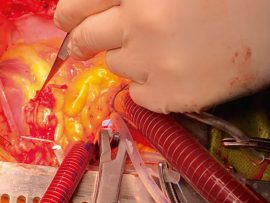
Abstract Objective: Cardiopulmonary bypass (CPB) via the right axillary artery (RAA) has become an alternative perfusion strategy, especially in complex aortic procedures. This study delineates our technique and outcome with..
Read More
Abstract Background: Cardiac surgery can lead to dysregulation with a pro-inflammatory state, resulting in adverse outcomes. Hemadsorption using the AN69 membrane (Oxiris membrane) has the properties to chelate inflammatory cytokines...
Read More
Abstract Objective This study sought to evaluate the value of a CO2 field-flooding device in cardiopulmonary bypass (CPB) surgical procedures for congenital heart disease (CHD) performed via a right-side small incision..
Read More
Abstract Objectives Cardiac surgery–associated acute kidney injury (CSA-AKI) is a common complication with high morbidity and mortality. This study was designed to determine whether adding human albumin to the cardiopulmonary..
Read More
Abstract Objectives Optimal blood pressure goals during cardiopulmonary bypass (CPB) remain uncertain and new metrics to individualize perfusion targets are needed. Critical closing pressure (Pcrit) is a fundamental property of..
Read More
Abstract BACKGROUND Fibrinolytic activity contributes to bleeding after cardiopulmonary bypass (CPB). OBJECTIVE Our objectives were, in a group of infants undergoing cardiac surgery with CPB: to document the extent of..
Read More
Abstract OBJECTIVES Minimally invasive cardiac surgery (MICS) struggles with effective caval isolation and cannulation for cardiopulmonary bypass (CPB). We aimed to develop a novel MICS venous cannula, eliminating external manipulations...
Read More
Abstract Background Timely recognition of perioperative red blood cell transfusion (PRT) risk is crucial for developing personalized blood management strategies in pediatric patients. In this study, we sought to construct..
Read More
Abstract Objective Congenital heart disease affects 1% of US births, with many babies requiring major cardiothoracic surgery under cardiopulmonary bypass (CPB), exposing the more critical patients to neurodevelopmental impairment. Optimal..
Read More
Abstract Background: To compare tracheal temperature (TET) with nasopharyngeal temperature (TNP) in patients undergoing cardiac surgery using cardiopulmonary bypass (CPB). Methods: TET was measured using a thermistor in the cuff..
Read More
Abstract Background The role of pulsatile versus non-pulsatile flow during cardiopulmonary bypass (CPB) is still in debate. This systematic review aimed to comprehensively assess the impact of pulsatile versus non-pulsatile..
Read More
Abstract Purpose Tranexamic acid (TXA) is widely used as an antifibrinolytic drug. However, studies to determine the optimal blood concentration of TXA have produced inconsistent results. During cardiac surgery, cardiopulmonary..
Read More
Abstract Background Near-infrared spectroscopy (NIRS) enables a non-invasive measurement of tissue oxygen saturation (StO2) in regions illuminated by near-infrared lights. Vascular occlusion test (VOT) serves as a model to artificially..
Read More
Abstract Objective This study aims to compare the effects of sevoflurane (SEV) and propofol (PRO) on postoperative cognitive dysfunction (POCD) in patients undergoing cardiac surgery (CS) under cardiopulmonary bypass (CPB),..
Read More
Abstract Intraoperative cell salvage (IOCS) allows the collection, treatment, and retransfusion of shed blood from the surgical field and cardiopulmonary bypass (CPB) collector during cardiac surgery. This technique has been..
Read More
Abstract Introduction The recently recommended activated clotting time (ACT) to be maintained at the initiation of and during cardiopulmonary bypass (CPB) is ≥480 s. However, the post-unfractionated heparin (UFH) administration ACT..
Read More
Abstract Background The aim of this study is to assess the impact of optimized modified ultrafiltration (OMUF) on the physiological parameters of infants and children undergoing cardiopulmonary bypass (CPB). Methods..
Read More
Abstract Background: In the PROTECTION trial, intravenous amino acids (AA) decreased the occurrence of acute kidney injury (AKI) in cardiac surgery patients with cardiopulmonary bypass (CPB). Recruitment of renal functional..
Read More
Abstract Background The adoption of minimally invasive cardiac surgery (MICS) has increased over the past 25 to 30 years, driven by advancements in technology and a growing understanding of its..
Read More
Abstract Objectives To investigate the impact of systemic inflammatory response syndrome (SIRS) on 30-day mortality following cardiac surgery and develop a machine learning model to predict SIRS. Design Retrospective cohort..
Read More
Abstract Coronary artery bypass grafting (CABG) with cardiopulmonary bypass (CPB) is associated with the transient activation of a systemic inflammatory response. Fibronectin (FN), an endogenous inflammatory mediator, is a key..
Read More
Abstract Haemolysis occurring during cardiac surgery with cardiopulmonary bypass (CPB) is assumed to be a risk factor for postoperative acute kidney injury (AKI). Plasma alpha-1 microglobulin (A1M) may have a..
Read More
Abstract Objective Cerebral air embolism during Cardio-Pulmonary Bypass is a severe complication with significant neurological risks. We present six pediatric cases, detailing their presentation, management, and outcomes. The discussion reviews..
Read More
Abstract Oxygenator high-pressure (HPE) is a phenomenon that can occur during cardiopulmonary bypass (CPB) in which the oxygenator inlet pressure increases rapidly, thereby limiting flow. Most perfusionists globally do not..
Read More
Abstract Objective: To investigate the effect of sodium bicarbonate Ringer’s solution (BRS) on the degradation of endothelial glycocalyx components in patients undergoing cardiopulmonary bypass (CPB) during cardiac surgery, and to evaluate..
Read More
Abstract Objectives: Sternotomy is rarely performed for veterinary therapeutic or recovery models in quadrupeds because of difficulties with breathing, ambulation, and pain control. Central cannulation for cardiopulmonary bypass (CPB) is infrequent..
Read More
Abstract OBJECTIVES This study investigates the impact of bilateral antegrade cerebral perfusion (ACP) time on outcomes in aortic arch surgery. METHODS In total, 961 patients underwent either hemiarch (n = 385) or..
Read More