


Abstract Extracorporeal cardiopulmonary resuscitation (ECPR) requires advanced skills for induction and management. This study evaluated whether the outcomes of ECPR differ by institutional volume. Using the Japanese Association for Acute..
Read More
Abstract Introduction Venoarterial extracorporeal membrane oxygenation (VA-ECMO) is an essential life-support system in critical care specifically engineered to assist cardiac and respiratory function by externally maintaining blood perfusion and oxygenation..
Read More
Abstract Background/Objectives: Conventional cardiopulmonary resuscitation (CCPR) has been the foundational resuscitation approach for decades. Where CCPR is unsuccessful, extracorporeal membrane oxygenation-assisted CPR (ECPR) may improve outcomes. Predicting failure of CCPR..
Read More
Abstract Managing acute brain injury involves protecting the brain from secondary injury by addressing the mismatch between metabolic demand and cerebral perfusion. Observational studies have associated impaired cerebral autoregulation, a..
Read More
Abstract Brain injury and cerebral inflammation are frequent complications following cardiopulmonary bypass (CPB) resulting in neurocognitive dysfunction, encephalopathy, or stroke. We compared cerebral inflammation induced by del Nido and histidine-tryptophan-α-ketoglutarate..
Read More
Abstract Background: del Nido cardioplegia (dNC) solution is widely used in pediatric and congenital cardiac surgery. In 2014, Cincinnati Children’s Hospital Medical Center (CCHMC) changed from Mee cardioplegic solution to..
Read More
Abstract OBJECTIVES Extracorporeal membrane oxygenation (ECMO) can act as a bridge to recovery in both pre- and postoperative patients with transposition of the great arteries (TGA). However, literature on its..
Read More
Abstract Cardioplegic arrest and cardiopulmonary bypass (CP/CPB) are known to engender microvascular dysfunction in patients undergoing cardiac surgery. These effects are significantly varied by patient comorbidities including diabetes and hypertension...
Read More
Abstract Rapid hemodynamic stabilization and restoration of pulmonary perfusion are the cornerstones of treatment for high-risk pulmonary embolism (PE). While all current guidelines recommend systemic thrombolysis (SYS) as the first-line..
Read More
Abstract Background The optimal pulmonary revascularisation strategy in high-risk pulmonary embolism (PE) requiring implantation of extracorporeal membrane oxygenation (ECMO) remains controversial. Methods We conducted a systematic review and meta-analysis of..
Read More
Abstract Aim To compare the long-term Health-Related Quality of Life (HRQoL) between patients receiving extracorporeal cardiopulmonary resuscitation (ECPR) and conventional cardiopulmonary resuscitation (CCPR) for out-of-hospital cardiac arrest (OHCA). Methods and..
Read More
Abstract The use of venoarterial extracorporeal membrane oxygenation (VA-ECMO) for temporary mechanical circulatory support in various clinical scenarios has been increasing consistently, despite the lack of sufficient evidence regarding its..
Read More
Abstract Background Current adult cardiac surgery guidelines recommend against the routine use of prophylactic intravenous corticosteroids during cardiopulmonary bypass (CPB) due to concerns about myocardial injury, despite their potential to..
Read More
Abstract Introduction Contemporary rates of survival after pediatric in-hospital CPR events and trends in survival over the last 20 years have not been compared based on illness category. We hypothesized that..
Read More
Abstract The increased accessibility of extracorporeal membrane oxygenation following the COVID‐19 pandemic and the publication of the first randomized trial of extracorporeal cardiopulmonary resuscitation (ECPR) prompted the National Heart, Lung,..
Read More
Abstract Objectives Patents with out-of-hospital cardiac arrest (OHCA) are at high risk of death or poor neurologic recovery if spontaneous circulation is not rapidly restored. Emergent mechanical circulatory support with..
Read More
Abstract OBJECTIVES Extracorporeal membrane oxygenation (ECMO) can act as a bridge to recovery in both pre- and postoperative patients with transposition of the great arteries (TGA). However, literature on its..
Read More
Abstract Venovenous (VV) extracorporeal membrane oxygenation (ECMO) supports end-organ oxygen delivery in patients with refractory respiratory failure. Physical therapy (PT) while on ECMO provides conceptual benefits of strength and conditioning...
Read More
Abstract The mechanical circulatory support (MCS) for pediatric patients with severe acute heart failure and poor pulmonary conditions is challenging. Herein, we report the first pediatric case of successfully treated..
Read More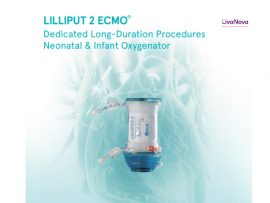
Abstract Aims Knowing the upper time limit for successful weaning from temporary mechanical circulatory support in cardiogenic shock will help with decision‐making regarding advanced heart failure (HF) therapy or considering..
Read More
Abstract Background/Objectives: Previously, we showed that blood-based polarizing cardioplegia exerted beneficial cardioprotection during hypothermic ischemia; however, these positive effects of blood-based polarizing cardioplegia were reduced during normothermic ischemia compared to..
Read More
Abstract Background Management of acute aortic dissection (AAD) caused by retrograde perfusion through the femoral artery during minimally invasive cardiac surgery (MICS) remains controversial. We present a case of AAD..
Read More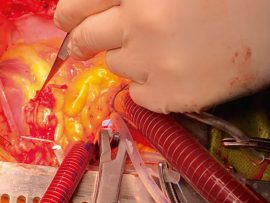
Abstract Objective: Cardiopulmonary bypass (CPB) via the right axillary artery (RAA) has become an alternative perfusion strategy, especially in complex aortic procedures. This study delineates our technique and outcome with..
Read More
Abstract Background Extracorporeal cardiopulmonary resuscitation (ECPR) is increasingly used for adults with cardiac arrest (CA) refractory to Advanced Cardiovascular Life Support (ACLS). Concerns exist that adding ECPR could worsen health..
Read More
Abstract The use of extracorporeal membrane oxygenation (ECMO) has emerged as a rescue intervention for hemodynamically unstable patients and prophylactic intraprocedural hemodynamic support in the cardiac catheterization laboratory. The prompt..
Read More
Abstract The clinical tolerance of extracorporeal membrane oxygenation (ECMO) membrane changes in acute respiratory distress syndrome (ARDS) patients under veno-venous ECMO (VV-ECMO) has not been reported. The aim of this..
Read More
Abstract Cardiogenic shock represents a critical condition in which the heart is unable to maintain adequate circulation leading to insufficient tissue perfusion and end-organ failure. Temporary mechanical circulatory support offers..
Read More
Abstract Objective To describe the six-month functional outcomes of patients who received extracorporeal cardiopulmonary resuscitation (ECPR) following in-hospital cardiac arrest (IHCA) in Australia. Design Secondary analysis of EXCEL registry data...
Read More
Abstract Background Children who undergo cardiac surgery may require postcardiotomy extracorporeal membrane oxygenation (ECMO). Although morbidities are considerable, our understanding of outcome determinants is limited. We evaluated associations between patient..
Read More
Abstract Background Survival for cardiac arrest remains poor, and the use of extracorporeal cardiopulmonary resuscitation (ECPR) has been suggested as a potential therapy to improve outcomes. Harefield Hospital has been performing..
Read More