


Abstract Aims Venoarterial extracorporeal membrane oxygenation (VA-ECMO) is currently one of the most used devices in refractory cardiogenic shock. However, there is a lack of evidence on how to set..
Read More
Abstract The time between onset of cardiogenic shock and initiation of mechanical circulatory support is inversely related to patient survival as delays in transporting patients to the operating room (OR)..
Read More
Abstract In patients in cardiogenic shock (CS), mechanical circulatory support (MCS) may improve systemic perfusion without increasing myocardial work. Restoration of oxygen delivery with reduced myocardial oxygen demand favors myocardial..
Read More
Abstract Background: Veno-arterial extracorporeal membrane oxygenation (VA-ECMO) is increasingly being used for circulatory support in cardiogenic shock patients, although the evidence supporting its use in this context remains insufficient. The aim..
Read More
Abstract Objectives Simultaneous mechanical (MCS) with intra-aortic balloon pump (IABP) to (ECMO) is common in postcardiotomy (PCS). This study aimed to analyse the effect of concomitant ECMO and IABP therapy on the short-term..
Read More
Abstract Post-infarction ventricular septal rupture (VSR) is a serious complication of myocardial infarction, which, in its natural course or treated medically, is related to high mortality rate. Surgical intervention remains..
Read More
Abstract CentriMag® extracorporeal VAD support could represent a more physiological choice than conventional ECMO in primary cardiogenic shock. We therefore evaluated the outcome of patients with primary cardiogenic shock who were..
Read More
Abstract Background: Postcardiotomy cardiogenic shock (PCS) that is refractory to inotropic support remains a major concern in cardiac surgery and is almost universally fatal unless treated with mechanical support. While reported..
Read More
Abstract Danvers, Mass., October 21, 2022 – (Nasdaq: ABMD) announces the U.S. Food and Drug Administration (FDA) has accepted and closed the post-approval study reports related to the pre-market approvals (PMA)..
Read More
Abstract Importance Intravascular microaxial left ventricular assist device (LVAD) compared with intra-aortic balloon pump (IABP) has been associated with increased risk of mortality and bleeding among patients with acute myocardial infarction..
Read More
Abstract We applied the Society for Cardiovascular Angiography and Interventions (SCAI) schema to cardiogenic shock (CS) patients treated with venoarterial extracorporeal membrane oxygenation (VA-ECMO) to assess performance in this high..
Read More
Abstract Background and purpose Extracorporeal membrane oxygenation (ECMO) continues to play an essential role in organ support in cardiogenic shock or acute respiratory distress syndrome and bridging to transplantation. The..
Read More
Abstract The recent widespread availability and use of mechanical circulatory support is transforming the management and outcomes of cardiogenic shock (CS). Clinical decision-making regarding the optimization of therapies for patients with..
Read More
Abstract Over the last several years, the use of extracorporeal membrane oxygenation (ECMO) has exponentially increased. As the technology advanced, the rate of devastating complications has decreased somewhat, and the..
Read More
Abstract Background Shock severity predicts mortality in patients with cardiogenic shock (CS). We evaluated the association between pre-cannulation Society for Cardiovascular Angiography and Interventions (SCAI) shock classification and mortality among..
Read More
Abstract We describe three successful cases of HeartMate left ventricular assist device (LVAD; Thermo Cardiosystems, Woburn, MA, USA) implantation in patients with end-stage heart failure for long-term circulatory support. Patient..
Read More
Jörn Tongers, MD, discusses his recently published paper evaluating the efficacy and safety of early combined mechanical circulatory support (MCS) with an Impella® heart pump and venoarterial extracorporeal membrane..
Read More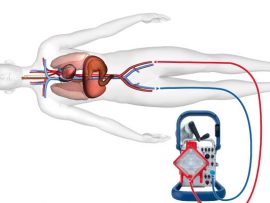
Abstract OBJECTIVES Our goal was to compare the haemodynamic effects of different mechanical left ventricular (LV) unloading strategies and clinical outcomes in patients with refractory cardiogenic shock supported with venoarterial..
Read More
Impella 5.5 Support beyond 50 Days as Bridge to Heart Transplant in End-Stage Heart Failure Patients
Abstract Prolonged mechanical circulatory support (MCS) for severe left ventricular dysfunction in cardiogenic shock as a bridge to heart transplantation (HTx) generally requires a surgical procedure. Typically, a surgically implanted..
Read More
Abstract Venoarterial extracorporeal membrane oxygenation (VA-ECMO) provides cardiovascular and respiratory support for patients in cardiogenic shock; yet, complications are a frequent source of morbidity and mortality. Limb ischemia can be..
Read More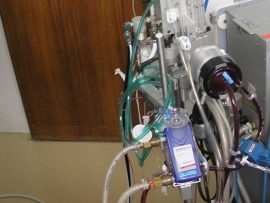
Abstract Background: The mortality rate for a patient with a refractory cardiogenic shock on venoarterial (VA) extracorporealmembrane oxygenation (ECMO) remains high, and hyperoxia might worsen this prognosis. The objective of..
Read More
Abstract The use of veno-arterial extracorporeal membrane oxygenation (VA ECMO) for the treatment of refractory cardiogenic shock has increased signifcantly. Nevertheless, early weaning may be advisable to reduce the potential..
Read More
Abstract Cardiogenic shock and cardiac arrest contribute pre-dominantly to mortality in acute cardiovascular care. Here, veno-arterial extracorporeal membrane oxygenation (VA-ECMO) has emerged as an established therapeutic option for patients suffering..
Read More
Abstract Introduction It remains unclear whether patients who will not accept allogeneic blood transfusion can be managed successfully with veno-arterial (V-A) extracorporeal membrane oxygenation (ECMO). The objective of our study..
Read More
Abstract Venoarterial extracorporeal membrane oxygenation (V-A ECMO) is increasingly used in cardiogenic shock for rapid stabilization and bridging towards recovery, long-term mechanical circulatory support or transplant. Although technological advances have..
Read More
Abstract First described early in the pandemic, coronavirus disease 2019 (COVID-19)-associated fulminant myocarditis can present with arrhythmias and cardiogenic shock, but may be treatable with mechanical circulatory support, such as..
Read More
Abstract Venoarterial extracorporeal membrane oxygenation (ECMO) is used in cardiogenic shock refractory to inotropic support and intra-aortic balloon pump (IABP) support. Peripheral ECMO can lead to ventricular distention, and IABP..
Read More
Abstract During refractory cardiogenic shock and cardiac arrest, veno‑arterial extracorporeal membrane oxygenation (VA‑ECMO) is used to restore a circulatory output. However, it also impacts significantly arterial oxygenation. Recentguidelines of the..
Read More
Abstract Venoarterial extracorporeal membrane oxygenation (VA ECMO) has been increasingly applied in patients with cardiogenic shock in recent years. Nevertheless, many patients cannot be successfully weaned from VA ECMO support..
Read More
Abstract The use of temporary mechanical circulatory support in cardiogenic shock has increased dramatically despite a lack of randomized controlled trials or evidence guiding clinical decision-making. Recommendations from professional societies..
Read More