
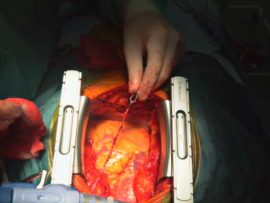

Abstract Background The role of inflammation in patients with coronary artery disease is emerging. We sought to assess the profile and outcomes of patients with a clinical syndrome of severe systemic..
Read More
Abstract Vasoplegia is a ubiquitous phenomenon in all advanced shock states, including septic, cardiogenic, hemorrhagic, and anaphylactic shock. Its pathophysiology is complex, involving various mechanisms in vascular smooth muscle cells..
Read More
Abstract Introduction: Prophylactic intra-aortic balloon counterpulsation (pIABC) is recommended for high-risk patients undergoing coronary artery bypass grafting (CABG) surgery. Criteria for high-risk patients benefiting from pIABC are unclear. This study..
Read More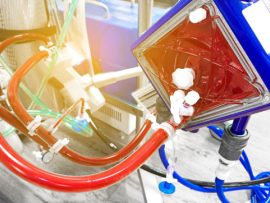
Abstract Extracorporeal membrane oxygenation (ECMO) has been used increasingly for both respiratory and cardiac failure in adult patients. Indications for ECMO use in cardiac failure include severe refractory cardiogenic shock,..
Read More
Abstract Postcardiotomy cardiogenic shock (PCCS) is a rare but catastrophic syndrome that can occur following separation from cardiopulmonary bypass or at any time during the immediate postoperative course. The management..
Read More
Abstract OBJECTIVES Left-sided unloading during extracorporeal membrane oxygenation (ECMO) therapy is crucial to prevent pulmonary oedema and facilitate ventricular recovery. We present the case of a 55-year-old man under ECMO..
Read More
Abstract Aims Percutaneous veno‐arterial extracorporeal membrane oxygenation (VA‐ECMO) is utilized for patients with cardiogenic shock or cardiac arrest. However, the procedure protocol for weaning from VA‐ECMO has not been well..
Read More
Abstract Background Cardiogenic shock is the main cause of death in hospitalized patients with acute coronary syndromes, with a high mortality rate. The management of graft thrombosis after coronary artery..
Read More
The use of veno-arterial extracorporeal membrane oxygenation (VA-ECMO) as a salvage therapy in cardiogenic shock is becoming of current practice. While VA-ECMO is potentially a life-saving technique, results are sometimes mitigated, emphasising the need for selecting..
Read More
Venoarterial extracorporeal membrane oxygenation has emerged as a viable treatment for patients in cardiogenic shock with biventricular failure and pulmonary dysfunction. Advances in pump and oxygenator technology, cannulation strategies, patient selection and management, and durable mechanical circulatory support have..
Read More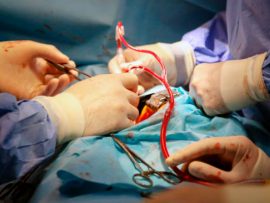
Abstract Extracorporeal membrane oxygenation (ECMO) refers to specific mechanical devices used to temporarily support the failing heart and/or lung. Technological advances as well as growing collective knowledge and experience have..
Read More
Background Venoarterial extracorporeal membrane oxygenation (V-A ECMO) improves perfusion and oxygenation in patients with cardiogenic shock. However, it can also result in supranormal oxygen exposure. Recent evidence suggests hyperoxia may..
Read More
Background Post-cardiotomy cardiogenic shock (PCCS) has an incidence of 2–6 % after routine adult cardiac surgery. 0.5–1.5 % are refractory to inotropic and intra-aortic balloon pump (IABP) support. Advanced mechanical circulatory support..
Read More
Background Postcardiotomy cardiogenic shock (PCCS) refractory to inotropic support and intra-aortic balloon pump (IABP) occurs rarely but is almost universally fatal without mechanical circulatory support. In this systematic review and..
Read More
Abstract Weaning failure and mortality rates in veno-arterial extracorporeal membrane oxygenation (VA-ECMO) supported patients are significant. Small studies suggest the possible usefulness of levosimendan in this environment, especially in postcardiotomy..
Read More
Abstract Extracorporeal life support (ECLS) can result in complications due to increased left ventricular (LV) afterload. The percutaneous ventricular assist device (PVAD) and intra-aortic balloon pump (IABP) are both considered..
Read More
Abstract Different arterial cannulation strategies are feasible for veno-arterial extracorporeal membrane oxygenation (VA-ECMO) in postcardiotomy shock. We aimed to analyze potential benefits and safety of different arterial cannulation strategies. We..
Read More
Abstract Veno-arterial extracorporeal membrane oxygenation (ECMO) is a strong mechanical circulatory device for patients with hemodynamic deterioration due to cardiogenic shock, but its drawback is an increase in left ventricular..
Read More