


Abstract Refractory cardiogenic shock (CS) often requires veno-arterial extracorporeal membrane oxygenation (VA-ECMO) to sustain end-organ perfusion. Current animal models result in heterogenous cardiac injury and frequent episodes of refractory ventricular..
Read More
Abstract Introduction Cardiopulmonary bypass (CPB) is currently performed in infants and newborns for surgical correction of congenital heart diseases (CHDs).1 CPB exposes the body to extreme, nonphysiologic conditions that initiate a..
Read More
Hypoxic-ischemic brain injury is the main cause of death or disability in patients resuscitated from cardiac arrest (CA). Veno-arterial extracorporeal membrane oxygenation (VA ECMO) may be used as a mechanical support for..
Read More
Abstract Dynamic or hybrid configurations for extracorporeal membrane oxygenation (ECMO) are needed when patient physiology or clinical conditions change. Dynamic configurations included configurations converting from veno-arterial (V-A) ECMO or veno-venous..
Read More
Abstract Extracorporeal membrane oxygenation (ECMO) is a last resort therapy for patients with terminal respiratory failure. In the current worldwide surge of critically ill patients with novel coronavirus disease (COVID-19),..
Read More
Abstract Introduction: The intra-aortic balloon pump (IABP) and Impella are left ventricular unloading devices with peripheral venoarterial extracorporeal membrane oxygenation (VA-ECMO) in place and later serve as bridging therapy when..
Read More
Abstract EXTRACORPOREAL MEMBRANE OXYGENATION (ECMO) is a therapeutic modality used in patients with pulmonary, cardiac, or combined cardiopulmonary failure when other methods of organ support have failed. Venovenous (VV) ECMO..
Read More
Abstract Veno-arterial extracorporeal membrane oxygenation (VA-ECMO) supports patients suffering from refractory cardiogenic shock. Thromboembolic complications (TeC) are common in VA-ECMO patients and are associated with increased morbidity and mortality. Valid..
Read More
Abstract Background The usefulness of right heart catherization (RHC) has long been debated, and thus, we aimed to study the real‐world impact of the use of RHC in cardiogenic shock...
Read More
Abstract Venoarterial extracorporeal membrane oxygenation (ECMO) is used in cardiogenic shock refractory to inotropic support and intra-aortic balloon pump (IABP) support. Peripheral ECMO can lead to ventricular distention, and IABP..
Read More
Abstract Dynamic or hybrid configurations for extracorporeal membrane oxygenation (ECMO) are needed when patient physiology or clinical conditions change. Dynamic configurations included configurations converting from veno-arterial (V-A) ECMO or veno-venous..
Read More
Abstract Veno-arterial extracorporeal membrane oxygenation (VA-ECMO) provides a temporary support system for patients with cardiogenic shock refractory to conventional medical therapies. It has been reported that levosimendan may facilitate VA-ECMO..
Read More
Abstract Background RotaFlow and Levitronix CentriMag veno-arterial extracorporeal membrane oxygenation (ECMO) support systems have been investigated as treatment for refractory cardiogenic shock (CS). Methods Between 2004 and 2012, 119 consecutive..
Read More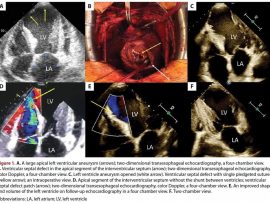
Referring to the discussion on effective methods of treatment for patients with a post-infarction left ventricular aneurysm and a ventricular septal defect (VSD) [1], we present the case of a..
Read More
Abstract Background: Axial flow pumps are standard treatment in cases of cardiogenic shock and high-risk interventions in cardiology and cardiac surgery, although the optimal anticoagulation strategy remains unclear. We evaluated whether..
Read More
Abstract The use of circulatory support has grown exponentially over the last decade, particularly for the management of cardiogenic shock in the setting of acute myocardial infarction.1,2 The devices more..
Read More
Abstract Supraventricular tachycardia is the most common tachyarrhythmia in pediatrics. Although postoperative junctional ectopic tachycardia (JET) is a known complication of congenital heart surgery that is typically transient, congenital JET..
Read More
Abstract Objectives The aim of this study was to evaluate the prognostic impact of cerebral regional oxygen saturation (crSO2) in patients undergoing surgery for Stanford type A aortic dissection (TAAD)...
Read More
Abstract Objective To explore whether pre-cannulation international normalized ratio (INR) is associated with in-hospital mortality in veno-arterial extracorporeal membrane oxygenation (VA-ECMO) patients. Design Retrospective observational cohort study. Setting Quaternary care..
Read More
Abstract In patients with Fontan palliation, the systemic and pulmonary circulation is in series and supported by a single ventricle, resulting in fragile hemodynamics. Cardiac output is driven by low..
Read More
Abstract In SARS-CoV-2 patients with severe acute respiratory distress syndrome (ARDS), Veno-Venous Extracorporeal Membrane Oxygenation (V-V ECMO) was shown to provide valuable treatment with reasonable survival in large multi-centre investigations...
Read More
Abstract Here, we report the case of a 55 year old male patient without significant preexisting cardiovascular disease who received a deceased donor liver transplant. Intraoperatively, the patient developed cardiogenic..
Read More
Abstract Extracorporeal membrane oxygenation (ECMO) support is indicated in patients who are refractory to treatment, those with cardiogenic shock or respiratory failure and those with exacerbations eligible for heart and..
Read More
Abstract Venoarterial extracorporeal membrane oxygenation (VA ECMO) is used to provide cardiopulmonary support in cardiogenic shock; however, high extracorporeal flow may increase left ventricular (LV) afterload leading to LV distention..
Read More
Abstract Background The benefit of red blood cell (RBC) transfusion in anemic critically-ill patients with cardiovascular disease is uncertain, as is the optimal threshold at which RBC transfusion should be..
Read More
Abstract Objectives Peripartum cardiomyopathy (PPCM) is a form of systolic heart failure occurring toward the end of pregnancy or in the period after delivery. Lack of myocardial recovery or therapy‐refractory..
Read More
Abstract Background Postoperative respiratory failure, defined as ventilator dependency for more than 48 hours or unplanned reintubation within 30 days, is a costly complication of cardiac surgery that increases mortality..
Read More
Abstract The rationale for mechanical circulatory support (MCS) in cardiogenic shock is to restore cardiac output in selected patients when critically low or in case of refractory cardiac arrest. Furthermore,..
Read More
Abstract Cardiogenic shock (CS) remains the leading cause of death in patients hospitalised with acute myocardial infarction with mortality as high as 40%–50% prior to hospital discharge. The failure of..
Read More
Abstract Background The utilization of venoarterial extracorporeal membrane oxygenation (VA‐ECMO) as a life‐supporting therapy has increased exponentially over the last decade. As more patients receive and survive ECMO, there are..
Read More