


Abstract Background Red blood cell transfusion is common and associated with adverse outcomes for cardiac surgery, while present blood conservation guidelines have not been fully implemented until now. This study..
Read More
Abstract Objective The objective was to determine the optimal cell saver device settings (infusion rate and wash rate) at which hematocrit is preserved and potassium and lactate are removed from..
Read More
Abstract Return of circuit blood after discontinuing extracorporeal membrane oxygenation (ECMO) is an important blood conservation strategy for reducing the need for blood transfusion. This follows the current standard of..
Read More
Abstract come with risks and high costs, and should be utilized only when clinically indicated. Decisions to transfuse are however not always well informed, and lack of clinician knowledge and..
Read More
Abstract Background: The aim of this study was to compare three different blood washing techniques and describe the differences for the composition of the washed red blood cells (RBC). Methods:..
Read More
Abstract Objective: Compare the use of blood products and intravenous fluid management in patients scheduled for coronary artery bypass surgery and randomized to minimal invasive extracorporeal circulation (MiECC) and conventional..
Read More
Abstract Purpose Albumin solution is a colloid used for resuscitation in cardiac surgical patients, but it is unclear if it offers advantages over crystalloids. We examined current clinical practice across..
Read More
Abstract Background Orthotopic liver transplantation (OLT) is the treatment option for early-stage hepatocellular carcinoma (HCC). OLT is often associated with high blood loss, requiring blood transfusion. Retransfusion of autologous blood is a..
Read More
Objectives Blood-processing techniques and preservation conditions cause storage lesions, possibly leading to adverse outcomes after transfusion. The authors investigated the metabolic changes and deformability of red blood cells (RBCs) during..
Read More
Abstract The following sections are included: HISTORICAL NOTE DYNAMICS OF COAGULATION, FIBRINOLYSIS, AND COMPLEMENT ACTIVATION CARDIOPULMONARY BYPASS (CPB) Role of Oxygenators in Haemostasis ANTI-COAGULATION DURING CARDIOPULMONARY BYPASS Heparin Protamine..
Read More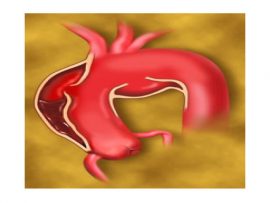
Abstract Background Acute Stanford type A aortic dissection (TAAD) is a life-threatening condition. Surgery is usually performed as a salvage procedure and is associated with significant postoperative early mortality and..
Read More
Abstract Background Patients undergoing cardiac surgery are subject to severe alterations of the coagulation system. The four cardiac surgery centers in Tuscany (Italy) structured and shared an algorithm (Granducato Patient..
Read More
Abstract Background Expected benefits of modified ultrafiltration (MUF) include increased hematocrit, reduction of total body water and inflammatory mediators, improved left ventricular systolic function, and improved systolic blood pressure and..
Read More
Abstract Cryoprecipitate has been the gold standard for treating acquired hypofibrinogenemia in cardiac surgery for nearly 50 years. More recently, fibrinogen concentrate has been used off-label in the United States..
Read More
Abstract Background and aim Thoracotomy approaches to left ventricular assist device (LVAD) implantation may reduce surgical morbidity and, through preservation of the pericardial restraint over the right heart, may reduce..
Read More
Abstract BLEEDING is a well-documented and frequently encountered complication after cardiac surgery, affecting roughly 2%-to-10% of all patients. Major bleeding is a known risk factor for significant morbidity and mortality..
Read More
Abstract BACKGROUND: The standardized management of anticoagulation during the cardiopulmonary bypass seems inaccurate because of patients and surgeries variability. This study evaluates if an individualized management of heparin and protamine..
Read More
Abstract Background Intra-operative cell salvage (IOCS) and leukocyte-depleted filter (LDF) are widely used and effective in saving blood. However, the safety issue concerning reinfusion of IOCS–LDF processed blood to renal..
Read More
Abstract Background Variability in transfusion outcomes and excessive postoperative bleeding represents a significant problem in cardiac surgery. The effort to reduce bleeding complications and transfusion outcomes is desirable. Our study..
Read More
Abstract Objective To explore whether pre-cannulation international normalized ratio (INR) is associated with in-hospital mortality in veno-arterial extracorporeal membrane oxygenation (VA-ECMO) patients. Design Retrospective observational cohort study. Setting Quaternary care..
Read More
Abstract Objective Currently, several near-infrared spectroscopy oximetry devices are used for detecting cerebral ischemia during cardiopulmonary bypass (CPB) surgery. We investigated whether two different models of near-infrared spectroscopy oximetry devices..
Read More
Abstract Introduction Multiple studies have shown a decrease in the inflammatory response with minimized bypass circuits leading to less complications and mortality rate. On the other hand, some other studies..
Read More
Abstract Background The dose of protamine required following cardiopulmonary bypass (CPB) is often determined by the dose of heparin required pre-CPB, expressed as a fixed ratio. Dosing based on mathematical..
Read More
Abstract Extracorporeal membrane oxygenation (ECMO) has been used with increasing frequency to support patients with acute respiratory failure, most commonly, and severe forms of acute respiratory distress syndrome (ARDS). The..
Read More
Abstract Purpose of review The collection of shed blood and its reinfusion has been termed ‘cell salvage’ or ‘autotransfusion’. This review will summarize the historical foundation of cell salvage and summarize recent..
Read More
Abstract Purpose: This studywas designed to optimize the latestgeneration venovenous (vv)-extra-corporeal membrane oxygenation(ECMO)-circuit configuration andsettings based on the evaluation ofblood oxygenation and CO 2 removaldeterminants in patients with severeacute respiratory..
Read More
Blood transfusion is a critical and life-saving facet of the care for cardiothoracic surgery patients. Inherent to the transfusing of blood is the understanding of the preservation of blood as..
Read More
Abstract Patients with inherited anemia and hemoglobinopathies (such as sickle cell disease and β-thalassemia) are treated with red blood cell (RBC) transfusions to alleviate their symptoms. Some of these patients..
Read More
Abstract Acute respiratory distress syndrome (ARDS) after cardiac surgery is reported with a widely variable incidence (from 0.4%-8.1%). Cardiac surgery patients usually are affected by several comorbidities, and the development..
Read More
Abstract Patient blood management (PBM) has been proposed as a standard of care in modern . PBM-related interventions usually are implemented as bundles, but randomized controlled trials on the implementation of..
Read More