

Abstract Study Design Retrospective study. Purpose To investigate the risk factors for allogeneic red blood cell (RBC) transfusion in adult spinal deformity (ASD) surgery. Overview of Literature Studies have not..
Read More
Abstract Introduction: Amniotic fluid embolism (AFE) is a catastrophic complication of pregnancy with high mortality rate. It is an inflammatory response leading to cardiovascular collapse. We present a case of successful..
Read MoreAbstract Background Acute kidney injury (AKI) frequently occurs as a complication of cardiac surgery and cardiopulmonary bypass (CPB). Its prevalence and severity are determined by various preoperative and intraoperative factors...
Read More
Abstract Study objective The aim of this study was to investigate the efficacy of a two-step patient blood management (PBM) program in red blood cell (RBC) transfusion requirements among patients..
Read More
Abstract Background Coagulatory alterations are common after pediatric cardiac surgery and can be addressed with point-of-care (POC) coagulation analysis. The aim of the present study is to evaluate a preventive..
Read MoreAbstract Background The optimal fluid management strategy for patients undergoing cardiac surgery was controversial regarding fluid volume and intraoperative fluid types. This study aimed to assess the correlation between colloids..
Read MoreAbstract Background: Cardiovascular surgeries often require deep hypothermic circulatory arrest and cardiopulmonary bypass (CPB), which can disrupt blood clotting and lead to excessive bleeding. Traditional treatments involve transfusing blood and blood..
Read More
Abstract Background and Objectives A plasma transfusion dose should be weight-based (10–20 mL/kg), which equates to three to four units in an average-sized adult; therefore, the transfusion of single units under..
Read More
Abstract BACKGROUND: Preoperative screening for iron deficiency is a part of patient blood management protocols. This systematic review, meta-analysis, and meta-regression reviews the association between nonanemic iron deficiency and postoperative..
Read More
Abstract Introduction While newer heater-cooler technologies using ethylene glycol-based (GB) solutions during cardiothoracic surgery have become commercially available, there is a paucity of clinical data describing their effectiveness during cardiopulmonary..
Read More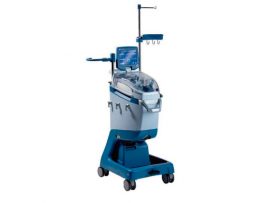
Abstract Introduction and importance Bleeding during pregnancy or during can cause significant morbidity and mortality for the mother and baby, this can be overcome by performing a (C-section) and . Although blood transfusions..
Read More
Abstract Objective Systemic heparinization during cardiopulmonary bypass (CPB) can significantly affect thromboelastography (TEG). This study investigated the feasibility of adding protamine in vitro to allow assessment of coagulation status using the..
Read More
Abstract Objectives To understand if red blood cell (RBC) transfusions are independently associated with a risk of mortality, prolonged , or infectious, cardiac, or renal morbid outcomes. Design A retrospective review...
Read More
Abstract Background Packed red blood cell (pRBC) transfusion is a relatively safe and mainstay treatment commonly used in cardiac surgical patients. However, there is limited evidence on clinical effects of..
Read More
Abstract Objective To determine the number of homologous blood transfusions received by canine surgical patients after introducing a cell salvage device (CSD), trends in surgeries requiring blood transfusion, and the..
Read More
Abstract The use of allogeneic blood products to restore hemostasis during pediatric cardiac surgery is associated with major risks. Consequently, there has been a growing interest in new patient blood..
Read More
Abstract Background Clinical blood resources are scarce and autologous blood transfusion for extracorporeal membrane oxygenation (ECMO) withdrawal is less studied. Objectives To assess the use of staged during decannulation. Methods The study..
Read More
Abstract Objective To evaluate the association of RBC transfusions with thrombosis in pediatric patients on extracorporeal membrane oxygenation (ECMO) and compare this with the transfusion of other blood products and..
Read MoreAbstract The purpose of this viewpoint is to provide awareness of the current opportunities to enhance a high-value care approach to blood product transfusion. It provides a historical context to..
Read More
Abstract Objective Failure to receive prompt leads to severe complications if massive occurs during surgery. For the timely preparation of blood products, predicting the possibility of massive transfusion (MT) is essential to..
Read More
Abstract Introduction For Jehovah’s Witness (JW) patients requiring cardiac surgery, various strategies such as preoperative use of erythropoietin stimulating agents (ESAs), intravenous iron (IVI), and non-pharmacologic interventions have emerged to..
Read More
Abstract Objectives To estimate whether the association of transfusion and acute kidney injury (AKI) has a threshold of oxygen delivery below which transfusion is beneficial but above which it is..
Read More
Abstract Background Red blood cell (RBC) transfusions are frequent in patients after cardiac surgery. This study assessed whether a bundle of care including pre-operative and post-operative administration of (EPO) with intravenous..
Read More
Abstract Background Platelets stored at 1–6 °C are hypothesized to be more hemostatically active than standard room temperature platelets (RTP) stored at 20–24 °C. Recent studies suggest converting RTP to cold-stored platelets..
Read More
Abstract Background: Antithrombin (AT) replacement is occasionally utilized in the setting of extracorporeal membrane oxygenation (ECMO)-associated heparin resistance. Although past studies emphasized the high costs and limited clinical benefit..
Read More
A precise blood transfusion evaluation model for aortic surgery: a single-center retrospective study
Abstract Cardiac aortic surgery is an extremely complicated procedure that often requires large volume blood transfusions during the operation. Currently, it is not possible to accurately estimate the intraoperative blood..
Read More
Abstract Objectives To compare the outcomes of factor eight inhibitor bypassing activity (FEIBA) versus fresh frozen plasma (FFP) as the primary treatment for postoperative coagulopathy in patients undergoing cardiac surgery...
Read More
Abstract JEHOVAH'S WITNESSES (JW) refuse allogeneic blood transfusions because of their religious beliefs, a situation that poses significant challenges in the context of cardiac surgery, given that bleeding-related complications may..
Read More
Abstract Background Minimizing the use of blood component can reduce known and unknown risks, preserve blood bank resources, and decrease healthcare costs. Red Blood Cell (RBC) transfusion is common after cardiac..
Read More
Abstract Introduction The trial hypothesized that minimally invasive extra-corporeal circulation (MiECC) reduces the risk of serious adverse events (SAEs) after cardiac surgery operations requiring extra-corporeal circulation without circulatory arrest. Methods..
Read More