


Abstract Objectives Optimal blood pressure goals during cardiopulmonary bypass (CPB) remain uncertain and new metrics to individualize perfusion targets are needed. Critical closing pressure (Pcrit) is a fundamental property of..
Read More
Abstract Objectives To investigate the safety and efficacy of ANG-3777, a hepatocyte growth factor mimetic, in mitigating the risk of acute kidney injury (AKI) in patients undergoing cardiac surgery with..
Read More
Abstract This study presents the utilization of a novel, highly lipophilic nitric oxide (NO) donor molecule, S-nitroso-1-adamantanethiol (SNAT), for developing an NO-emitting polymer surface aimed at preventing thrombus formation and bacterial..
Read More
Abstract Background Healthcare systems are operating under substantial pressures. Clinicians and managers are constantly having to make adaptations, which are typically improvised, highly variable and not coordinated across teams. This study..
Read More
Abstract BACKGROUND Fibrinolytic activity contributes to bleeding after cardiopulmonary bypass (CPB). OBJECTIVE Our objectives were, in a group of infants undergoing cardiac surgery with CPB: to document the extent of..
Read More
Abstract OBJECTIVES Minimally invasive cardiac surgery (MICS) struggles with effective caval isolation and cannulation for cardiopulmonary bypass (CPB). We aimed to develop a novel MICS venous cannula, eliminating external manipulations...
Read More
Abstract Objectives The detection of low-range heparin activity is important to correctly assess heparin reversal and rebound, especially after cardiopulmonary bypass. Current parameters are either not available at point-of-care (anti-Xa..
Read More
Abstract Background Timely recognition of perioperative red blood cell transfusion (PRT) risk is crucial for developing personalized blood management strategies in pediatric patients. In this study, we sought to construct..
Read More
Abstract The clinical tolerance of extracorporeal membrane oxygenation (ECMO) membrane changes in acute respiratory distress syndrome (ARDS) patients under veno-venous ECMO (VV-ECMO) has not been reported. The aim of this..
Read More
Abstract Objective Congenital heart disease affects 1% of US births, with many babies requiring major cardiothoracic surgery under cardiopulmonary bypass (CPB), exposing the more critical patients to neurodevelopmental impairment. Optimal..
Read More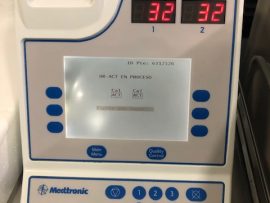
Abstract Objectives According to the manufacturer, the Hemochron ACT-LR cuvette is designated for heparin concentrations of 0 to 2.5 IU/mL, while the optimal concentration range for the ACT+ cartridge is..
Read More
Abstract Background: To compare tracheal temperature (TET) with nasopharyngeal temperature (TNP) in patients undergoing cardiac surgery using cardiopulmonary bypass (CPB). Methods: TET was measured using a thermistor in the cuff..
Read More
Abstract Background The role of pulsatile versus non-pulsatile flow during cardiopulmonary bypass (CPB) is still in debate. This systematic review aimed to comprehensively assess the impact of pulsatile versus non-pulsatile..
Read More
Abstract Cardiogenic shock represents a critical condition in which the heart is unable to maintain adequate circulation leading to insufficient tissue perfusion and end-organ failure. Temporary mechanical circulatory support offers..
Read More
Abstract Extracorporeal membrane oxygenation (ECMO) has been primarily used for respiratory and circulatory failure, but its airway-related use has not been investigated well. Tracheal procedures are a situation when ECMO..
Read More
Abstract Purpose Tranexamic acid (TXA) is widely used as an antifibrinolytic drug. However, studies to determine the optimal blood concentration of TXA have produced inconsistent results. During cardiac surgery, cardiopulmonary..
Read More
Abstract Objective To describe the six-month functional outcomes of patients who received extracorporeal cardiopulmonary resuscitation (ECPR) following in-hospital cardiac arrest (IHCA) in Australia. Design Secondary analysis of EXCEL registry data...
Read More
Abstract Objective To evaluate hospital-level variation in infections following cardiac surgery and develop and evaluate a 180-day infection quality metric. Methods This study evaluated Medicare claims that were merged with..
Read More
Abstract Background: Metastatic spine tumor surgery (MSTS) is often complex and extensive leading to significant blood loss. Allogeneic blood transfusion (ABT) is the mainstay of blood replenishment but with immune-mediated..
Read More
Abstract Background and Objectives: Rapid response teams (RRT) are multidisciplinary teams activated to assess patients outside of the Intensive Care Unit (ICU) and require a shared framework for approaching a deteriorating..
Read More
Extracorporeal membrane oxygenation for Chinese neonates with severe respiratory and cardiac failure
Abstract Objective We aimed to outline the experience with extracorporeal membrane oxygenation (ECMO) for respiratory and cardiac failure in neonates in our institution and compare our results with those from..
Read More
Abstract Background Children who undergo cardiac surgery may require postcardiotomy extracorporeal membrane oxygenation (ECMO). Although morbidities are considerable, our understanding of outcome determinants is limited. We evaluated associations between patient..
Read More
Abstract Background Excessive perioperative bleeding is associated with major complications in cardiac surgery, resulting in increased morbidity, mortality, and cost. Methods An international expert panel was convened to develop consensus..
Read More
Abstract The blood vessel network transfers gas and nutrients throughout the body. In addition, vascular cells contribute to essential functions such as coagulation, immune regulation, angiogenesis and tissue repair, and..
Read More
Abstract Around one-quarter of all patients undergoing cardiac procedures, particularly those on cardiopulmonary bypass, develop cardiac surgery-associated acute kidney injury (CSA-AKI). This complication increases the risk of several serious morbidities..
Read More
Abstract Background Postcardiotomy cardiogenic shock (PCCS) in cardiac surgery is associated with a high rate of morbidity and mortality. Beside other therapeutic measures (e.g. intraaortic balloon pump (IABP)), extracorporeal life..
Read More
Abstract Veno-venous (VV) extracorporeal membrane oxygenation (ECMO) is associated with fewer neurological complications and decreased mortality compared to veno-arterial (VA) ECMO in neonatal respiratory failure. The Crescent right atrial (RA)..
Read More
Abstract Mortality remains elevated during venoarterial extracorporeal membrane oxygenation support (VA-ECMO) for cardiogenic shock and the role of inflammation is uncertain. By using the neutrophil-to-lymphocyte ratio (NLR), we investigated inflammatory..
Read More
Abstract Background Near-infrared spectroscopy (NIRS) enables a non-invasive measurement of tissue oxygen saturation (StO2) in regions illuminated by near-infrared lights. Vascular occlusion test (VOT) serves as a model to artificially..
Read More
Abstract Objective Wide interhospital variation exists in cardiac surgical postoperative transfusion rates. We aimed to compare transfusion rates at 2 hospitals and identify the institutional practice factors, unrelated to patient..
Read More